
A patient with metastatic neuroendocrine tumor arrives for receptor PET. The chart shows monthly long-acting somatostatin analogue injections, a fasting sheet printed for tomorrow's lymphoma PET, and a note that extra fluids support PSMA imaging. Which preparation is appropriate before this receptor PET tracer is injected?
Select an answer to reveal the explanation.
Short Explanation
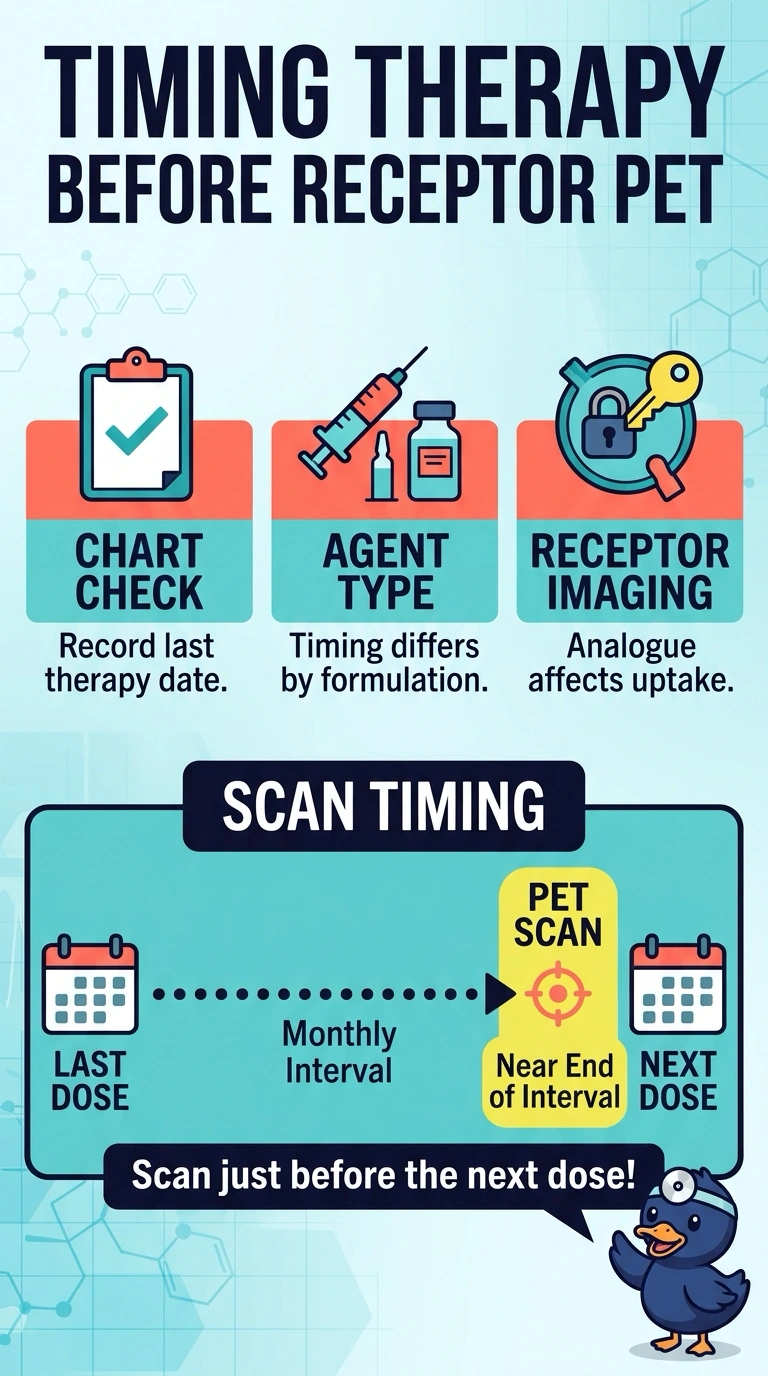
You’ll usually schedule receptor PET near the end of your long-acting somatostatin analogue dosing interval, before your next dose. Timing matters here; fasting or extra fluids from other PET protocols don’t set this scan’s schedule.
Full Explanation
Somatostatin analogues can affect uptake on somatostatin receptor imaging, so schedule the scan near the end of the long-acting analogue dosing interval, before the next scheduled dose. Guidance commonly recommends this timing, but withholding therapy for a fixed period is not a universal requirement. Fasting for the required hours and recording glucose are used for many FDG PET protocols; a lymphoma PET fasting sheet does not replace appropriate timing for receptor imaging. Extra fluids and emptying the bladder may be advised for some renally cleared tracers, but advice used for PSMA imaging does not determine receptor PET timing. Giving the next monthly analogue injection immediately before imaging is not the recommended timing, because the scan should be near the end of the dosing interval instead. Short- and long-acting formulations have different timing considerations, so follow the instructions for the specific agent. As a practical check, confirm timing with the applicable tracer instructions and local protocol, and document the date of the last dose.