
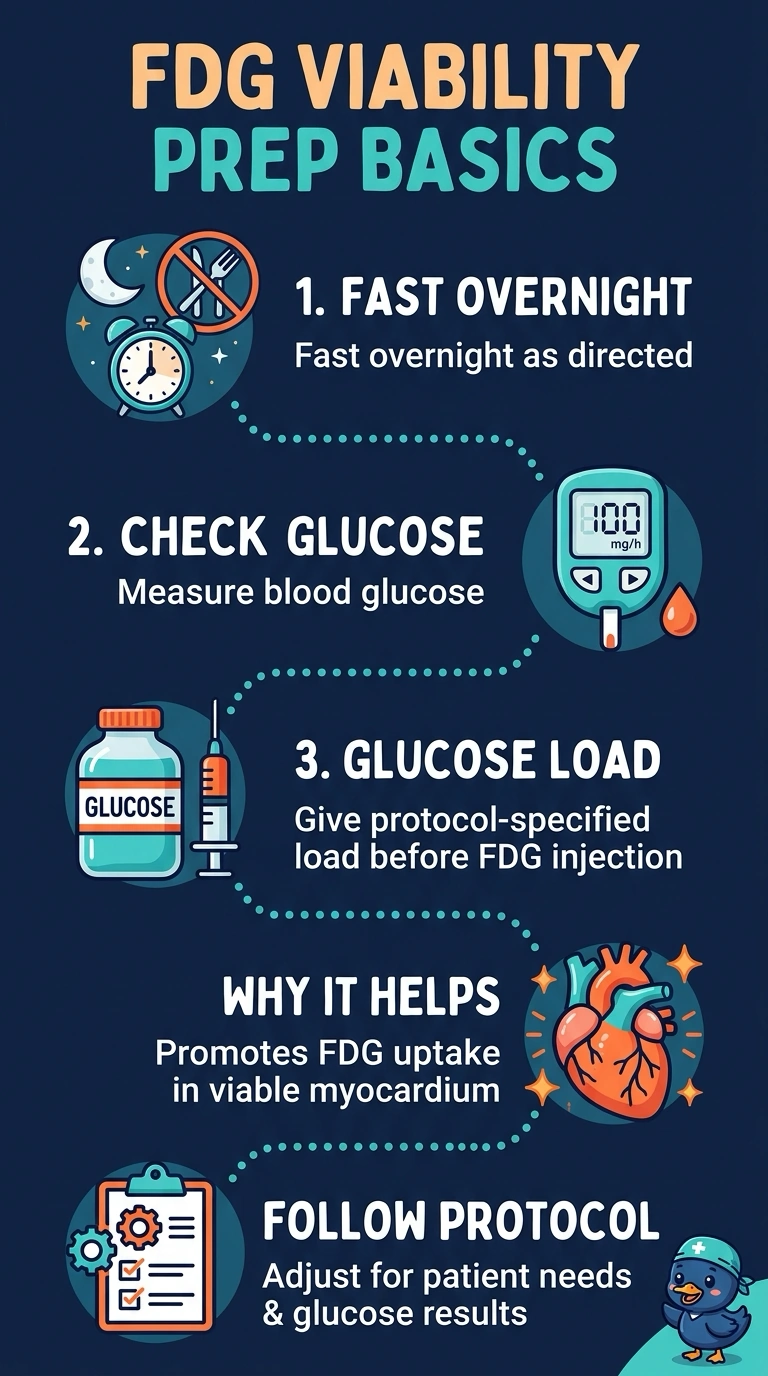
A patient with severe left ventricular dysfunction is referred for F-18 FDG myocardial viability imaging after a fixed defect appeared on a perfusion study. The protocol requires an overnight fast, a glucose check, and glucose loading before injection. Which patient preparation plan best supports this viability protocol?
Select an answer to reveal the explanation.
Short Explanation
For viability imaging, you want viable heart muscle to take up FDG, so fast overnight, check your glucose, and give the protocol-specified glucose load before injection. It’s like giving the muscle fuel to take up the tracer; a high-fat, low-carb prep is used to suppress uptake for other indications.
Full Explanation
Myocardial viability FDG protocols commonly use fasting followed by oral glucose loading, with insulin sometimes used according to the protocol and the patient’s glucose response. Glucose loading promotes FDG uptake in viable myocardium; scarred, nonviable tissue generally has lower uptake. Preparation and glucose-management details vary, particularly for patients with diabetes, so follow the facility’s protocol and verify the glucose result before proceeding. A recent breakfast fails the specified overnight fast. Skipping the glucose check fails a stated safety and preparation step. A high-fat, low-carbohydrate preparation is commonly used to suppress physiologic myocardial FDG uptake for indications such as inflammation imaging, rather than to enhance uptake for viability assessment.