
A nuclear medicine technologist's dosimeter reads a deep-dose equivalent of 60 mrem for the month, and a bioassay after she handled a ruptured syringe estimates an intake with a committed effective dose of 45 mrem. There is no pregnancy declaration on file for her. Which comparison correctly applies NRC dose limits to her exposure?
Select an answer to reveal the explanation.
Short Explanation
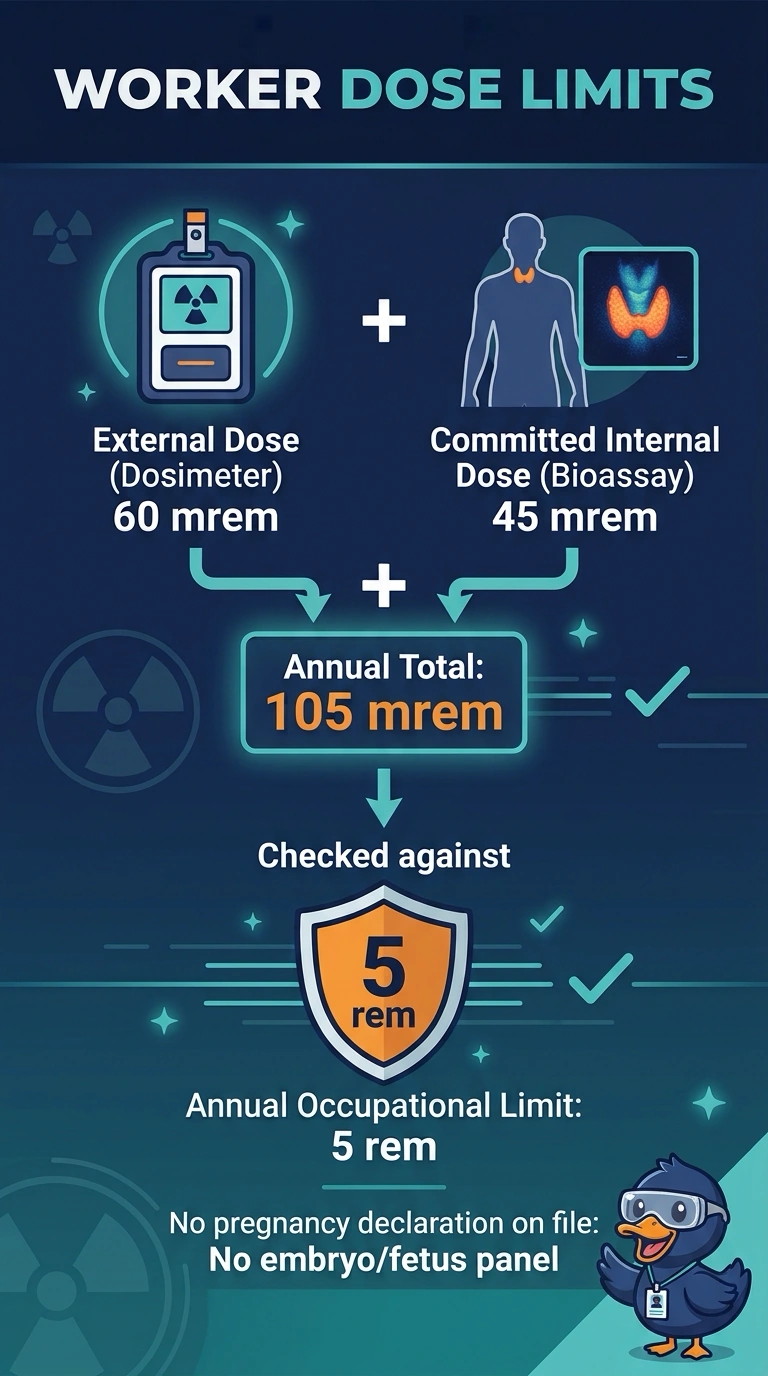
Your committed internal dose is combined with your external dose—like adding two entries on the same tally—to check your annual total against the 5 rem occupational limit. Here, that total is 105 mrem, and the committed dose reflects the expected dose over the applicable commitment period, not an amount that keeps accruing indefinitely.
Full Explanation
For NRC occupational dose-limit comparisons, total effective dose equivalent includes external deep-dose equivalent and committed effective dose equivalent from an intake. The 5 rem annual occupational limit applies to this combined dose. The public limit is a separate limit for members of the public, not the applicable limit for occupational exposure. A bioassay result is not omitted from the worker's dose-limit comparison. The 500 mrem embryo-and-fetus limit applies to the entire pregnancy after the worker has made a written declaration of pregnancy; it does not apply to every monitored female worker. A single month's readings alone do not establish the annual total, so the worker's dose history must also be considered.