
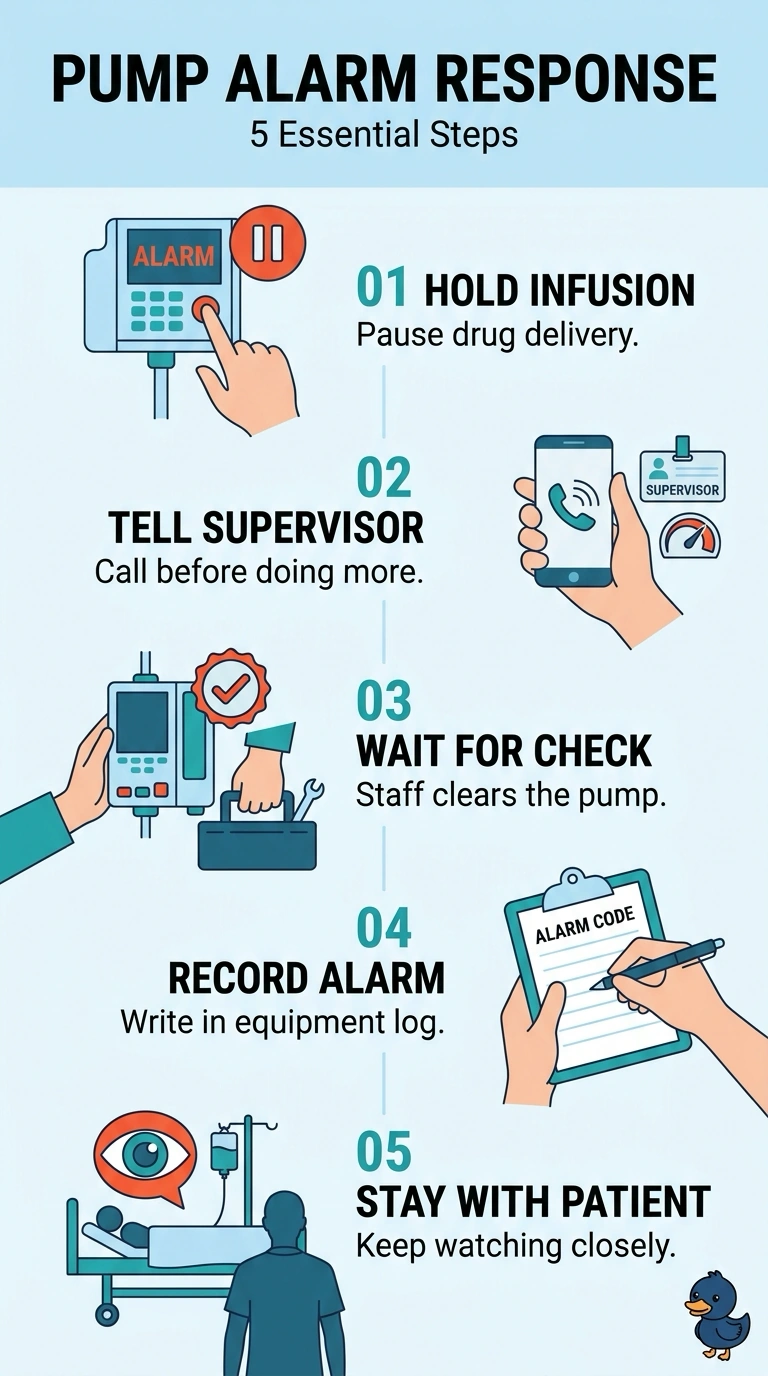
During a pharmacologic stress infusion the pump stops with an occlusion alarm while the patient feels well and the vitals hold steady. Policy here holds the infusion until the device is cleared, calls for your supervisor to be told right away, and requires the alarm code to be entered in the equipment log. Which response handles this infusion-pump malfunction while meeting all three rules?
Select an answer to reveal the explanation.
Short Explanation
You've got three boxes to tick: hold the line, clear the device, and write it down where the equipment team looks. Restarting the pump to make the alarm go away treats a delivery fault like a nuisance. That immediate call to your supervisor is your safety net while the study is still running.
Full Explanation
An infusion-pump alarm during pharmacologic stress is a delivery problem first and a scheduling problem second, so the response has to protect the patient and the record at the same time. Holding the infusion stops any further administration while the occlusion is assessed, which prevents an unmeasured bolus from arriving if the line suddenly clears. Direct, immediate notification of your supervisor puts a second set of eyes on the patient and starts the equipment process while the study is still in progress, when a decision can still change the plan. Logging the alarm code and time in the equipment log gives the device team a timestamped pattern to work from, which is often what reveals a failing pump. Delaying the call until the end of the shift fails the immediacy requirement, because a late conversation cannot influence the study that is still running. Resetting the pump so the infusion resumes fails the hold requirement, since an uncleared device may deliver an unpredictable dose. Writing only in the patient's record fails the equipment-log requirement, because the device history lives in the equipment log. Caveat: escalation paths vary by facility, so follow your local policy wording. Practical check: before you act, name aloud which device, which person, and which log are involved.