
A patient with a fixed perfusion defect on rest sestamibi images is being evaluated for revascularization, so cardiology orders FDG viability imaging for the afternoon. The patient's last meal was at noon and blood glucose was drawn then. Which preparation should the technologist arrange before the FDG injection to judge myocardial viability?
Select an answer to reveal the explanation.
Short Explanation
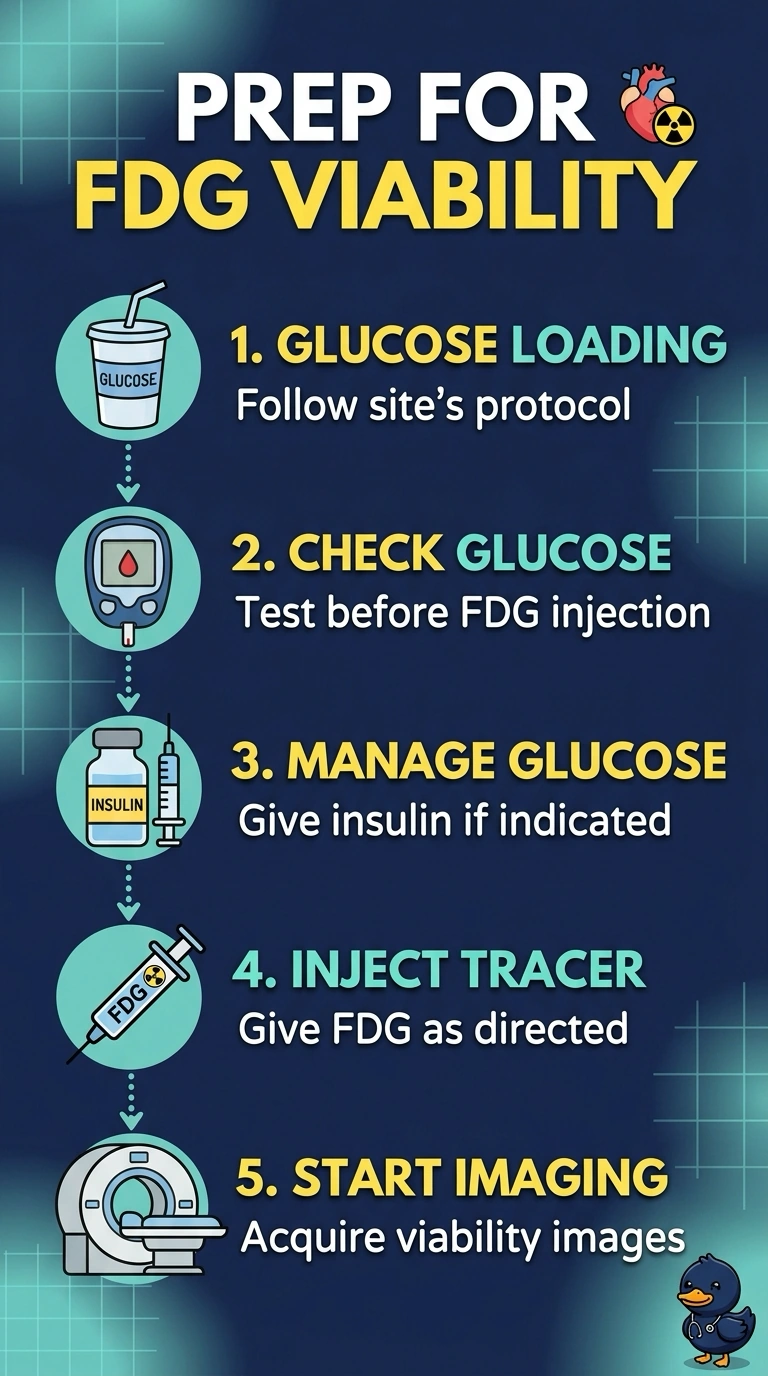
To assess myocardial viability, you need to prepare the heart to take up glucose—like fueling it before a test. Follow your lab’s oral glucose-loading protocol, check blood glucose before the FDG injection, and give insulin if the protocol calls for it; the noon result isn’t a substitute for a pre-injection check.
Full Explanation
For myocardial viability imaging, FDG uptake by viable myocardium is enhanced by promoting glucose utilization. The laboratory's oral glucose-loading protocol, a glucose measurement before injection, and insulin when indicated by that protocol together help optimize myocardial uptake and account for the patient's metabolic response. The noon meal and glucose measurement do not replace these preparation steps for an afternoon study. Fasting with a preinjection glucose and a correction protocol is a familiar approach in other FDG workflows, but it omits the glucose load needed to enhance myocardial FDG uptake for viability assessment. Giving the oral load and appropriate protocol-directed insulin without checking glucose before injection fails to assess the patient's glucose level at the time of tracer administration; the noon result may no longer reflect it. A hyperinsulinemic-euglycemic clamp can be used in specialized myocardial viability protocols, but it substitutes a different preparation method for the laboratory's specified oral glucose-loading protocol. Exam caveat: FDG preparation varies by indication—methods intended to suppress physiologic myocardial uptake, such as fasting or dietary preparation, are not interchangeable with protocols designed to assess viability. Practical check: confirm the indication and local protocol, then document the timing of the glucose load, the preinjection glucose result, and any protocol-directed insulin before administering FDG.