
A transit on-call engineers with Claude Code against logs and GTFS. Which combination fits?
Select an answer to reveal the explanation.
Short Explanation
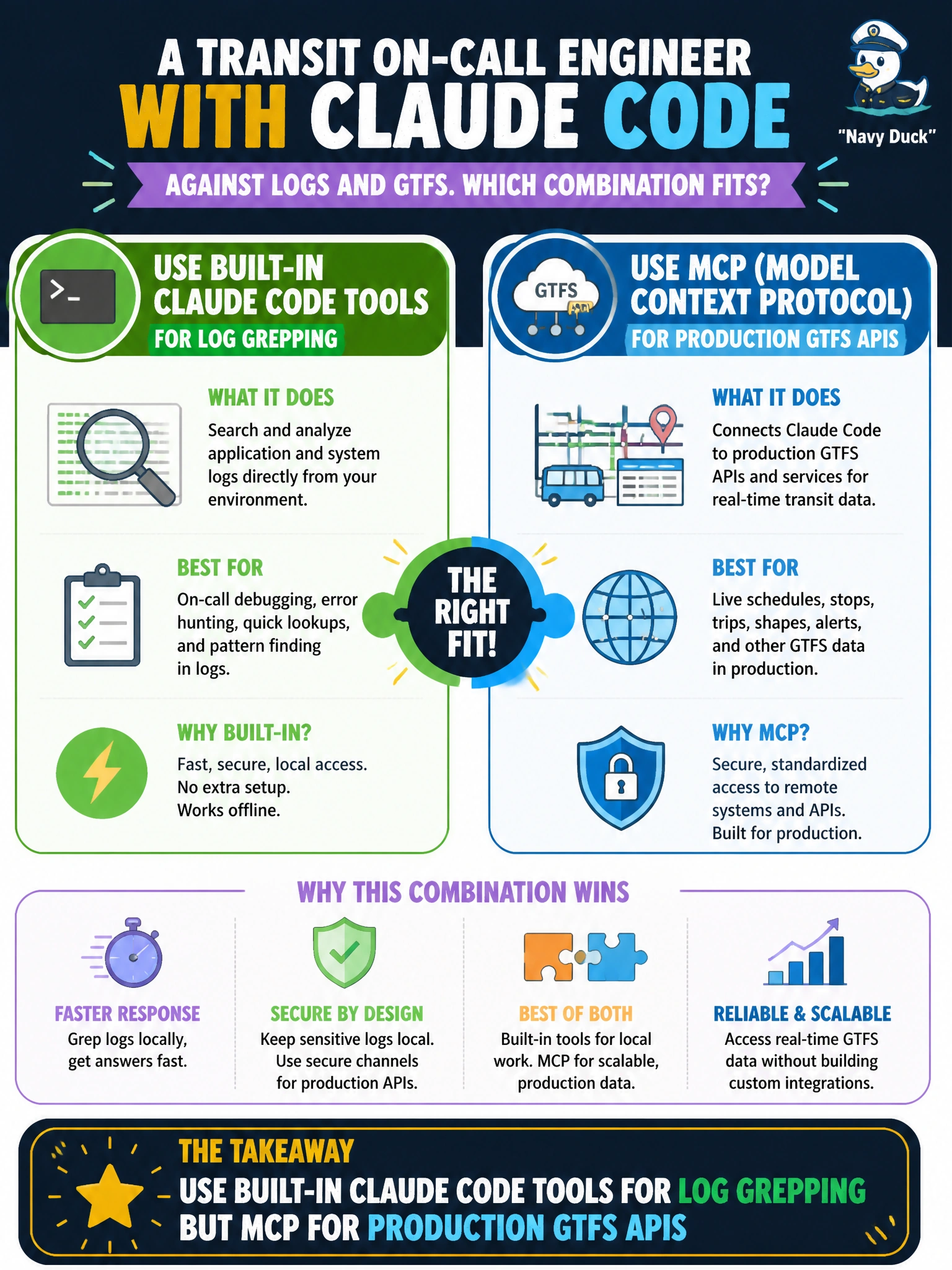
Grep logs with built-in Claude Code tools; hit production GTFS through MCP—local grind versus live feed.
Full Explanation
Transit on-call engineers using Claude Code against incident artifacts should combine built-in tools for local log grepping with MCP for production GTFS APIs. Built-in tools excel at reading and searching files in the local debug workspace; MCP reaches shared live feeds without pasting them into chat. Using MCP for local log grepping and built-in tools for production GTFS APIs reverses locality: MCP adds unnecessary remote indirection for local files, while built-ins are not the right long-term interface to production feed services. Using built-in tools for log grepping but direct WebFetch for authenticated GTFS APIs skips MCP's managed auth and rate-limit handling, forcing engineers to juggle credentials and incident load by hand. Using MCP for a checked-in GTFS snapshot file serves static, stale data instead of live production feeds, so responders work from outdated trip information during an incident. Exam caveat: production GTFS MCP tools need prod credentials and rate limits appropriate for incident load, separate from sandbox keys. Operational check: grep a local log with built-in tools, fetch a live trip update via MCP, confirm feeds are not pasted wholesale into the transcript, and verify the reversed tooling mix is slower or unavailable by design.