
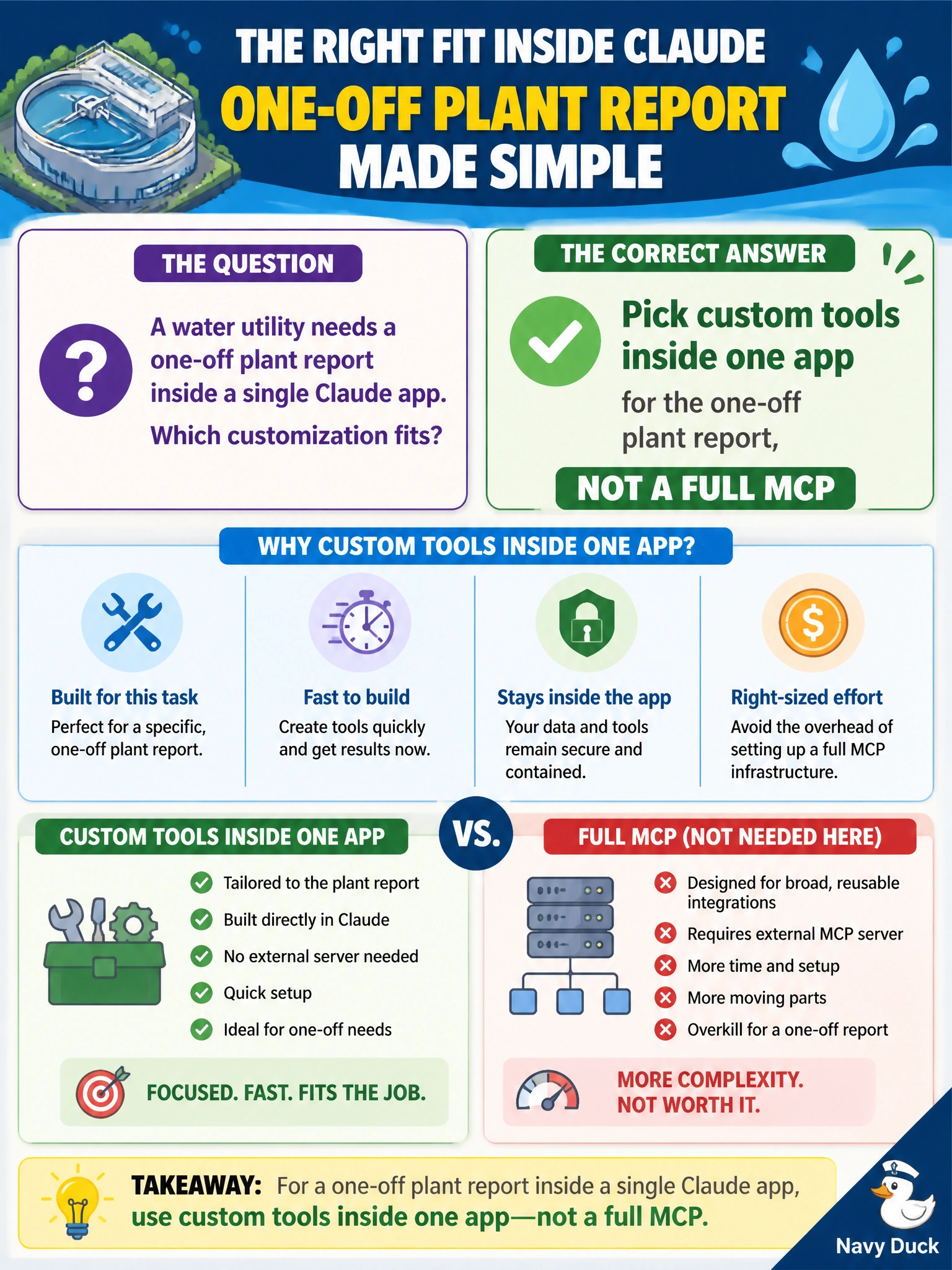
A water utility needs a one-off plant report inside a single Claude app. Which customization fits?
Select an answer to reveal the explanation.
Short Explanation
One plant, one app, one report—custom in-app tools beat building a dedicated MCP server for the plant historian. You don't need to package the one-off as a shared Skill or register a reusable telemetry MCP connector when it's just one consumer.
Full Explanation
A one-off plant report consumed by a single water-utility Claude app usually does not justify a shared MCP platform. Custom tools inside that one app can call the needed plant data sources, format the report, and stay scoped to a single consumer without multi-tenant packaging, discovery catalogs, or cross-app SLAs. Building a dedicated MCP server for the plant historian to serve this report front-loads dedicated infrastructure and governance for an unproven, single-use path. Packaging the one-off plant logic as a shared Skill for wider reuse creates shared operational burden—on-call, versioning, access reviews—without shared demand, since only one internal app will consume it. Registering a plant telemetry MCP connector scoped for reuse across future utility apps slows delivery and misapplies reuse architecture to a non-shared workload that may never gain a second consumer. Exam caveat: if a second plant app, contractor portal, or partner utility soon needs the same report capability, revisit MCP promotion—start custom, graduate to MCP when consumers multiply, and document that trigger in advance. Operational check: implement the report as an in-app custom tool, confirm only that app references it in configuration, estimate near-term consumers; if still one, keep custom tools, avoid packaging the one-off logic as a shared Skill, and record the promotion criteria (second consumer, shared auth needs, or cross-department reuse) for later extraction.