
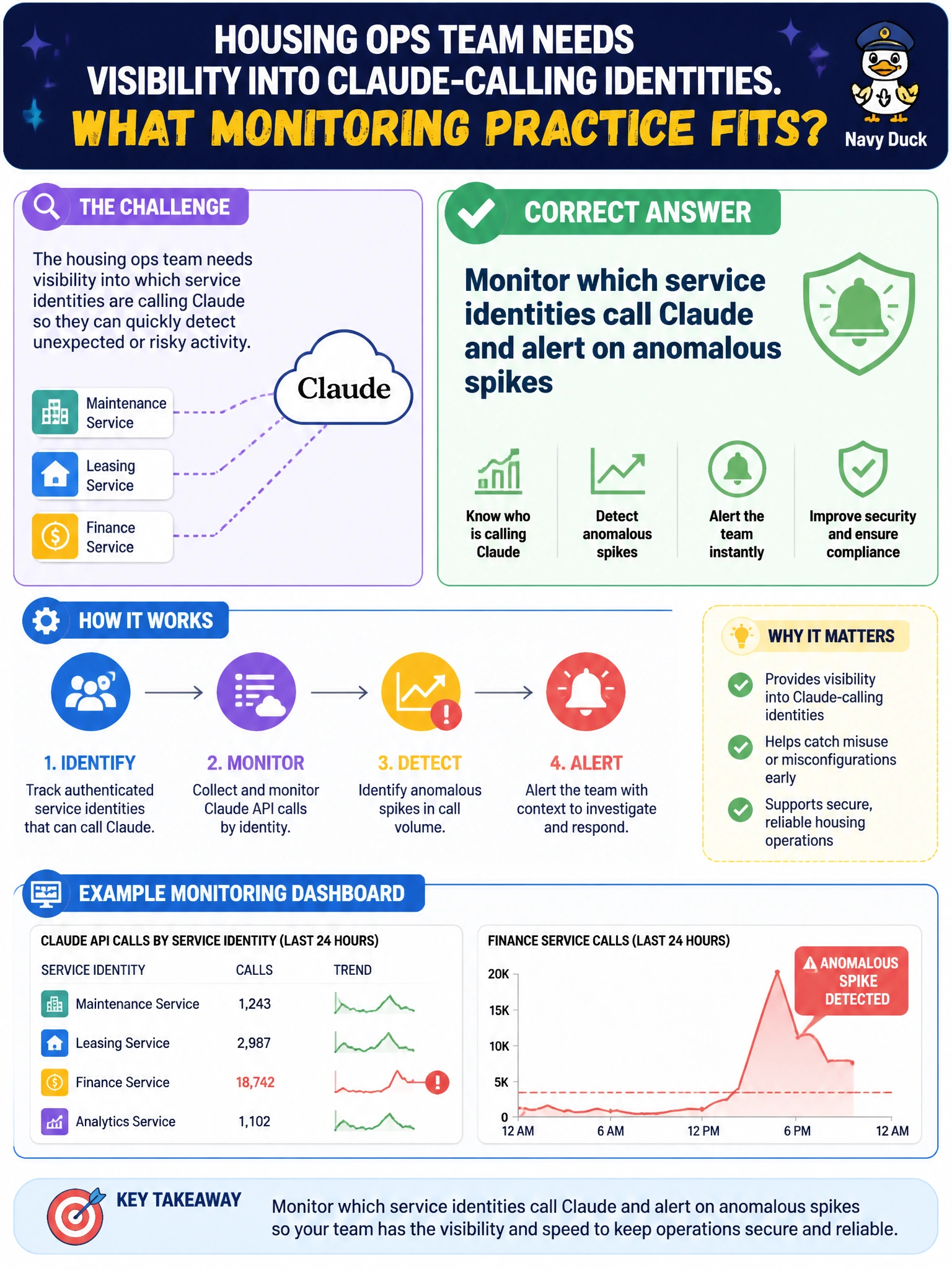
A housing ops team needs visibility into Claude-calling identities. Which monitoring practice fits?
Select an answer to reveal the explanation.
Short Explanation
If you don't watch who is ringing Claude's doorbell, you won't notice when a weird identity starts hammering it. Cost dashboards, latency graphs, and sampled prompt audits won't tell you which service identity is spiking or alert you before things go sideways.
Full Explanation
Housing operations that call Claude through service identities need continuous visibility into who is invoking the model and whether usage patterns look normal. Monitoring which service identities call Claude and alerting on anomalous spikes supports detection of stolen keys, runaway automation, misconfigured retries, and unauthorized new callers before cost or data incidents escalate. Tracking aggregate Claude token consumption in cost dashboards for budget review misses per-identity callers and anomalous spikes, so credential misuse or runaway automation stays invisible until invoices or complaints arrive. Monitoring model latency percentiles for Claude endpoints to tune timeout settings tracks performance, not caller identity, so it leaves municipal accountability and incident response without the forensic identity evidence they need. Sampling Claude prompt content for quality review in scheduled manual audits inspects what was said, not who said it, so it fails to give housing operations continuous visibility into service identities or anomalous call spikes. Exam caveat: usage alerts are not the same as content inspection—spike detection catches volume and identity anomalies but does not replace prompt/response logging policies where legally required. Operational check: generate a controlled spike from a test service identity, confirm the alert fires with the correct identity label, and verify dashboards show per-identity call counts with retention that meets housing audit requirements.