
A court Claude app must stop unsupervised case-file deletes. Which hooks control fits?
Select an answer to reveal the explanation.
Short Explanation
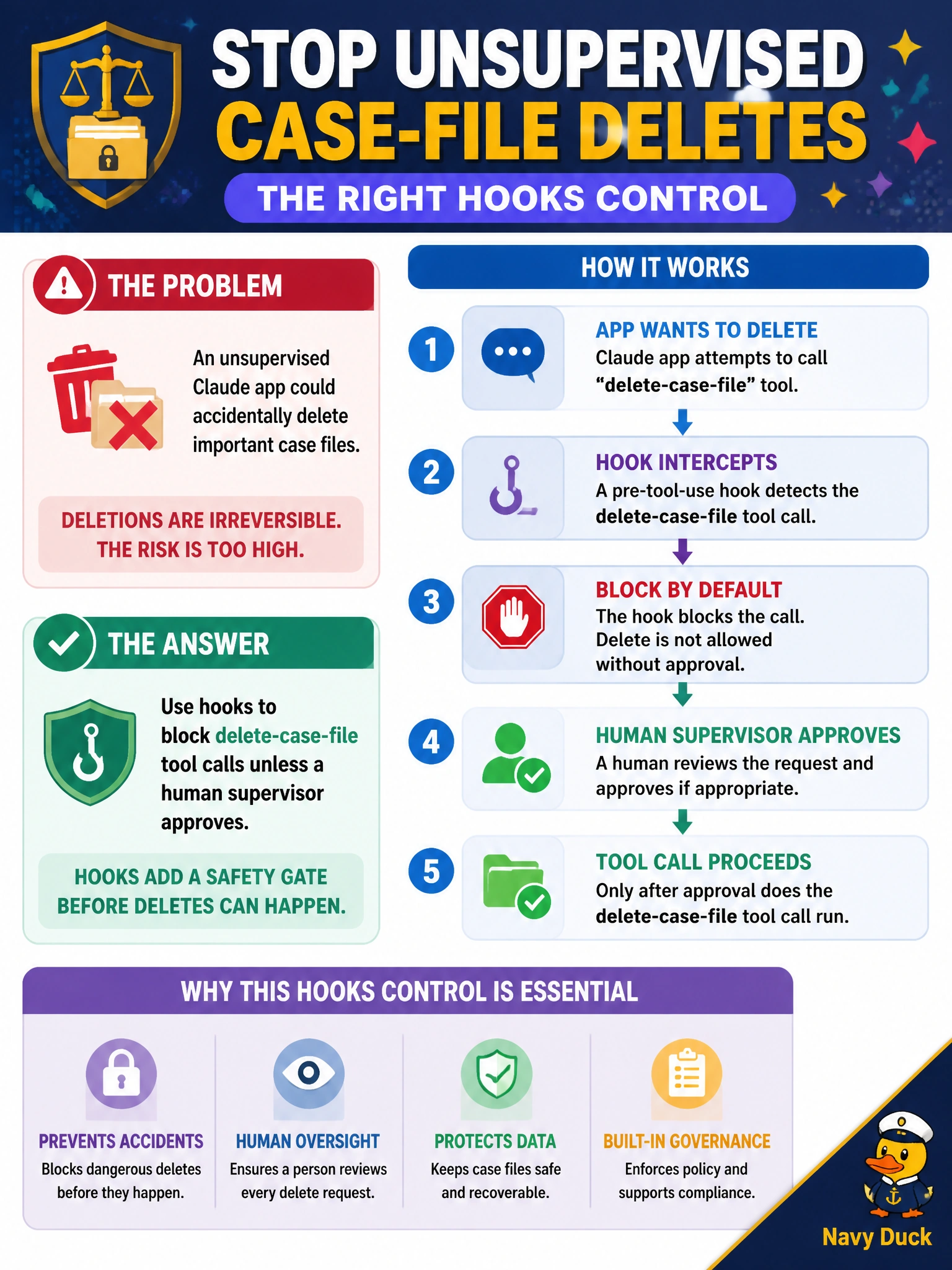
Deleting case files is a big red button—put a hook on it so a human supervisor has to approve first. You don't want a prompt reminder or a format check standing in for that approval; neither one actually stops the delete.
Full Explanation
Using hooks to block delete-case-file tool calls unless a human supervisor approves is the right control for court Claude apps that must stop unsupervised destructive actions. That control works because case-file deletion is high impact and often irreversible for records retention; a hook forces a human gate before the tool executes even if the model proposes delete. Supervisor approval creates accountability and aligns AI tool use with court records governance.
Logging delete-case-file calls after execution for audit review fails because it only records the deletion after it happens; it does not block unsupervised deletes before they occur, so the records risk remains. Adding a supervisor reminder in the prompt when deletes are discussed fails because a prompt reminder is only advisory; it does not block the delete-case-file tool call or require a human gate before execution. Validating delete-case-file arguments for format before allowing execution fails because format validation does not enforce human approval; a well-formed delete request can still proceed unsupervised, defeating the destructive-action control.
Exam caveat: hooks must fail closed—if the approval service is down, deletes should not proceed by default. Operational check: register a pre-tool hook on delete-case-file, require authenticated supervisor approval with reason codes, audit every approval and denial, run chaos tests that deny approval-service availability, and confirm the court app blocks deletes when hooks cannot complete.