
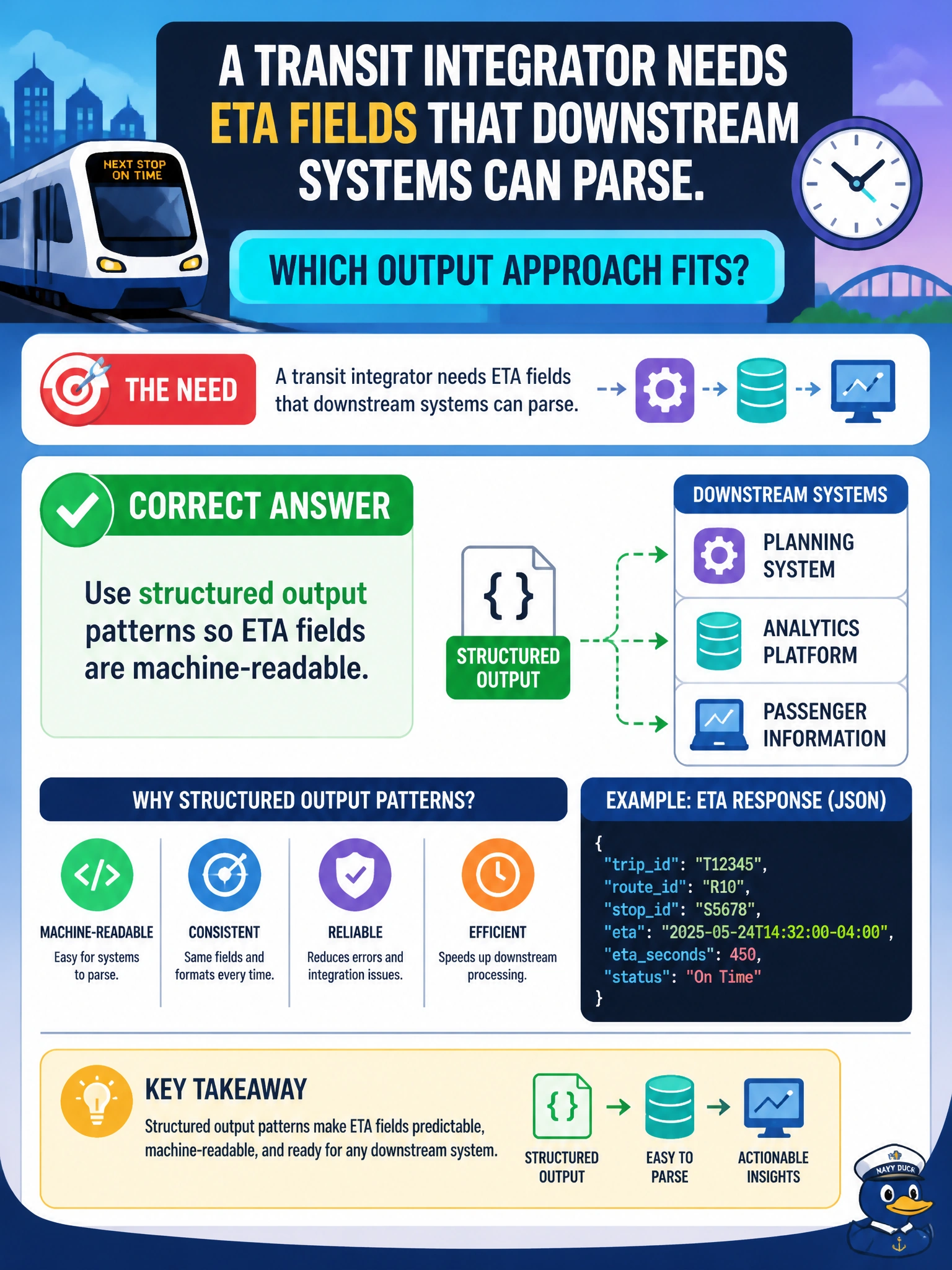
A transit integrator needs ETA fields that downstream systems can parse. Which output approach fits?
Select an answer to reveal the explanation.
Short Explanation
Downstream systems need machine-readable ETA fields, not service alerts describing disruptions. Use structured output so your parsers can actually read them and you won't be left guessing.
Full Explanation
Using structured output patterns so ETA fields are machine-readable is the right approach when transit integrators feed Claude into downstream systems. That works because GTFS consumers, apps, and station signs need typed ETA times and stop identifiers, not static calendar dates meant for trip planning. Structured fields enable validation, caching, and deterministic display, which are non-negotiable for rider-facing municipal pipelines.
Returning GTFS static schedules with calendar dates for trip planning fails conceptually because static calendar data is not live ETA fields and cannot provide the machine-readable arrival values downstream systems need. Sharing service alerts describing disruptions for rider updates fails because alerts communicate service changes, not the structured ETA fields parsers require. Emitting verbose reasoning traces showing model steps for debugging arrivals fails for the same reason: internal debugging text is not a stable ETA schema and can break downstream automation with missing or wrong arrivals.
Exam caveat: structured shape alone does not guarantee temporal correctness; clocks, time zones, and feed freshness still need operational checks. Operational check: require a JSON (or tool) schema for ETA fields, validate against GTFS stop and trip IDs, reject nonconforming responses before publish, and monitor parser error rates during service disruptions when Claude load spikes.