
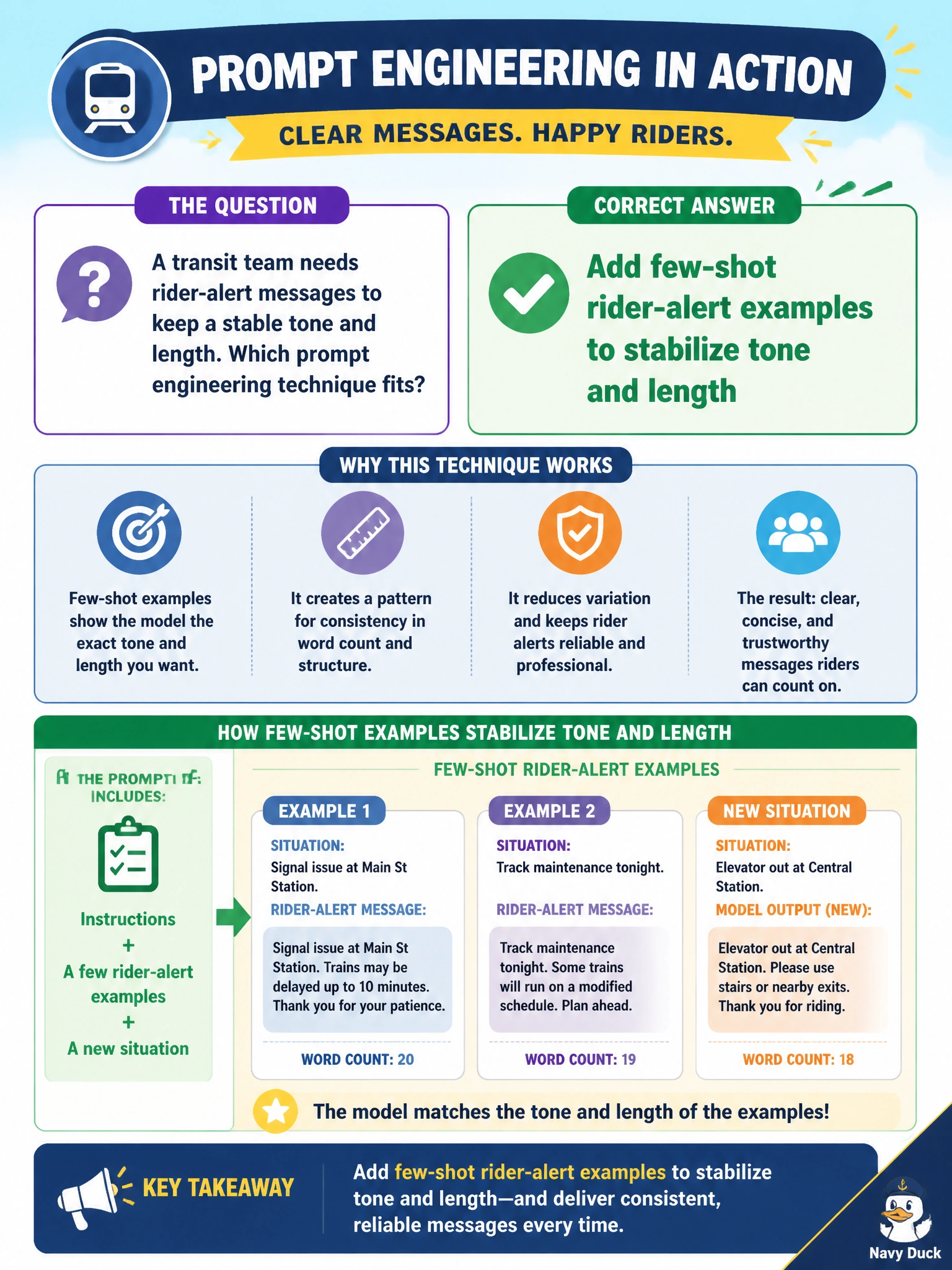
A transit team needs rider-alert messages to keep a stable tone and length. Which prompt engineering technique fits?
Select an answer to reveal the explanation.
Short Explanation
Show Claude a couple of good rider alerts first—few-shot examples nail tone and length better than hoping it guesses. Skipping examples, cranking up the randomness, or letting output run long just trades consistency for chaos.
Full Explanation
Stabilizing rider-alert tone and length with few-shot examples is a practical prompt-engineering control for transit public communications. Adding representative rider-alert samples to the prompt works because Claude can mirror approved voice, urgency markers, channel length limits, and required facts (route, delay window, alternative) instead of inventing style from scratch on every outage. Few-shot anchors also reduce variance across operators and shifts, which matters when alerts go to apps, SMS, and station displays under time pressure. Using zero-shot prompts to shorten initial setup time fails conceptually because generating without examples leaves tone and length unconstrained, maximizing drift and spikes when the public needs consistent, scannable messaging. Raising sampling temperature to encourage varied wording in alerts fails because municipal brand and ADA-clarity standards are not optional creative exercises during service disruption, and added randomness directly undermines stable tone. Expanding max output tokens to allow detailed outage explanations fails because unbounded copy breaks SMS caps, truncates on signs, and slows riders who need a short operational fact set. Exam caveat: few-shot examples must be current and representative; stale samples can lock in outdated stop names, old delay phrasing, or retired brand guidelines. Operational check: maintain a curated alert example pack reviewed by PIO and operations, pin it in the transit prompt, measure length and tone conformance on a holdout set of outage scenarios, and refresh examples when brand or channel limits change.