
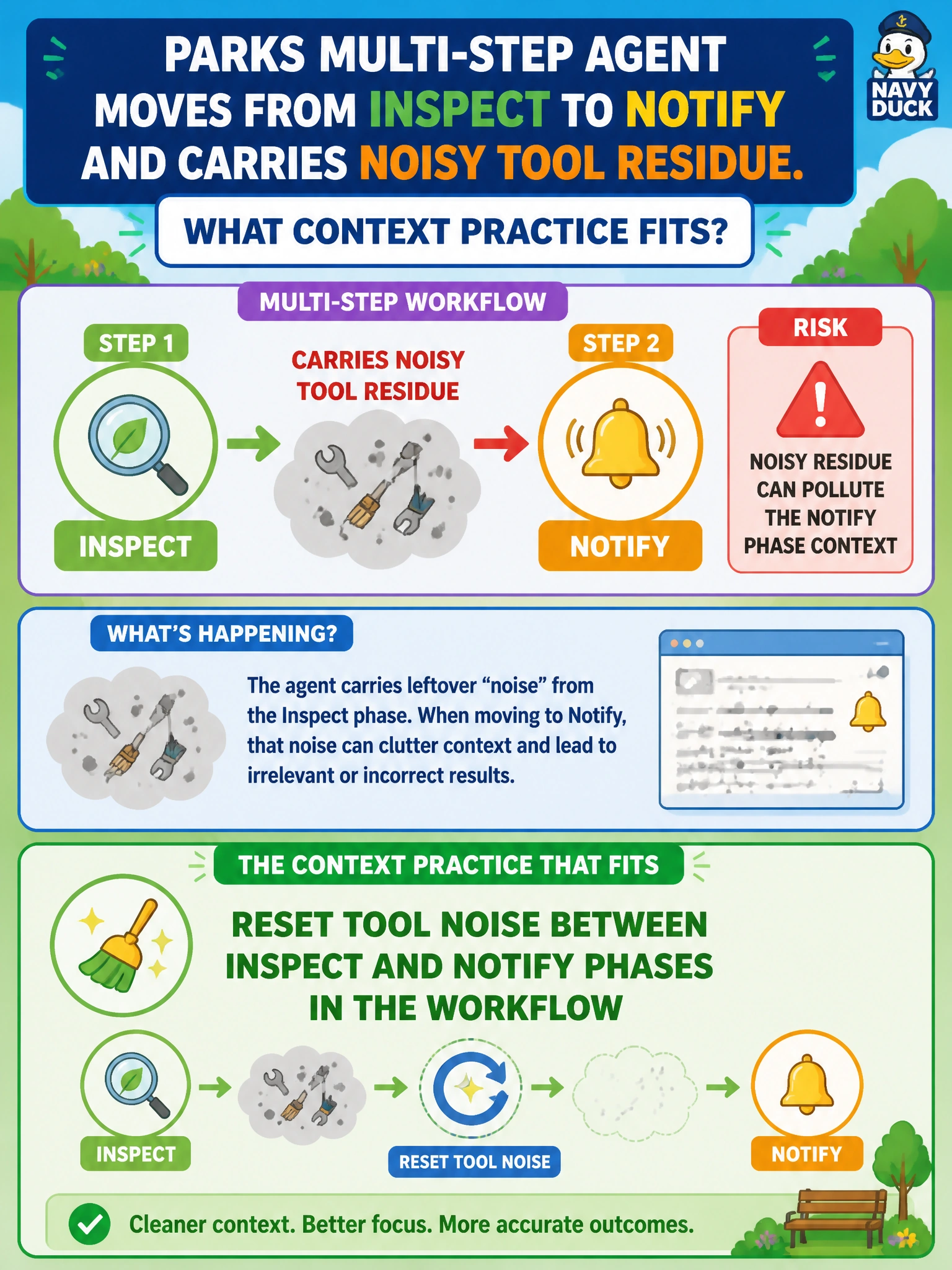
A parks multi-step agent moves from inspect to notify and carries noisy tool residue. What context practice fits?
Select an answer to reveal the explanation.
Short Explanation
Inspect noise shouldn't hitch a ride into notify—reset the tool clutter between those municipal phases.
Full Explanation
Resetting tool noise between inspect and notify phases is the correct context practice for parks multi-step agents because inspection tools emit sensor dumps, photo metadata, and checklist chatter that should not hitchhike into resident or crew notifications. A phase reset keeps notify prompts focused on the approved finding summary, severity, and required actions rather than raw inspect residue. Clean phase boundaries improve notice quality, reduce tokens, and prevent accidental disclosure of internal inspection detail.
Retaining inspect tool context in notify phase for continuity tracking fails because notification tone and content get polluted with coordinates, debug strings, and intermediate hypotheses unfit for outbound civic messages. Archiving inspect transcripts to storage after the notify phase completes fails conceptually—it keeps the contexts unpartitioned during the handoff, so notices remain over-contextualized until archiving happens too late. Consolidating inspect logs into one audit table during the notify phase fails to meet the need here because an audit table is a record-keeping step, not a context reset—the raw inspect noise still rides into the notify phase's prompt while someone separately files it for later review.
Exam caveat: resets must still pass a curated handoff object (finding ID, severity, location, recommended action); wiping everything without a structured bridge loses the reason to notify. Operational check: run inspect→notify with reset enabled, assert notify context contains the handoff fields only, spot-check generated notices for absence of raw tool JSON, and compare resident-facing clarity against a no-reset baseline.