
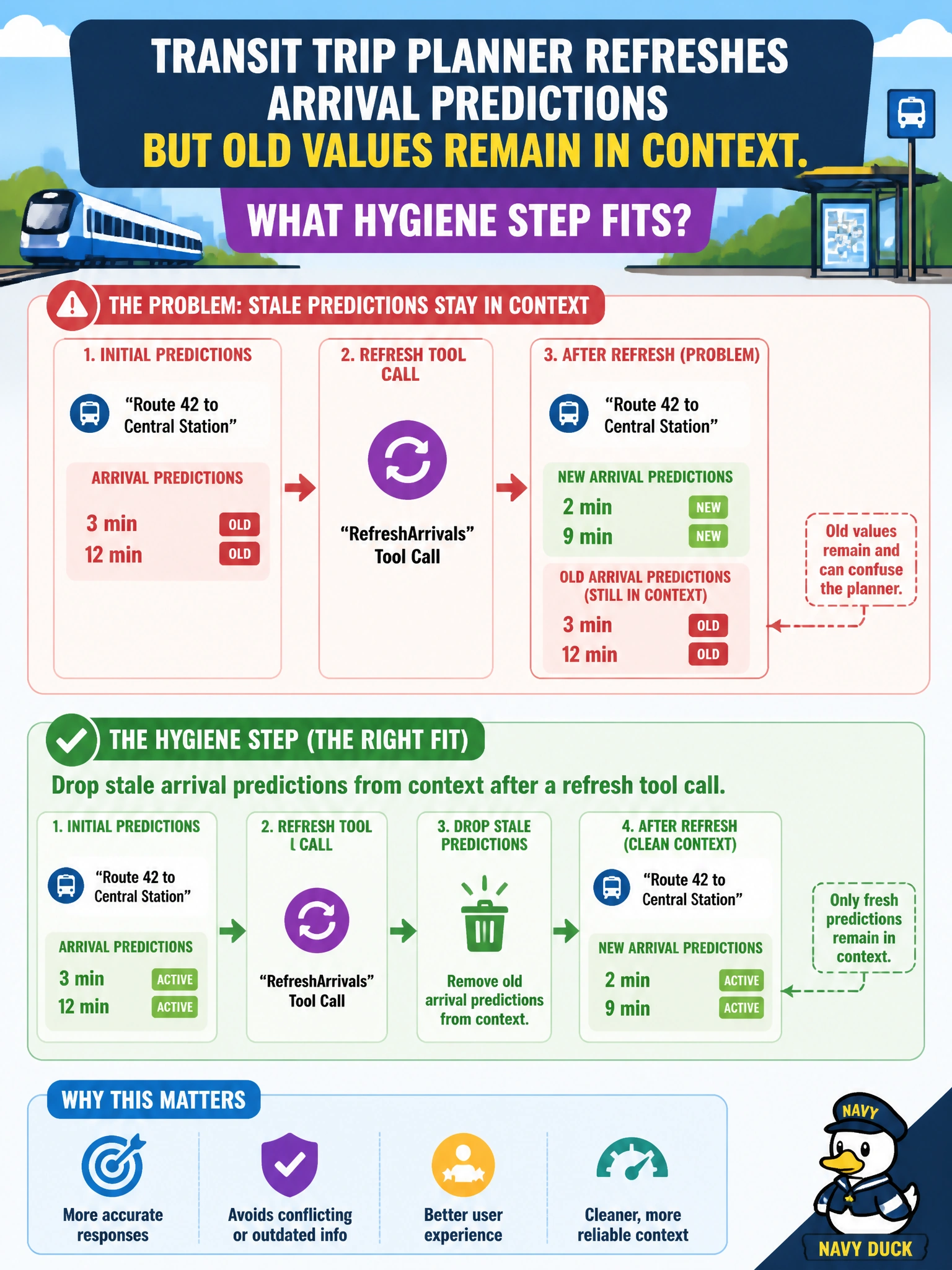
A transit trip planner refreshes arrival predictions but old values remain in context. What hygiene step fits?
Select an answer to reveal the explanation.
Short Explanation
Old arrivals lie—after you refresh, drop the stale predictions so riders don't chase ghosts.
Full Explanation
Dropping stale arrival predictions from context after a refresh tool call is the correct hygiene step for transit trip planners because outdated ETAs actively mislead riders. When a refresh tool returns new predictions, prior values are not historical color—they are competing facts. Removing the stale set ensures Claude reasons only over the fresh tool result, which is essential for real-time civic guidance where minutes matter for connections and accessibility planning.
Appending fresh arrival predictions to context alongside version timestamps fails because the stale values remain in context too, and the model may still cite the old times, producing contradictory rider advice. Moving fresh arrival predictions to background memory for later trips fails because it removes the just-refreshed data from the active context, so the planner cannot use it for the current rider’s trip. Blending stale and fresh predictions into averaged arrival estimates fails because it mixes outdated times with current ones, creating inaccurate ETAs that mislead riders about real arrival times.
Exam caveat: some workflows need a short audit trail of prior ETAs for explaining changes; if retained, label them explicitly as superseded history rather than live predictions so they cannot be mistaken for current truth. Operational check: seed context with stale arrivals, invoke refresh, assert the pruner removes or relabels old ETAs, and confirm the next Claude answer references only the fresh prediction set in rider-facing language.