
A housing authority must estimate Claude spend under projected case volume before go-live. What planning step fits?
Select an answer to reveal the explanation.
Short Explanation
Don't wait for the first invoice shock—model monthly Claude cost against projected housing case volume before go-live.
Full Explanation
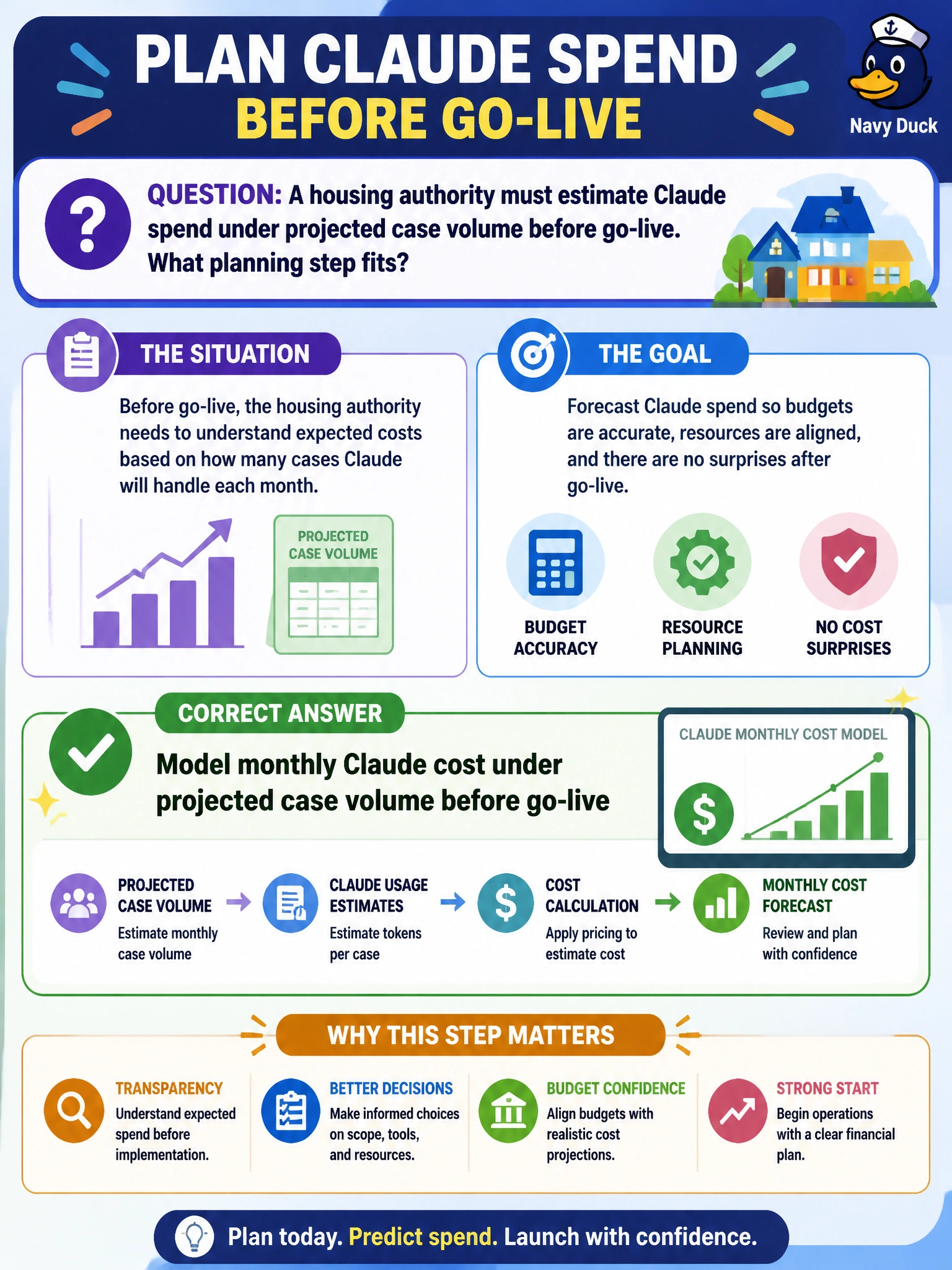
Modeling monthly Claude cost under projected housing case volume before go-live is the required planning step because housing authorities must defend budgets before applicants depend on the bot. Volume-based forecasts translate expected cases, turns per case, tokens per turn, and model mix into a monthly spend range leadership can approve or reject. Doing this pre-production prevents the classic civic failure mode of discovering AI invoices only after go-live when cutting the bot would harm residents mid-process.
Estimating human review staffing cost for projected case volume before go-live fails because staffing is a separate budget line and does not estimate the Claude API spend the authority must approve. Measuring average model latency under projected peak concurrency before go-live fails because latency testing measures performance, not the monthly Claude cost required for budget planning. Validating triage accuracy across housing case types before go-live fails because accuracy validation checks decision quality, not the Claude cost forecast leadership needs.
Exam caveat: forecasts should include retries, tool-call overhead, and seasonal application spikes—not only the happy-path median case—or actuals will systematically beat the model. Operational check: build a spreadsheet or FinOps model from pilot telemetry (cases/day, tokens/case), run low/expected/high volume scenarios, attach the range to the go-live checklist, and require finance sign-off before production keys are enabled.