
A transit analytics job must avoid runaway overnight Claude spend on long reports. What budgeting technique fits?
Select an answer to reveal the explanation.
Short Explanation
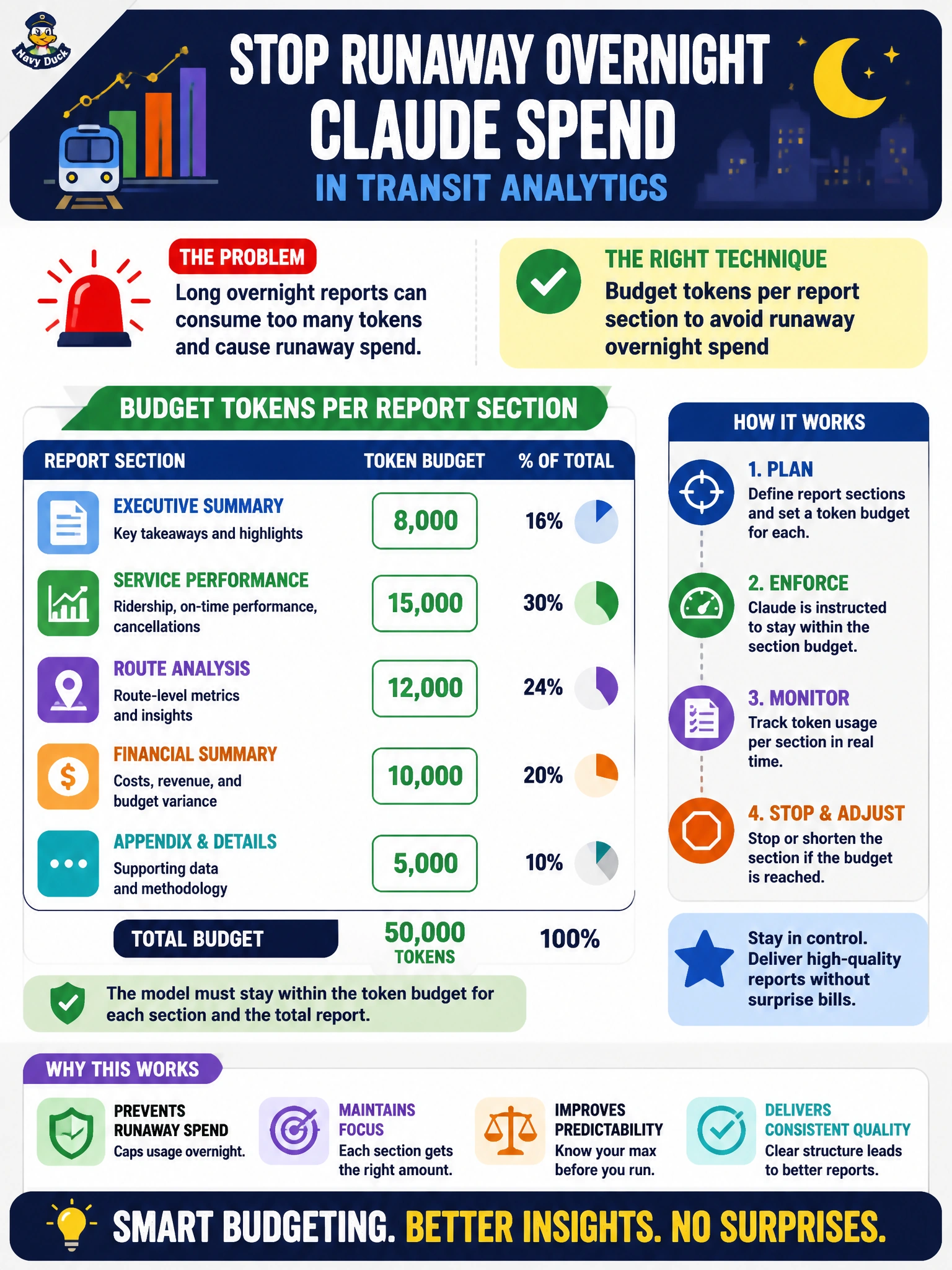
Overnight jobs love to feast—budget tokens per report section so the analytics bill doesn't runaway.
Full Explanation
Budgeting tokens per report section to avoid runaway overnight Claude spend is the right control for transit analytics jobs that generate long multi-section reports while operators sleep. Section budgets bound worst-case cost, force summarization or truncation when a section grows verbose, and keep batch windows from silently consuming the agency’s entire monthly quota. The technique aligns engineering limits with municipal overnight batch economics rather than hoping job authors stay concise.
Monitoring monthly token totals with a finance dashboard review fails because it only surfaces overspend after the nightly batch has already run, so a single pathological section can still dominate the night’s Claude bill and starve morning rider-facing workloads before anyone sees the dashboard. Pooling tokens across nightly jobs for shared batch consumption fails conceptually—it lets one verbose report silently draw down the shared pool, so there is no per-section bound to protect morning rider-facing workloads. Caching frequent nightly timetable queries to lower repeated inference use fails because it reduces repeat inference but does nothing to cap a single long report section, so a verbose section can still blow past the overnight budget without any token limit.
Exam caveat: per-section budgets must leave headroom for retries and tool calls nested inside a section, or legitimate sections will fail while spend still climbs through repeated attempts. Operational check: run a synthetic overnight report with an intentionally verbose section, confirm the section hits its token budget and emits a controlled partial result plus alert, and verify sibling sections still complete within the night’s total spend envelope.