
A county FinOps dashboard must attribute Claude spend across departments. Which practice fits?
Select an answer to reveal the explanation.
Short Explanation
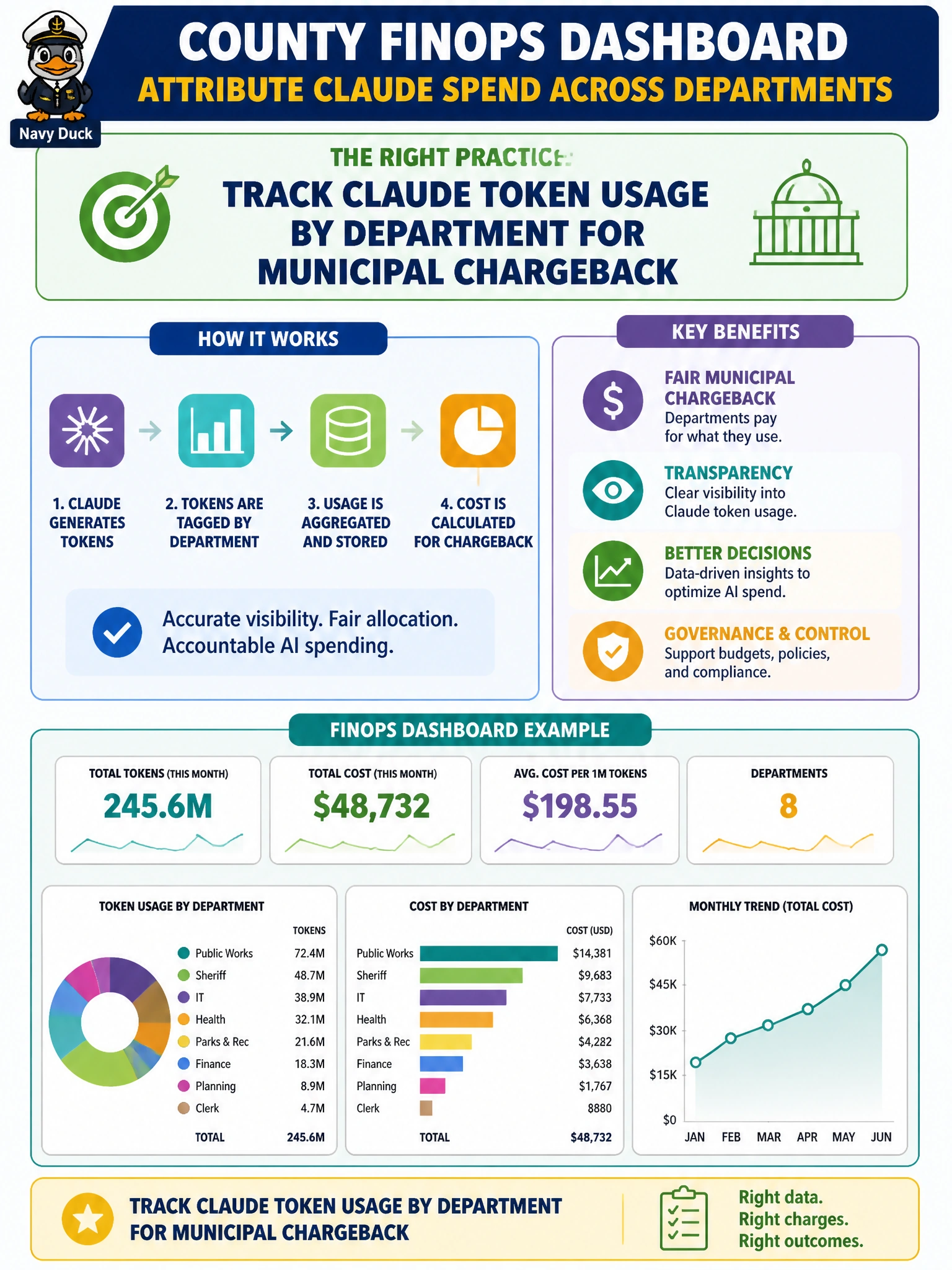
Somebody's paying for those tokens, so you track usage by department instead of lumping it into one county bucket. Headcount guesses and latency graphs won't tell you who's actually driving the Claude bill.
Full Explanation
Tracking Claude token usage by department for municipal chargeback is the right FinOps practice because counties need attributable spend to fund AI capacity fairly across public works, planning, health, and other units. Department-level metering turns opaque invoices into actionable chargeback or showback, reveals runaway consumers, and supports budget hearings with evidence rather than averages. Attribution also creates incentives: departments that cache prompts and right-size models see their own costs fall.
Consolidating Claude spend into a central county cost center fails because it obscures department-level attribution, prevents stewardship, and makes overruns a central surprise instead of a managed signal. Allocating Claude budget by department headcount for planning estimates fails conceptually—it decouples spend from actual token use, punishes light users, subsidizes heavy users, and destroys the feedback loop FinOps needs. Monitoring Claude latency by department for service performance reviews fails because latency data alone creates no audit trail of token spend for procurement, grant reporting, or incident forensics on Claude costs.
Exam caveat: department tags must be applied at request time (API key, project, or metadata); retroactive guessing from shared keys will misallocate costs and undermine trust in the chargeback. Operational check: tag staging traffic by department for one billing cycle, reconcile summed token costs to the provider invoice within an agreed variance, and publish a chargeback report departments can contest with request-level evidence.