
A public-health intake bot must feed symptom checklist fields into an EHR API. Which output design fits?
Select an answer to reveal the explanation.
Short Explanation
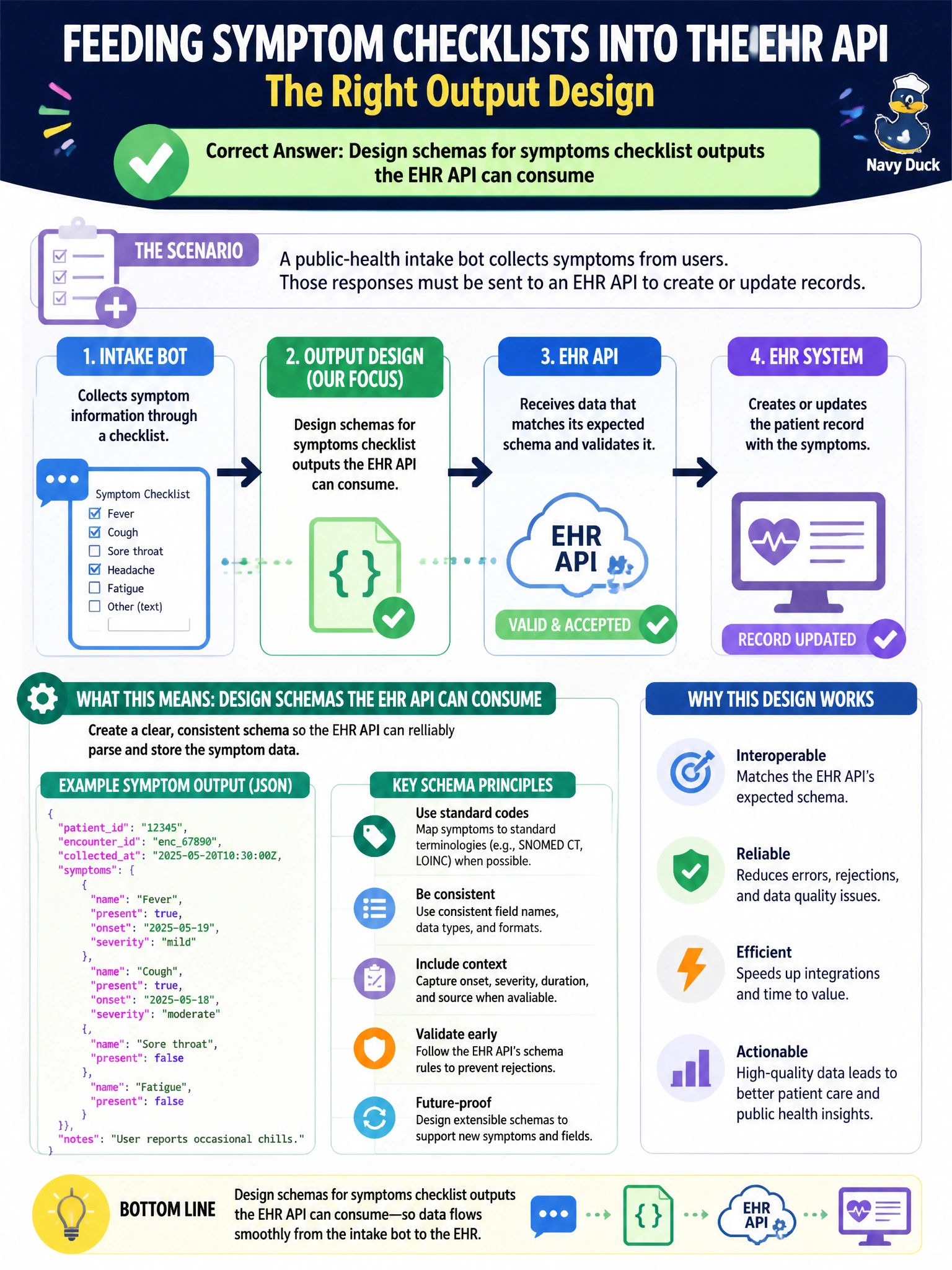
EHRs eat fields, not patient education articles meant for portal display. Design a symptoms checklist schema Claude fills so the health system can actually ingest it.
Full Explanation
Public-health intake bots that feed EHRs need machine-readable symptom fields, not patient education articles meant for portal display. Designing schemas for symptoms checklist outputs the EHR API can consume works because structured keys, enums, and required fields map cleanly to clinical intake interfaces, reduce parsing errors, and make validation possible before write. Claude can still gather conversational context, then emit the checklist schema the integration expects. Designing schemas for patient education articles the portal can display fails because education content is not symptom checklist data the EHR API can ingest, and portal display schemas do not solve structured intake integration. Formatting checklist outputs as PDF handouts the clinic printer can produce fails because print-ready PDFs are not machine-readable fields the EHR API can consume, and printer output cannot be validated or written as structured clinical data. Structuring checklist fields as appointment reminders the SMS gateway can deliver fails because SMS reminder text is not symptom checklist data for the EHR API, and reminder delivery does not populate intake fields or support clinical validation. Exam caveat: a schema that the EHR can consume still requires consent, minimum necessary data, and clinical workflow ownership—structure does not equal clinical authorization to chart. Operational check: publish a symptoms checklist JSON schema aligned to the EHR API, validate Claude outputs in a staging integration before production writes, and alert when required fields are missing or enums are out of range.