
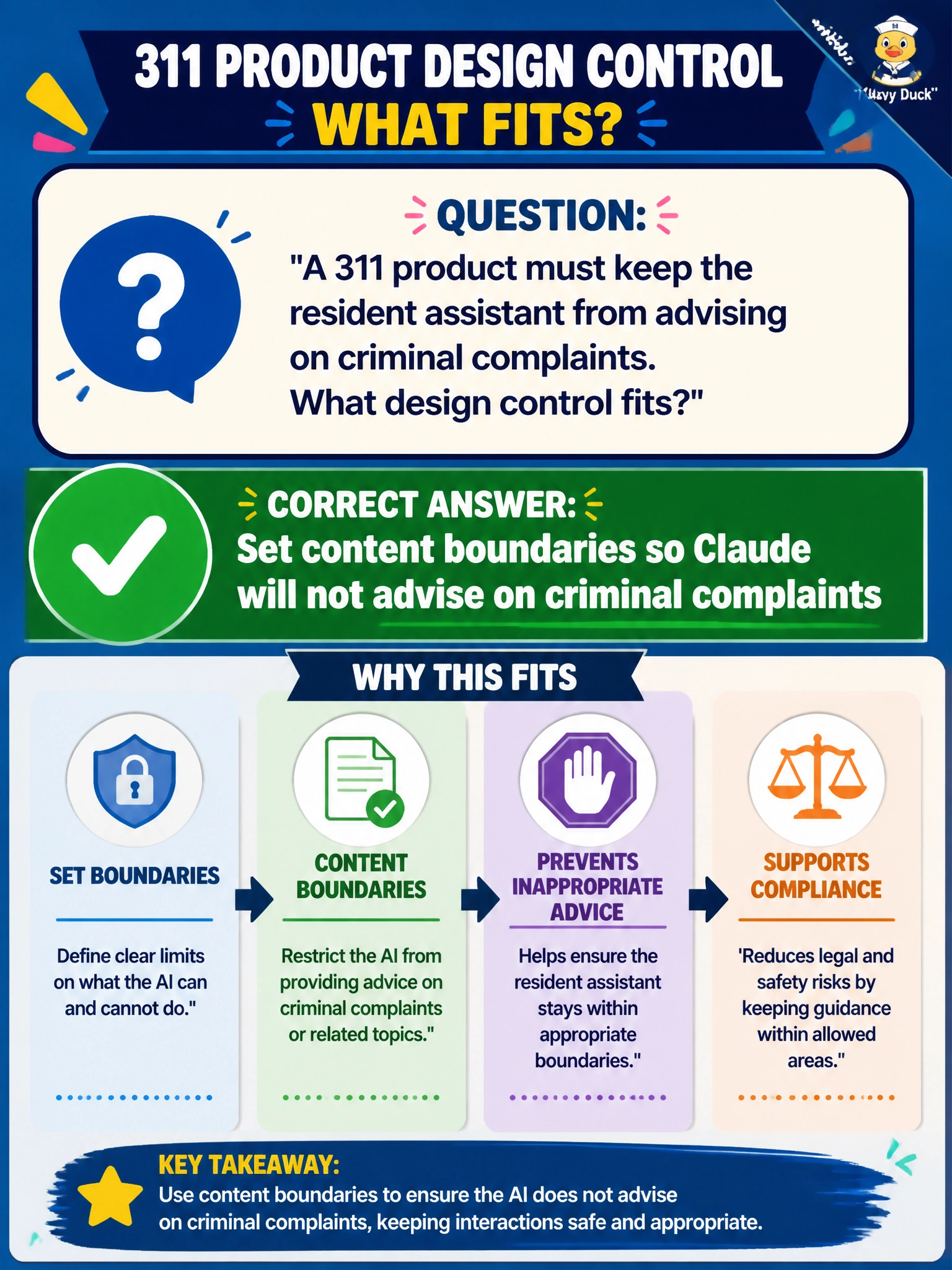
A 311 product must keep the resident assistant from advising on criminal complaints. What design control fits?
Select an answer to reveal the explanation.
Short Explanation
311 is for potholes and missed trash—not courtroom coaching. Draw a bright content boundary so Claude stays out of criminal-complaint advice.
Full Explanation
Three-one-one products that must keep the resident assistant from advising on criminal complaints should set content boundaries so Claude will not advise on those matters. Explicit content boundaries fit because 311 scope is municipal service intake—potholes, missed trash, code issues—not criminal-complaint counsel. Encoding refusals and escalation paths in system instructions and product policy keeps the assistant inside risk tolerance and routes residents to appropriate channels when they raise criminal topics. Adding a legal disclaimer while continuing to advise on complaint filings fails by concept: a disclaimer does not erase the boundary violation, and advising on filings still steps outside municipal intake into criminal-adjacent counsel. Logging complaint-related chats for later quality review and staff coaching fails by concept: after-the-fact logging is not a preventive control and does not stop the assistant from advising on criminal complaints in the moment. Summarizing parking and sanitation ordinances for general resident questions fails by concept: it addresses general municipal information but does not set any boundary preventing criminal-complaint advice. Exam caveat: boundaries should include clear referral language (for example emergency services or official complaint channels) without providing step-by-step criminal-procedure advice, and jailbreak/resilience tests belong in release criteria because users may attempt to override refusals. Operational check: send staged 311 prompts that request criminal-complaint advice, assert the assistant refuses and redirects per policy, and confirm ordinary service requests still complete without over-refusal.