
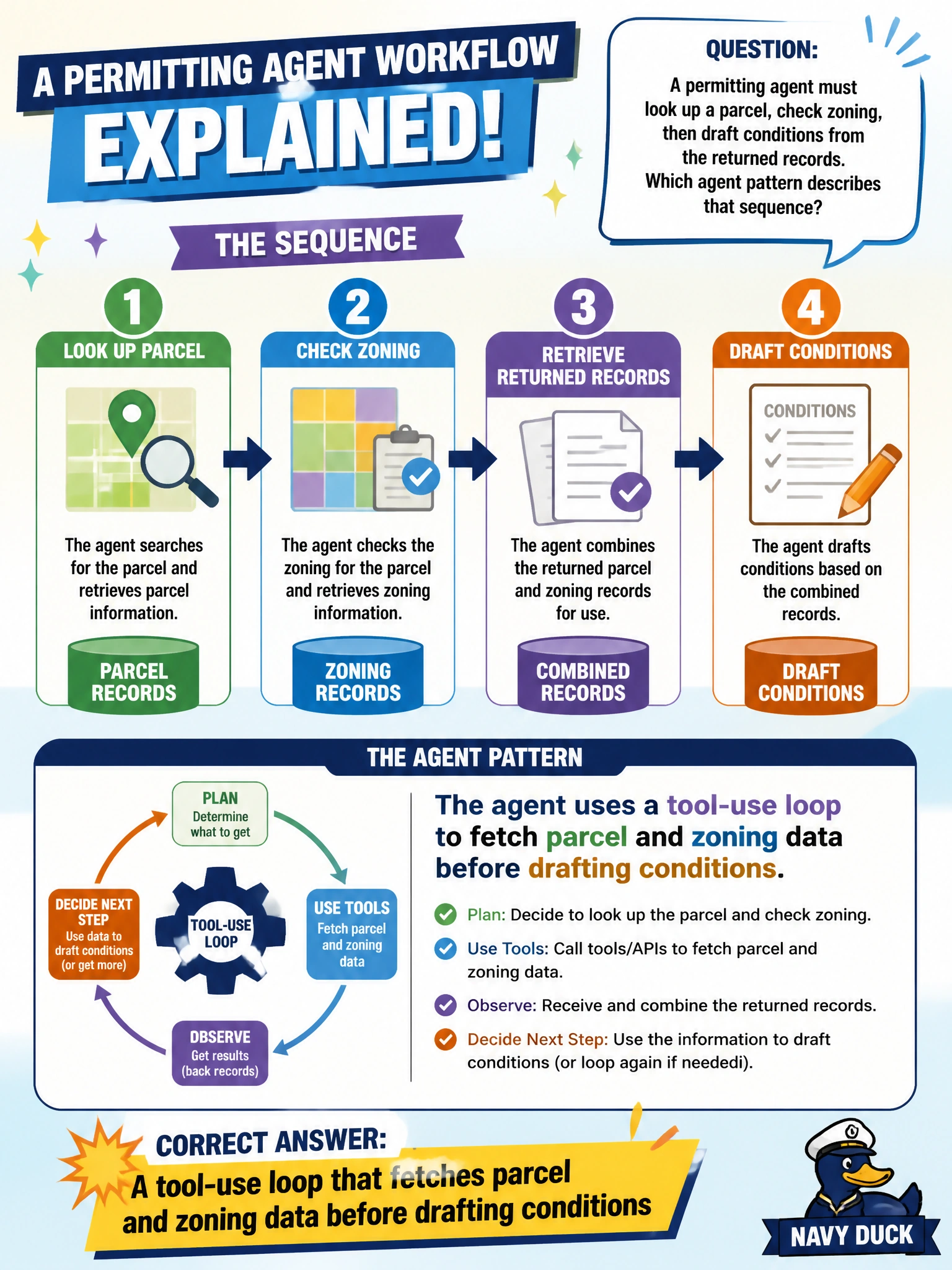
A permitting agent must look up a parcel, check zoning, then draft conditions from the returned records. Which agent pattern describes that sequence?
Select an answer to reveal the explanation.
Short Explanation
Parcel, then zone, then draft—like pulling the property file before writing the conditions letter. The tool-use loop is Claude asking the clerk's system, reading the reply, then writing.
Full Explanation
A tool-use loop that fetches parcel and zoning data before drafting conditions describes the permitting sequence where Claude must look up a parcel, check zoning, then draft from returned records. Tool-use loops interleave model reasoning with tool calls and tool results: retrieve parcel facts, retrieve zoning constraints, then condition the draft on those records. That grounds municipal conditions in systems of record instead of hallucinated parcel trivia.
A prompt chain that drafts conditions first and then looks up parcel records fails by concept because it inverts the required order: the draft must be conditioned on retrieved parcel and zoning records, not written before those lookups occur. A parallel subagent pattern that fetches parcel and zoning records simultaneously fails the sequence because the scenario requires an ordered lookup—parcel first, then zoning, then draft—rather than parallel retrieval that skips the sequential dependency. A routing pattern that classifies permit type and applies a canned conditions template fails the agent loop: without retrieving the specific parcel and zoning records first, the draft cannot be conditioned on the actual lookups.
Exam caveat: tool-use loops require trustworthy tools and validation that drafts cite returned record IDs. If a lookup fails, the agent should stop or escalate rather than draft from memory.
Operational check: implement parcel then zoning tool calls in order, pass structured results into the draft step, reject drafts lacking record citations, log tool I/O per application ID, and sample outputs against GIS/zoning source data weekly.