
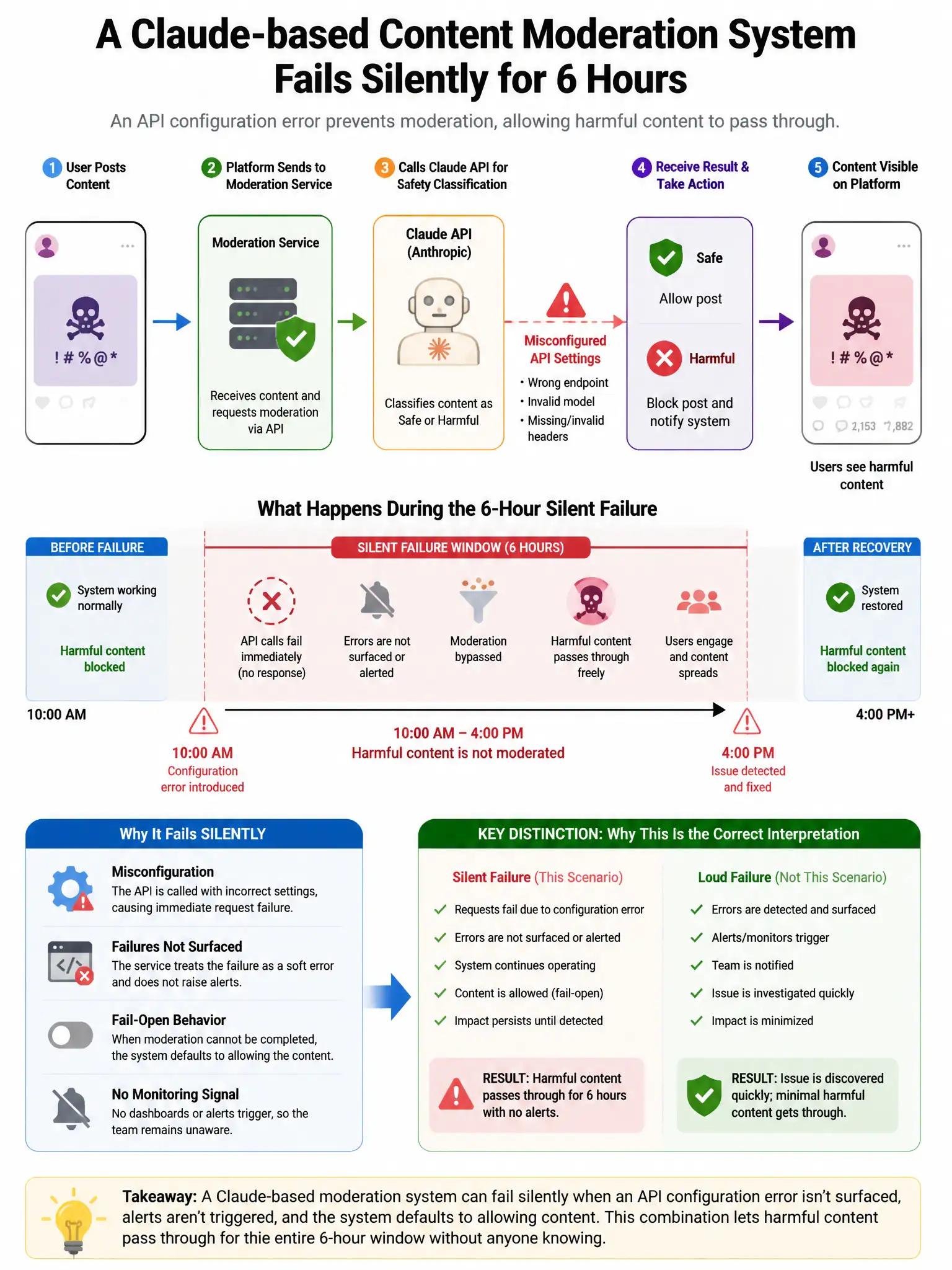
A Claude-based content moderation system that serves a social media platform fails silently for 6 hours due to an API configuration error, during which harmful content passes through unmoderated. The architect must design an incident response and disclosure procedure. What framework is most appropriate?
Select an answer to reveal the explanation.
Short Explanation
Here's the deal — you need an incident response plan that detects the failure, restores moderation with backup, assesses harm, finds root cause, and discloses to trust and safety. That's the responsible AI incident response path.
Full Explanation
The appropriate framework is an incident response plan: detect the failure via monitoring alerts, contain it by switching to backup moderation, conduct a post-mortem to identify root causes, assess user harm from unmoderated content during the window, and disclose the incident to the platform's trust and safety team with scope, duration, and remediation steps. Responsible AI incident response requires detection and containment, meaning moderation is restored immediately; harm assessment, meaning you understand what content passed through; root cause analysis, meaning recurrence is prevented; and appropriate disclosure, meaning the platform's trust and safety team needs the scope to assess user harm and regulatory obligations. This is the standard responsible disclosure framework. Fixing the configuration error quietly and not disclosing the incident to avoid reputational damage is wrong because silent remediation without disclosure violates trust and safety teams' ability to assess harm to users and may violate regulatory requirements for incident disclosure under data protection and platform safety regulations. Immediately deleting all content posted during the 6-hour window to remove potentially harmful posts is wrong because it would remove legitimate content along with harmful content, causing collateral harm to users whose benign posts were caught in a blanket deletion; targeted removal based on post-hoc review is more appropriate. Reporting the incident to Anthropic's API team and awaiting guidance before taking any other action is wrong because waiting for Anthropic guidance before taking any action delays containment — switching to backup moderation, the immediate harm mitigation step, is the architect's responsibility and should not wait for external guidance.