
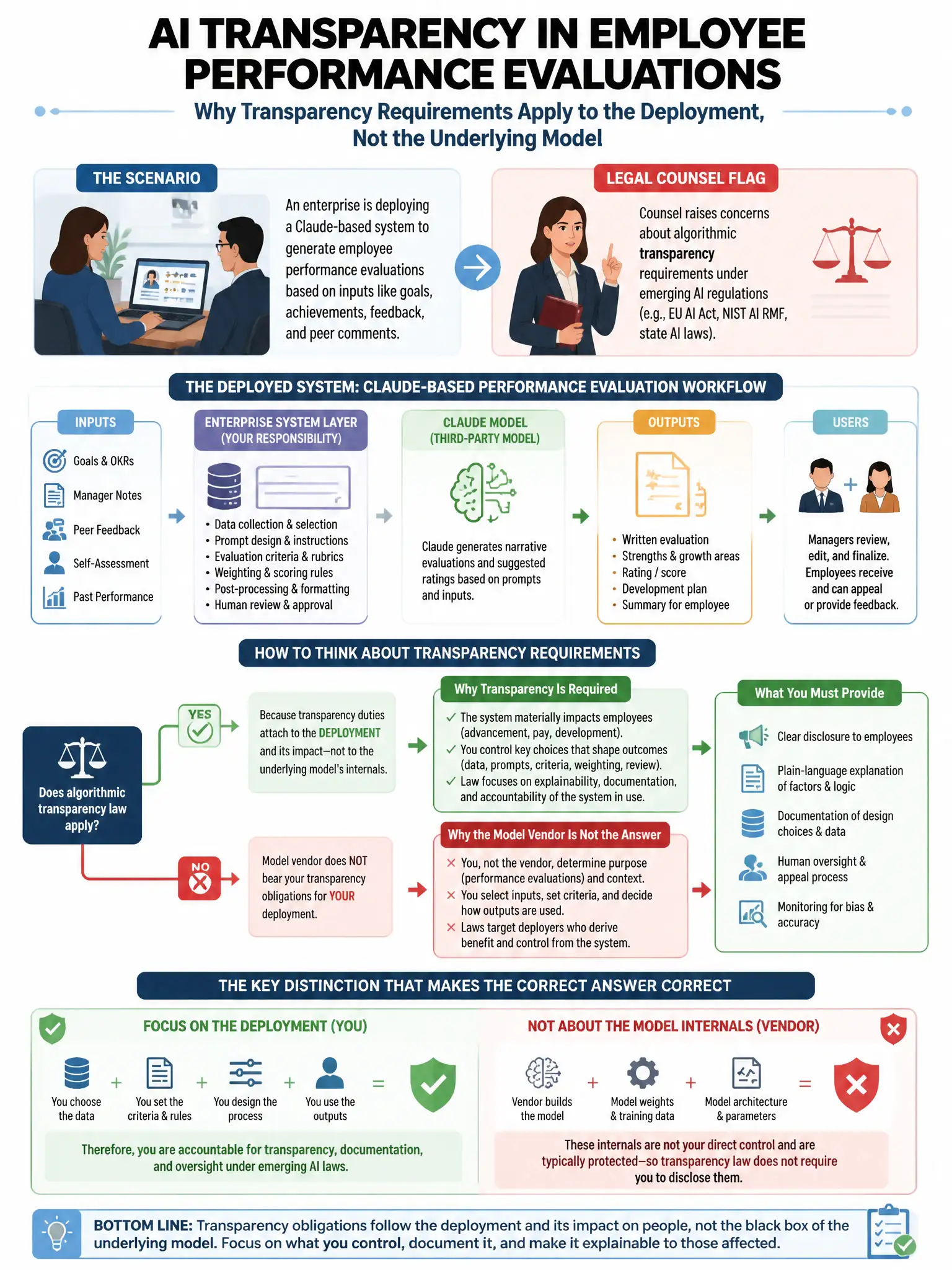
An enterprise is deploying a Claude-based system for employee performance evaluations. Legal counsel flags concerns about algorithmic transparency requirements under emerging AI regulations. An architect must design transparency artifacts to support regulatory compliance. Which documentation approach most directly satisfies AI transparency requirements for this use case?
Select an answer to reveal the explanation.
Short Explanation
Here's the deal — you need the comprehensive model card because AI transparency rules want the real story: what the system does, its limits, bias testing, and human oversight. For employee evaluations, that's the documentation regulators actually expect.
Full Explanation
The comprehensive model card approach is correct because AI transparency regulations, including the EU AI Act and emerging US state laws, require documentation of what the system does, what data it uses, known limitations and biases, performance across demographic groups (critical for employment decisions), and human review processes. The model card that covers model identity and version, intended use case and scope, known limitations and failure modes in performance evaluation contexts, evaluation methodology and metrics, bias testing results across demographic groups, human oversight procedures, and escalation paths for contested decisions satisfies the substance of transparency requirements. Publishing the system prompt used for the evaluation tool is wrong because it reveals implementation details that may be proprietary and does not address the substantive transparency requirements; regulators and affected employees want to know about bias testing and appeal processes, not implementation prompts. Providing users with a general description of how AI systems work is wrong because it is too abstract; regulators require specifics about this particular system's evaluation methodology, known failure modes, and demographic performance differences. Documenting the API calls made during each evaluation session for audit trail purposes is wrong because it documents the technical execution of individual evaluations but does not fulfill the systemic transparency requirements about overall system design, bias testing, and oversight procedures.