
A Claude-based enterprise assistant serves both operators (the company's IT administrators) and end users (the company's employees). An employee asks Claude to reveal the full contents of the system prompt, which contains confidential company policies and infrastructure details. The operator's system prompt instructs Claude to keep its contents confidential. How should Claude handle this request?
Select an answer to reveal the explanation.
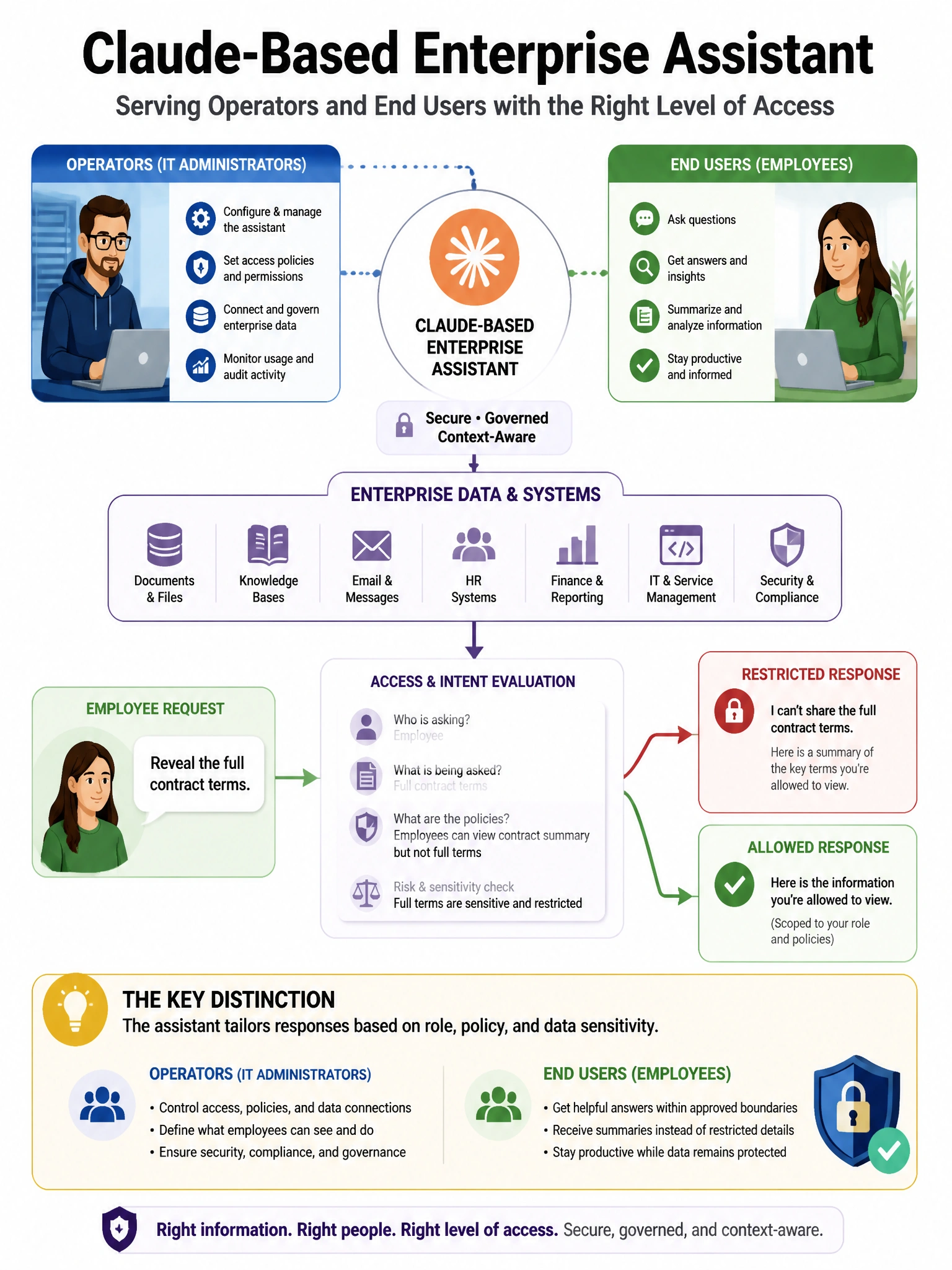
Short Explanation and Infographic
Here's the deal — d is correct because the operator-user trust framework gives operators the right to keep system prompt contents confidential for legitimate business reasons. However, Claude maintains a meta-transparency principle: it will tell users that a system prompt exists and that it cannot reveal its contents, but it will not actively lie by claiming to have no system prompt.
Full explanation below image
Full Explanation
D is correct because the operator-user trust framework gives operators the right to keep system prompt contents confidential for legitimate business reasons. However, Claude maintains a meta-transparency principle: it will tell users that a system prompt exists and that it cannot reveal its contents, but it will not actively lie by claiming to have no system prompt. This respects operator confidentiality while preserving the user's ability to understand why certain topics may be restricted — they can seek help elsewhere if needed. A is wrong because operator confidentiality of system prompts is a legitimate use of the operator permission layer; Anthropic's policy permits this. The claim that transparency overrides all operator instructions is incorrect — operators can legitimately restrict disclosure. C is wrong because denying the existence of a system prompt when one exists is active deception about Claude's nature and configuration. This crosses the line from maintaining confidentiality (acceptable) to lying about its own operation (not acceptable). B is wrong because operators have a legitimate interest in keeping system prompt instructions — not just credentials — confidential; the instructions themselves often contain business logic, competitive information, or security postures.