
An architect needs Claude to reason through a complex multi-step financial analysis, then call a get_market_data tool with specific parameters derived from that reasoning, incorporate the tool result, and reason further before producing a final report. The team is evaluating extended thinking for this use case. What is the correct design for extended thinking with interleaved tool use?
Select an answer to reveal the explanation.
Short Explanation and Infographic
Here's the deal — c is correct because Claude's extended thinking supports interleaved tool use: the model can produce a thinking block, then emit a tool_use block to call an external function, receive the tool_result in the next turn, and continue with additional thinking before the final answer. This is the intended pattern for complex agentic reasoning tasks.
Full explanation below image
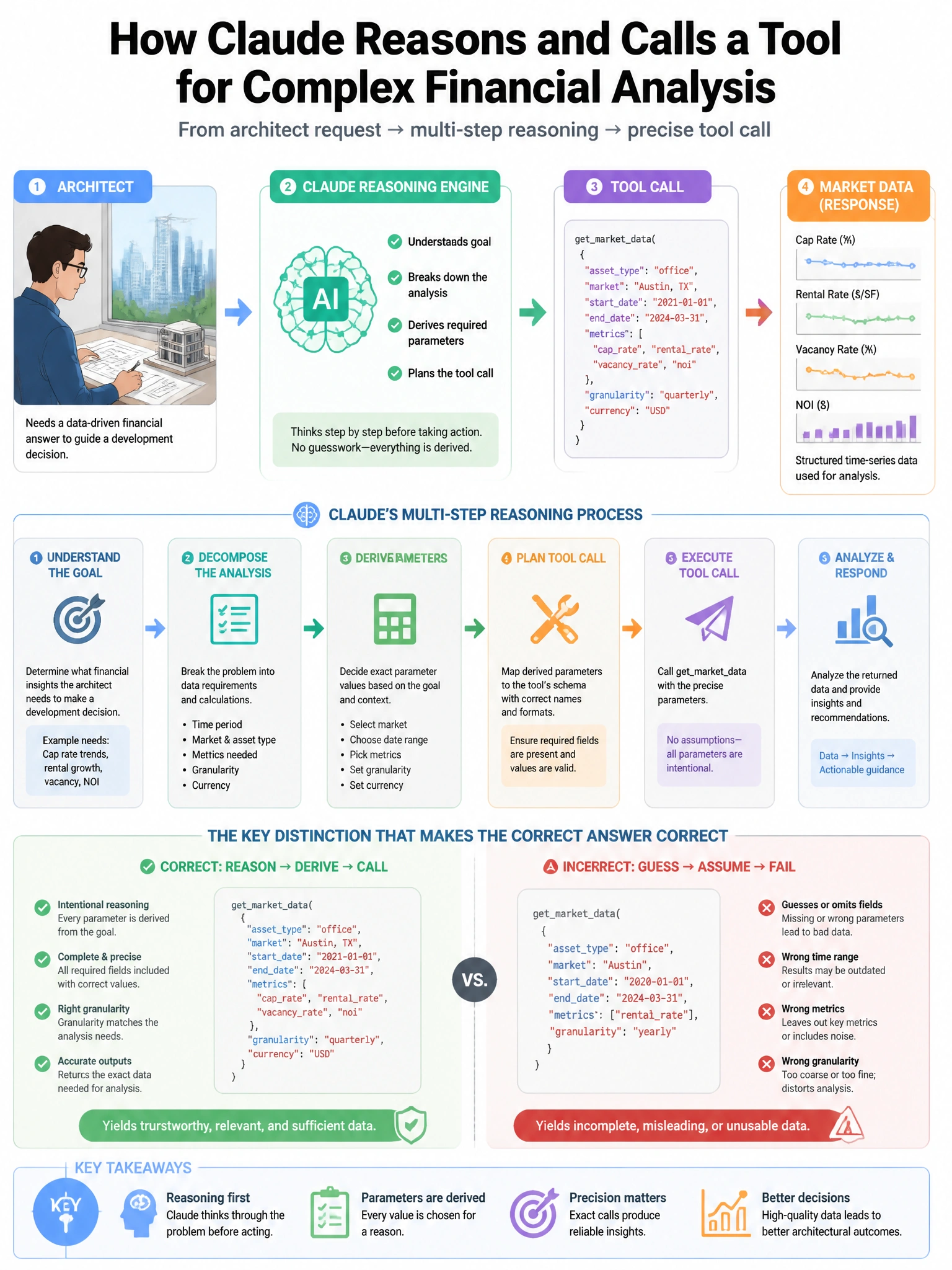
Full Explanation
C is correct because Claude's extended thinking supports interleaved tool use: the model can produce a thinking block, then emit a tool_use block to call an external function, receive the tool_result in the next turn, and continue with additional thinking before the final answer. This is the intended pattern for complex agentic reasoning tasks. A is wrong because tool definitions are not placed in the system prompt — they are passed via the tools parameter in the API request, and the 'automatic interleaving without configuration' claim is misleading. B is wrong because it incorrectly states that tool calls can only occur after thinking is complete; interleaving is supported, not prohibited. D is wrong because extended thinking and tool use are not mutually exclusive — this is a common misconception and chaining two separate calls would break the continuity of the reasoning chain.