
A SaaS application charges users based on Claude API token consumption. The billing system must accurately attribute tokens to users before invoices are generated. An architect needs a reliable way to count tokens. Which approach is most accurate for pre-request token estimation?
Select an answer to reveal the explanation.
Short Explanation and Infographic
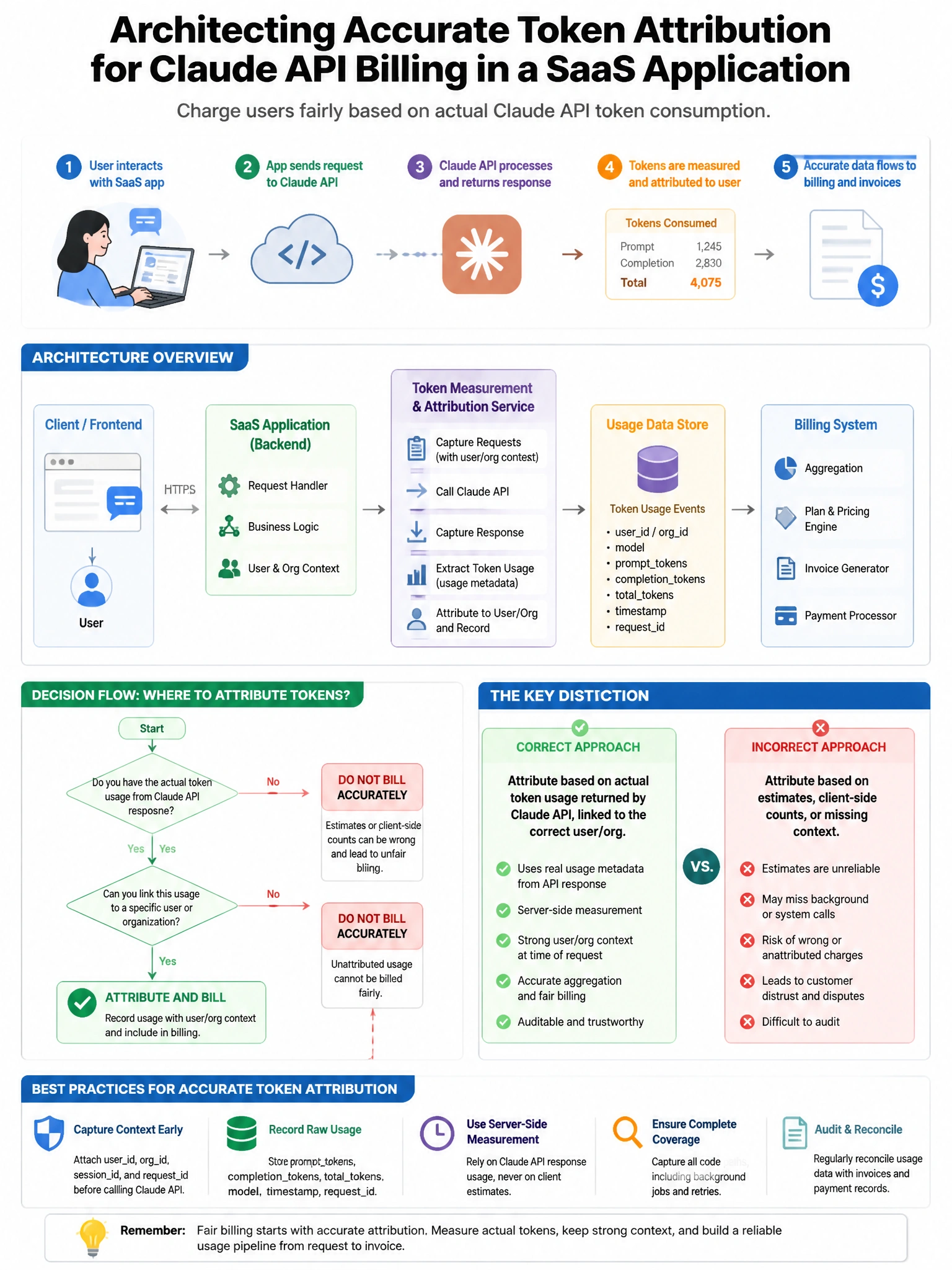
Here's the deal — c is correct because the Anthropic API provides a token counting endpoint that applies the exact same tokenizer used during inference — this gives precise token counts before the request is sent, enabling accurate pre-billing attribution and budget enforcement. B is wrong as a primary strategy: post-hoc attribution from the usage field is accurate but reactive — by the time you know the exact token count, the API call has already been made and charged; pre-request counting enables budget enforcement and cost caps.
Full explanation below image
Full Explanation
C is correct because the Anthropic API provides a token counting endpoint that applies the exact same tokenizer used during inference — this gives precise token counts before the request is sent, enabling accurate pre-billing attribution and budget enforcement. B is wrong as a primary strategy: post-hoc attribution from the usage field is accurate but reactive — by the time you know the exact token count, the API call has already been made and charged; pre-request counting enables budget enforcement and cost caps. A is wrong because the character/4 heuristic is inaccurate for non-ASCII content, code, and structured data — errors compound across thousands of requests, creating billing disputes. D is wrong because whitespace tokenization does not match Claude's BPE tokenizer — BPE tokenizes subword units that do not align with word boundaries, especially for code, symbols, and technical content.