
A municipal hoop-house helper passed a one-time review in March and has not been watched since. Drift, new toxic completions, and a public bucket appeared in July. What does governance still require?
Select an answer to reveal the explanation.
Short Explanation
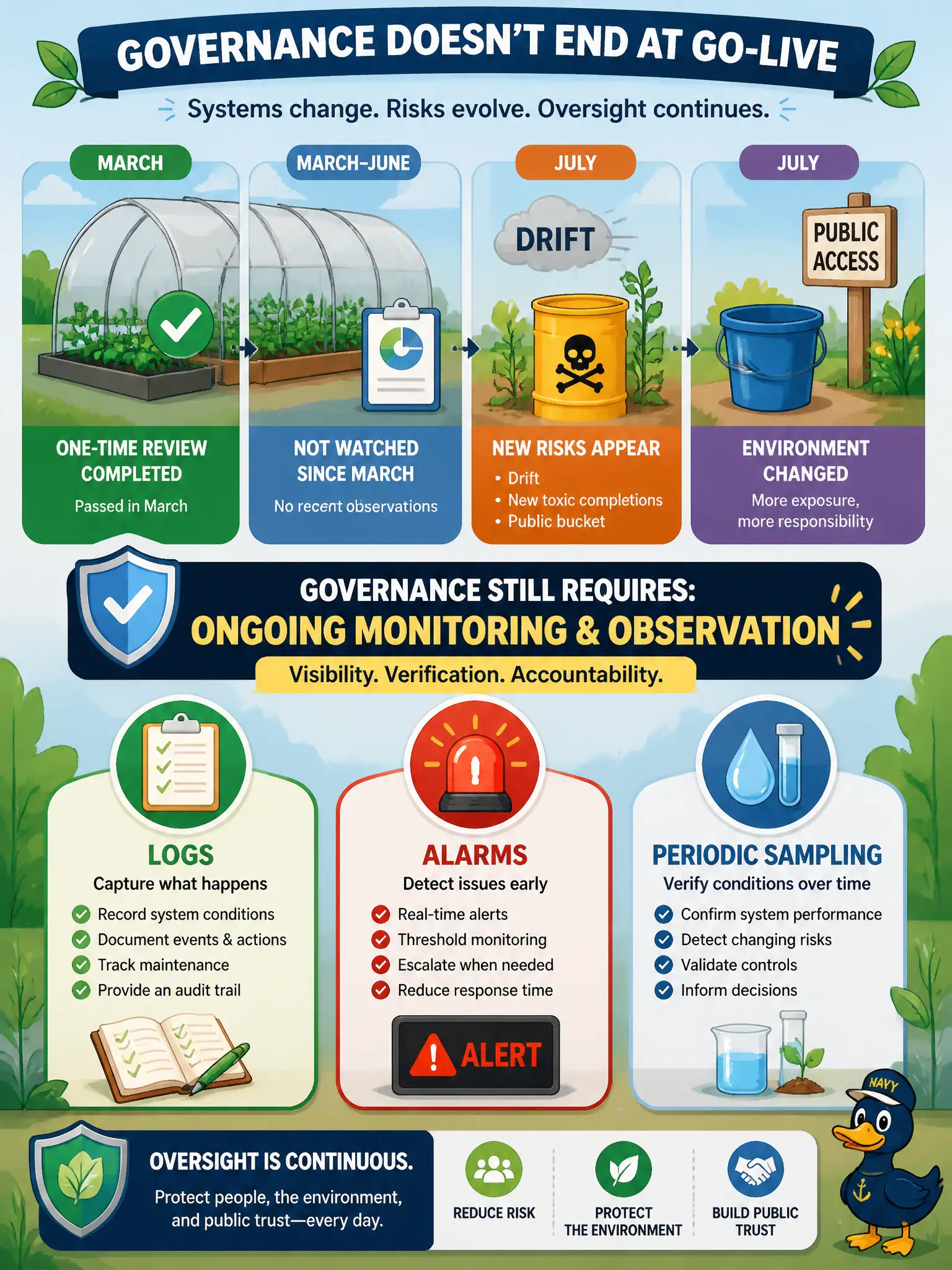
Think of a March sign-off and July drift, new toxic completions, and a public bucket. Governance still wants logs, alarms, and periodic sampling after go-live. One launch review does not cover July.
Full Explanation
A municipal hoop-house helper that passed a one-time review in March and then developed drift, new toxic completions, and a public bucket in July shows why governance still requires ongoing monitoring and observation after go-live. Logs, alarms, and periodic sampling catch configuration drift and emerging harmful outputs that a launch packet cannot foresee. Continuous watch is part of operating AI safely, not an optional extra after the ribbon cutting.
A single launch sign-off fails by concept: March evidence does not cover July failures, and static approval freezes neither threats nor misconfigurations. Amazon Polly fails because speech synthesis does not watch buckets for public exposure or detect toxic completions. Raising temperature fails because sampling settings do not create alarms, sample answers, or detect a public bucket.
Exam caveat: monitoring needs actionable thresholds and named owners—alarms without on-call response recreate the July gap and look like governance theater. Operational check: enable bucket-public and toxicity alarms for the hoop-house helper, sample completions on a weekly cadence, review CloudTrail and Config for drift since March, and close findings before the helper remains available to the public.