
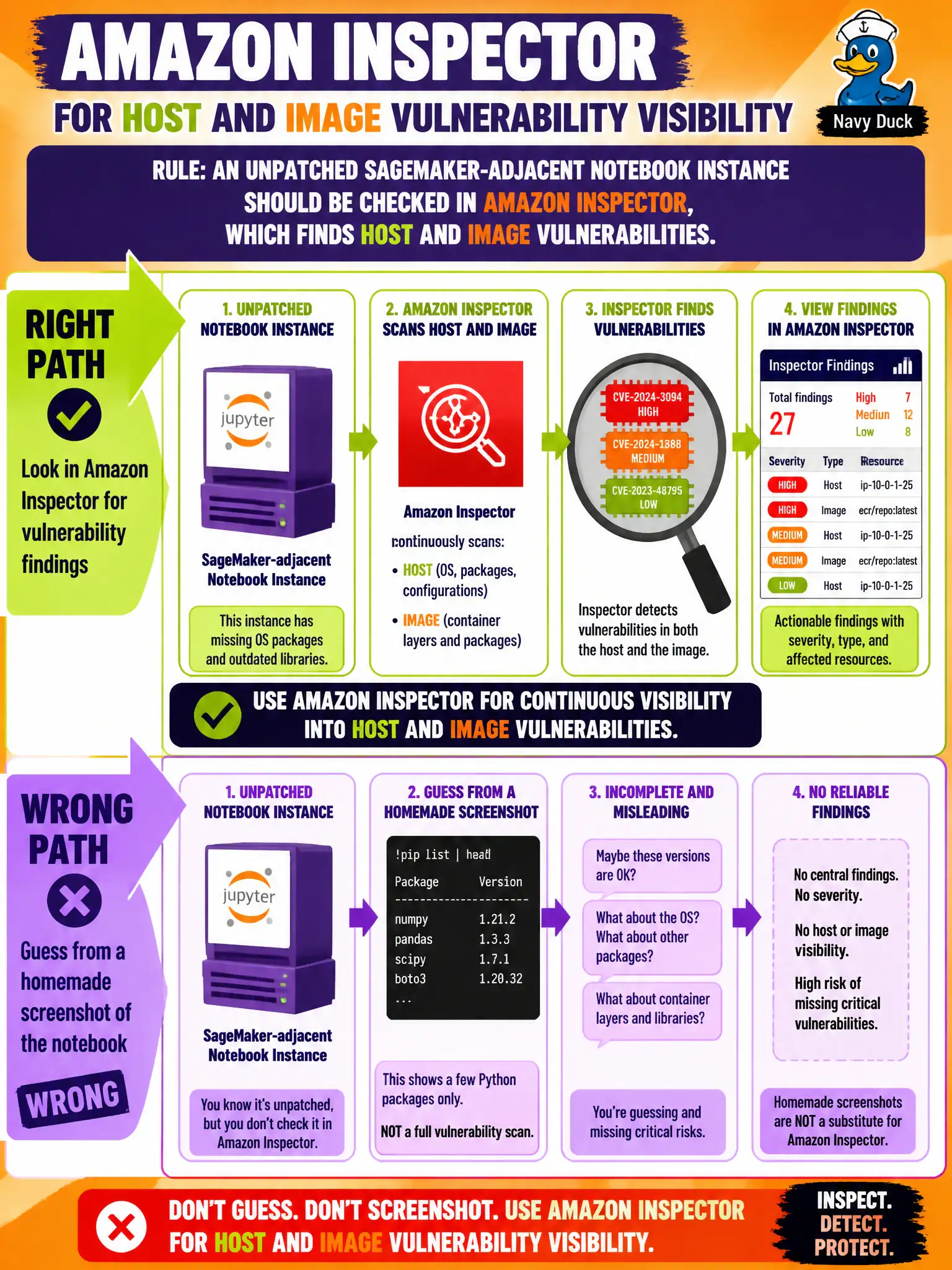
A historic potash-works museum runs a small SageMaker-adjacent notebook instance that has gone unpatched. Where should the team look for vulnerability findings?
Select an answer to reveal the explanation.
Short Explanation
Think of an unpatched SageMaker-adjacent notebook. Look in Amazon Inspector for host and image findings. A model card does not list those CVEs.
Full Explanation
An unpatched SageMaker-adjacent notebook instance at the potash-works museum needs vulnerability visibility for hosts and container images that sit next to AI workflows. Amazon Inspector is the service that scans for known CVEs and reports findings so the team can patch, isolate, or replace the notebook. That host-and-image finding path keeps AI-adjacent compute in the same vulnerability program as other municipal workloads rather than treating notebooks as exempt.
A model card fails by concept: cards explain model lineage and intended use; they do not list unpatched notebook CVEs or replace host scanning. Amazon Quick fails because dashboards visualize data—they do not patch hosts or substitute for vulnerability scanning of the instance. Raising temperature fails because generation randomness has no effect on operating-system or image patch levels and cannot heal an unpatched host.
Exam caveat: Inspector findings require a remediation cadence with owners and due dates; scanning without patching leaves the notebook exposed and can fail audit review. Operational check: enroll the notebook’s account and images in Inspector, open the findings for that instance, schedule patches for critical CVEs, re-scan to confirm the unpatched condition is cleared, and document the fix before museum staff reuse the notebook for production helpers.