
A volunteer cave-rescue cache helper is unsure which trailhead a caller named. What should a low-confidence signal do?
Select an answer to reveal the explanation.
Short Explanation
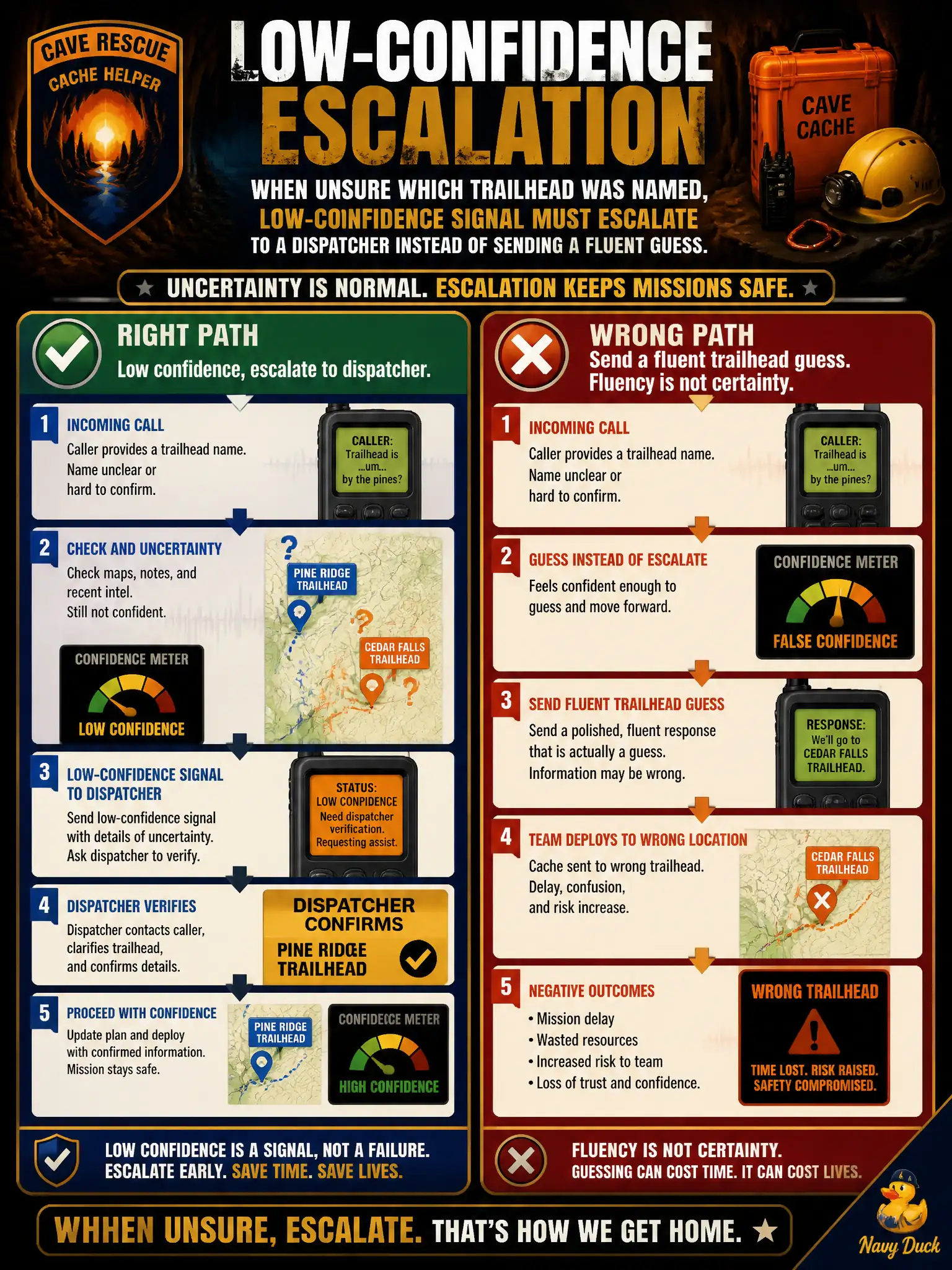
Think of an unsure trailhead on a cave-rescue call. A low-confidence signal should escalate to a dispatcher. A fluent guess is not a trailhead.
Full Explanation
When the cave-rescue cache helper is unsure which trailhead a caller named, a low-confidence signal should escalate to a dispatcher instead of sending a fluent guess. Confidence-aware routing is a safety control: uncertain location advice in rescue contexts can misdirect teams. Escalation, clarification questions, or handoff to a human preserves accuracy where model certainty is insufficient.
Silently sending the fluent guess because confidence never needs a human fails by concept: fluency without confidence is still a guess, and rescue routing cannot treat guesses as verified trailheads. Raising temperature fails because more randomness does not convert uncertainty into reliable geographic knowledge. A dashboard title fails because charts are not dispatchers and cannot accept an escalation or resolve the trailhead.
Exam caveat: thresholds for “low confidence” must be calibrated to the domain—rescue and medical contexts warrant stricter escalation than casual FAQ helpers. Operational check: feed ambiguous trailhead phrasings in staging, confirm low-confidence paths open a dispatcher handoff, and verify no auto-sent navigation advice leaves the helper when the score is below threshold.