
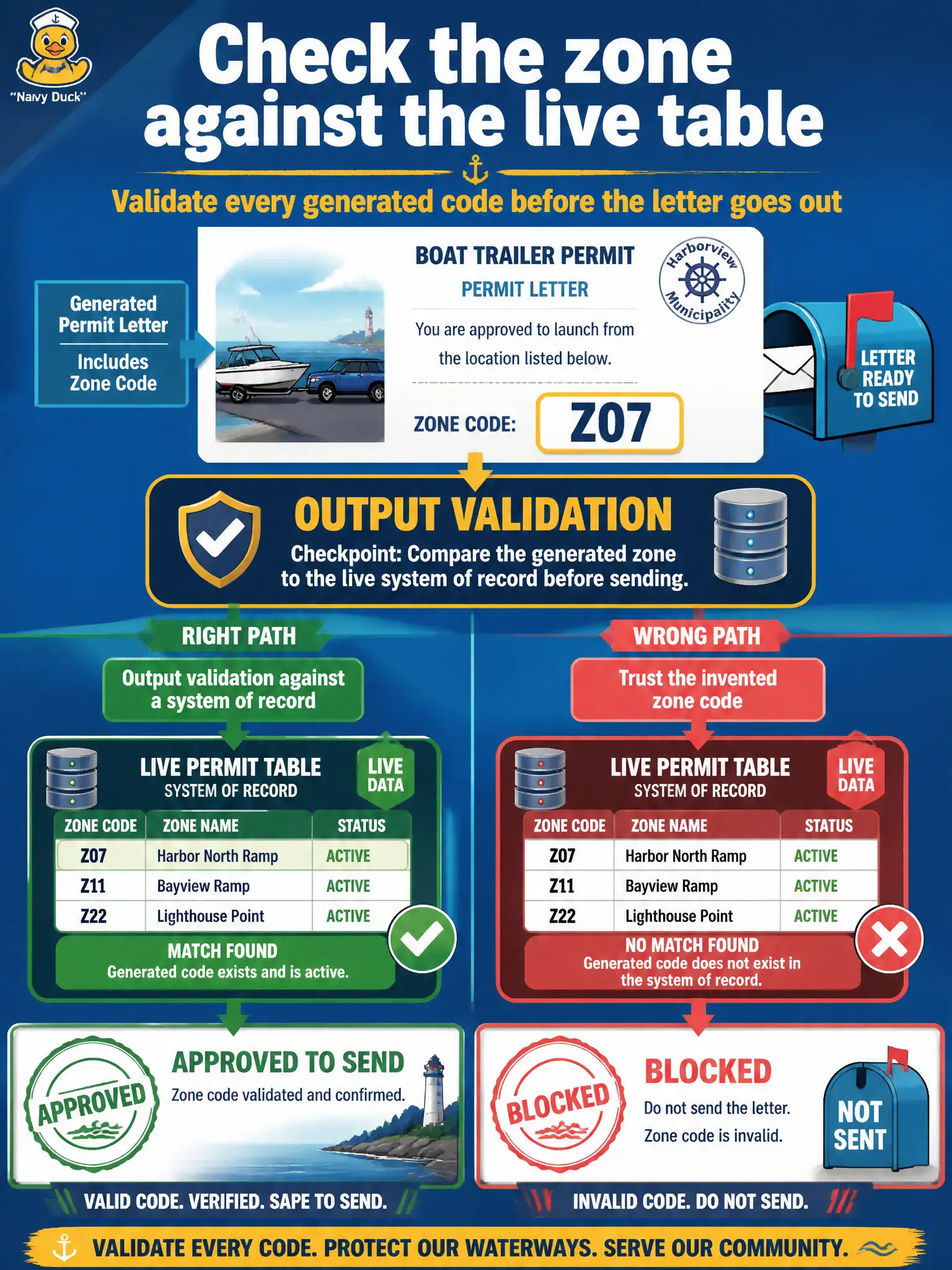
A municipal boat-trailer-permit helper must not invent a zone code. Every generated zone is checked against the live permit table before the letter goes out. Which method is that?
Select an answer to reveal the explanation.
Short Explanation
Think of every generated zone code checked against the live permit table before the letter goes out. That is output validation against a system of record. Fluency is not a zone code.
Full Explanation
The boat-trailer-permit helper must not invent a zone code. Checking every generated zone against the live permit table before the letter goes out is output validation against a system of record: the model may draft language, but a deterministic lookup decides whether the zone is real and allowed for that trailer permit. That post-generation gate is what keeps municipal letters accurate when fluency alone would invent codes that look official but do not exist in the table.
Shipping the letter with no table check because the prose sounds like a zone code fails by concept: fluent strings are not authoritative; only the permit table can confirm a zone. Prompt caching fails because reusing a prompt prefix optimizes latency and cost—it does not validate a newly generated zone against live municipal data. Amazon Polly fails because speech synthesis neither queries nor proves a permit table entry and cannot stand in for structured validation.
Exam caveat: validation must use the current system of record; a stale cached snapshot of zones can reintroduce the same fabrication risk the live check was meant to stop, especially after ordinance updates. Operational check: inject a fake zone in a staging completion, confirm the table check rejects it, verify the outbound letter path blocks send, and log the mismatch for operations review before the helper returns to public use.