
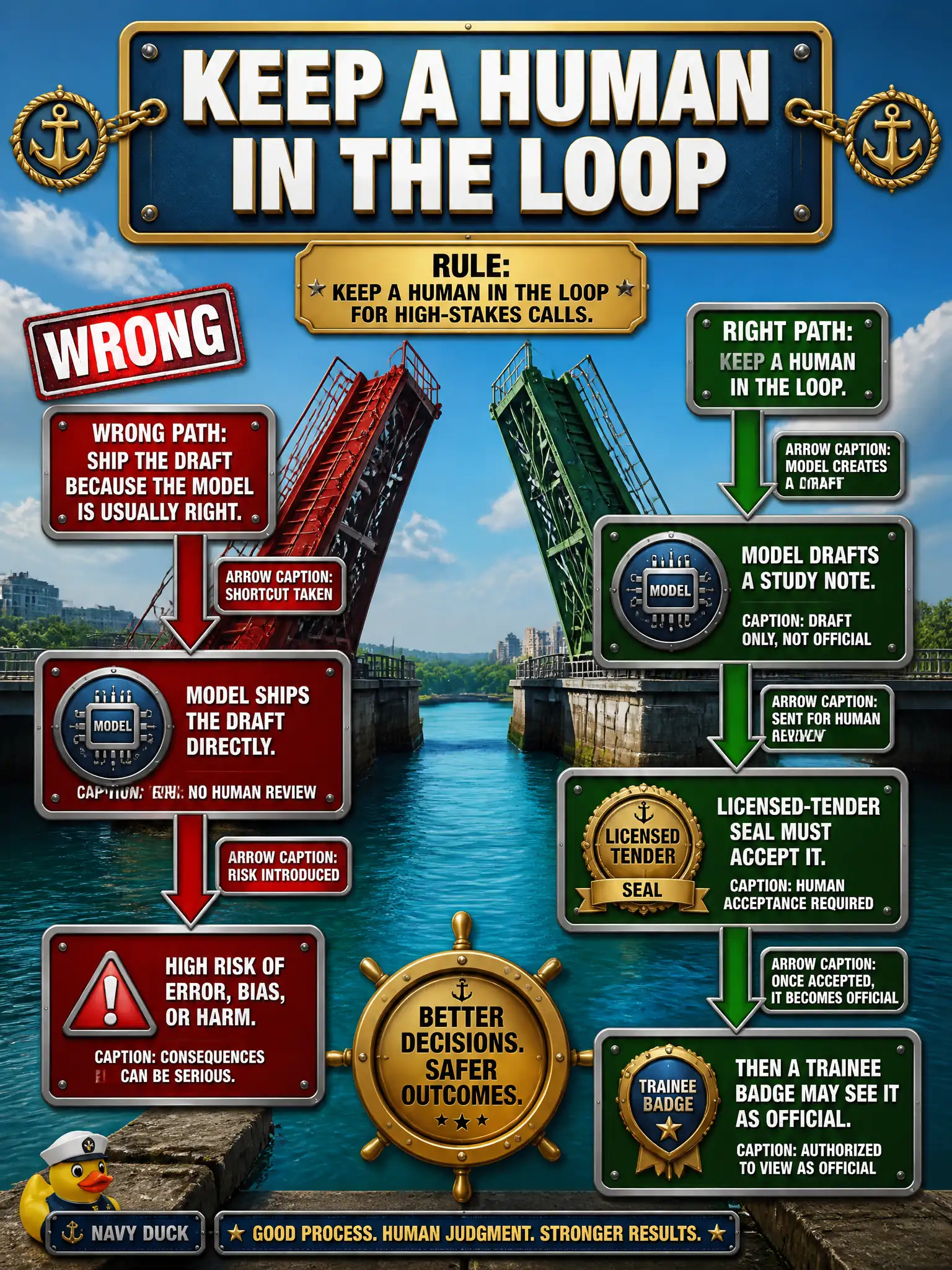
A municipal drawbridge-rule helper may draft a study note, but a licensed tender must accept it before a trainee sees it as official. Which human-centered design rule is that?
Select an answer to reveal the explanation.
Short Explanation
Think of a drawbridge-rule draft that a licensed tender must accept before a trainee treats it as official. Keep a human in the loop for high-stakes calls. Usually-right is not oversight.
Full Explanation
The municipal drawbridge-rule helper may draft a study note, but a licensed tender must accept it before a trainee treats it as official. That is human-in-the-loop design for high-stakes calls. Automation can accelerate drafting; it must not silently become authoritative guidance when errors could affect bridge operations, safety, or regulatory compliance. "Usually right" is a performance observation, not an oversight control.
Shipping the draft to the trainee with no officer review fails because usual correctness does not catch rare, high-impact mistakes that a licensed tender is responsible for catching. Replacing the licensed tender with a dashboard title fails because a chart label is not a accountable human role. Raising temperature so a high-stakes note no longer needs a human fails because sampling randomness is unrelated to governance; higher temperature typically increases variability, not accountability.
Exam caveat: human-in-the-loop only works if the human has time, expertise, and authority to reject the draft—rubber-stamping voids the control. Operational check: require an explicit tender accept/reject action before the note is marked official, log the reviewer identity and timestamp, and block trainee "official" views until that acceptance is recorded.