
A municipal bulk-trash signup scorer keeps sending reminder texts only to households on the west side of the river, even though east-side households meet the same eligibility rules. Which responsible-AI feature failed?
Select an answer to reveal the explanation.
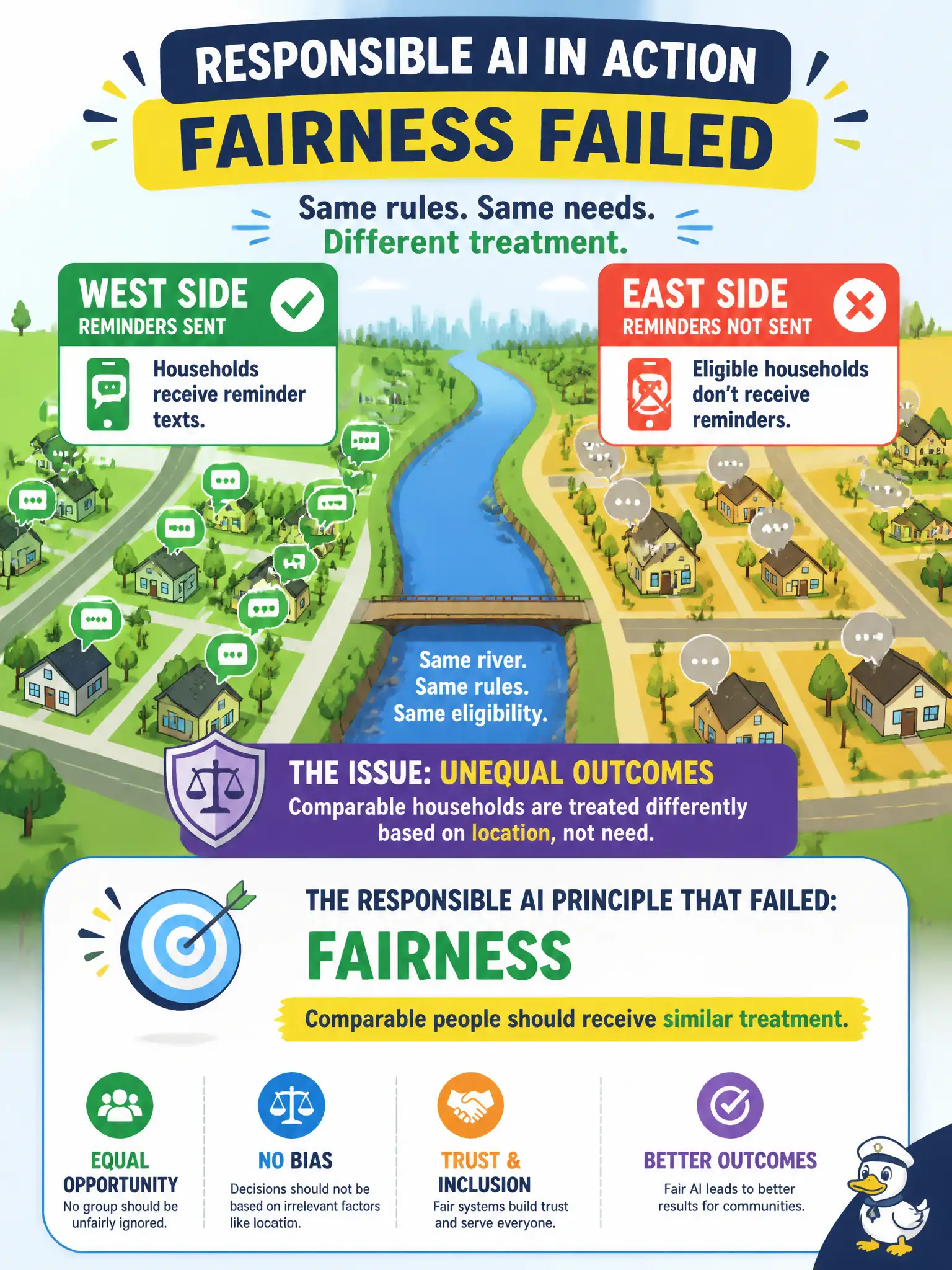
Short Explanation
Think of reminder texts that only go to the west side even though the east side meets the same rules. That is a fairness miss. Latency, token cost, and a cache are different problems.
Full Explanation
Sending bulk-trash reminder texts only to west-side households while east-side households meet the same eligibility rules is a fairness failure: comparable people should receive similar treatment under the same municipal program. Fairness here is about equal application of published eligibility across groups and neighborhoods, not about message speed or cloud spend. Unequal reminder access can deny residents a service they qualify for and erode trust in public operations.
Latency would mean messages arrive late; the stem’s problem is who receives them, not milliseconds. Cost per token might explain an operations debate about spend, but unequal treatment is not diagnosed as a token-price issue. Prompt caching reuses prefixes for efficiency; it is not the name for systematically skipping one side of the river from the reminder list.
Exam caveat: fairness issues often hide in training data, geocoding features, or eligibility filters that correlate with neighborhood. Fixing latency or caching will not repair skewed selection across equally eligible households.
Operational check: compare reminder send rates by side of river among equally eligible households, inspect the scoring features for geographic proxies, and remediate until similarly eligible residents are treated alike before the next bulk-trash pickup cycle.