
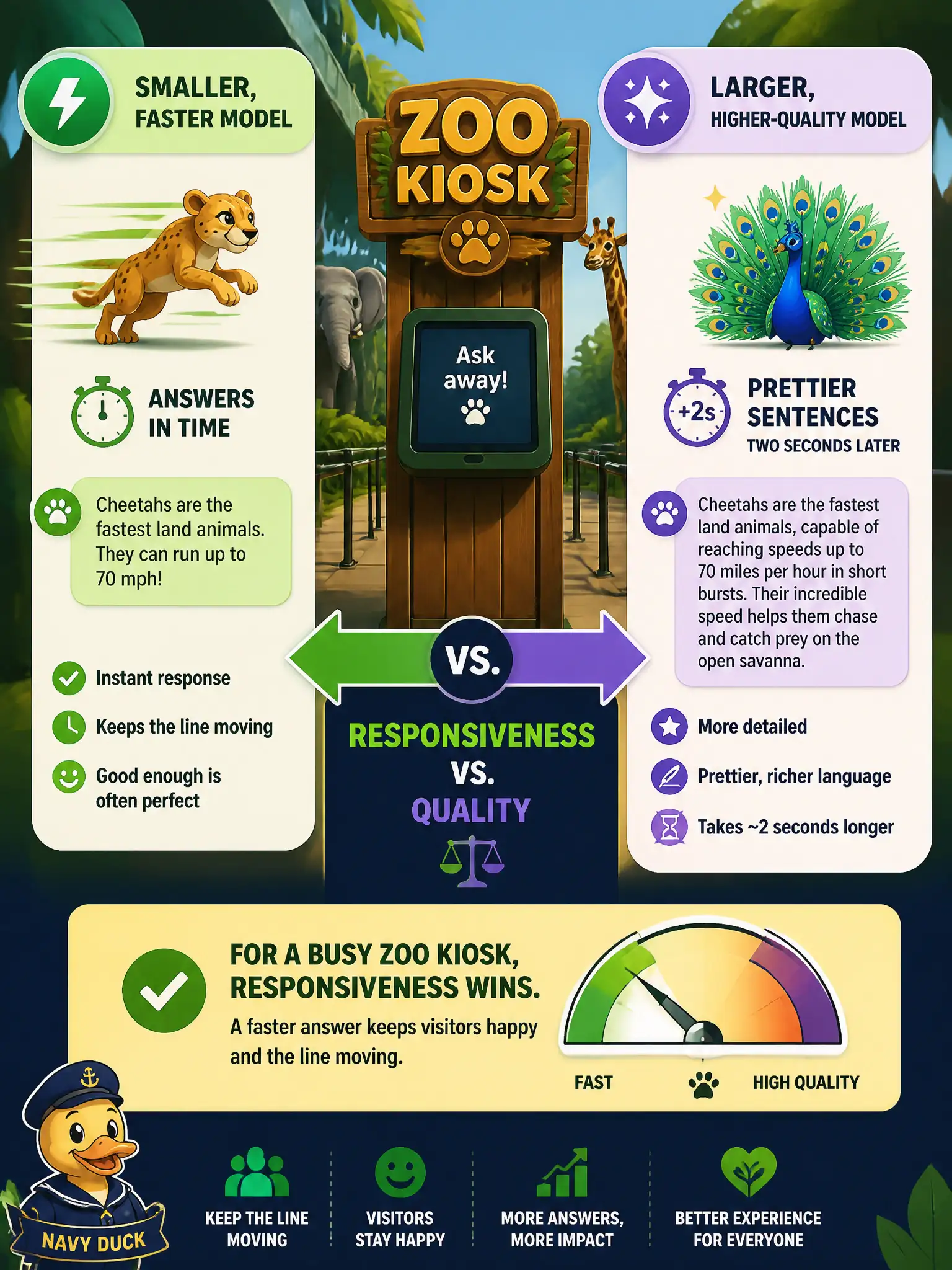
A zoo kiosk can use a smaller, faster model that answers in time, or a larger model that writes prettier sentences two seconds later. The line is already moving. Which tradeoff should the team make explicit?
Select an answer to reveal the explanation.
Short Explanation
Think of a moving kiosk line. A smaller, faster model that answers now can beat a prettier sentence two seconds later. Latency and quality trade off. A brand nickname does not pick.
Full Explanation
At a moving zoo kiosk line, responsiveness and response quality are competing application goals, not free complements. Making the tradeoff explicit means acknowledging that a smaller, faster model that answers in time can be the correct kiosk choice even when a larger model would write prettier sentences two seconds later. The line is already moving, so a late high-quality sentence can be worse for the visitor experience than a plain, timely answer.
Always picking the slower prettier model fails because latency is a first-class constraint at a live kiosk; prettier prose does not help if the visitor has already walked away. Treating quality and latency as the same metric fails because they measure different things—a two-second delay is not free and must be weighed against sentence polish. Picking by brand nickname fails because marketing labels do not encode the responsiveness-versus-quality balance the kiosk actually needs.
Exam caveat: GenAI model selection routinely balances response quality, latency, and spend; practitioner questions often expect you to name that tradeoff rather than default to the largest model. Operational check: time end-to-end kiosk answers under realistic line conditions, compare the faster model against the prettier slower one on both latency SLA and visitor satisfaction, and document which side of the tradeoff the team chose and why.