
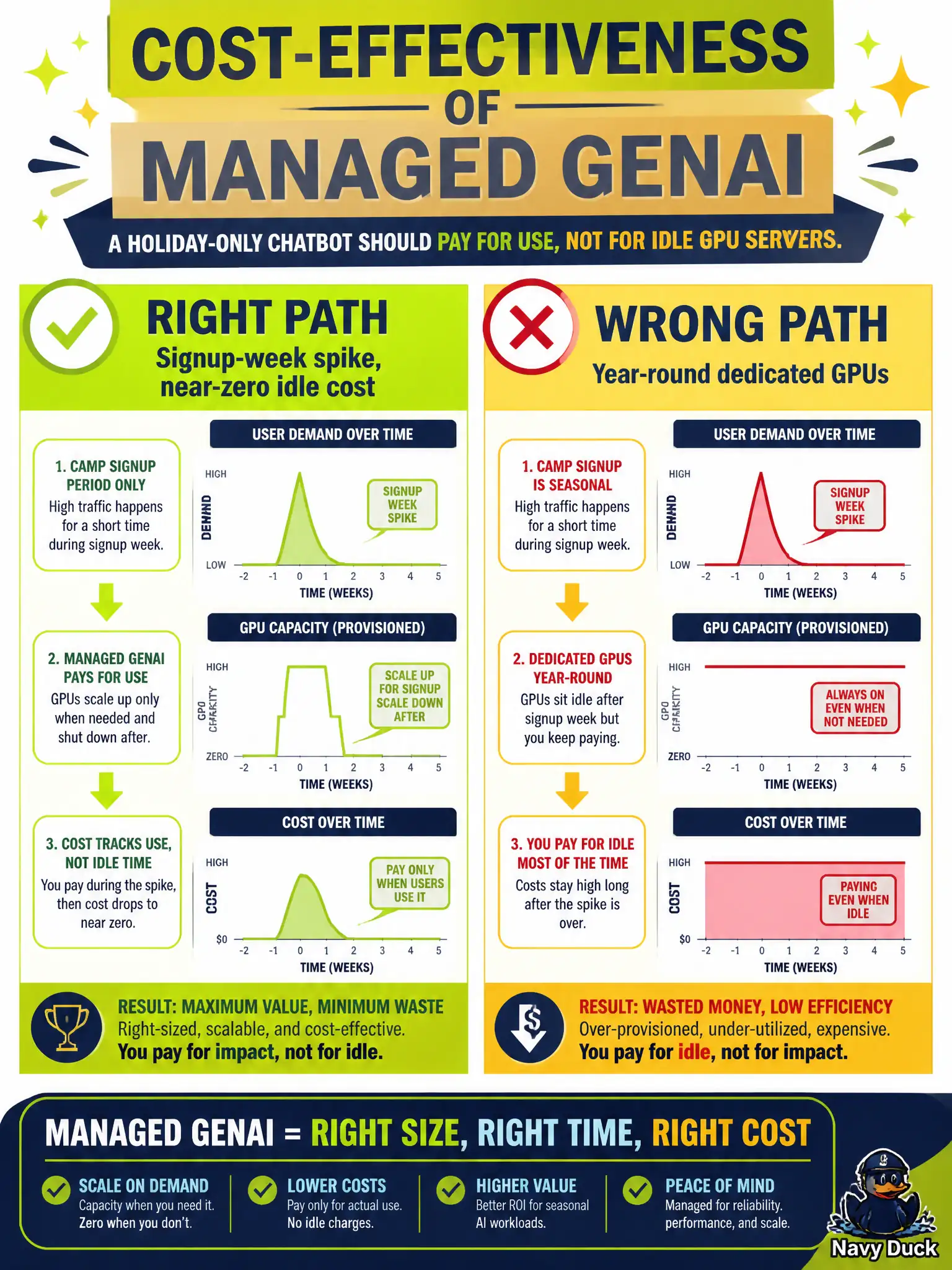
A scout-store chatbot is busy only around camp-signup week and is quiet the rest of the year. The store does not want idle GPU servers in January. Which cost approach fits?
Select an answer to reveal the explanation.
Short Explanation
Think of a scout-store bot that only wakes up at camp-signup week. Pay-for-use managed inference can sit quiet in January. Year-round GPUs just heat the closet.
Full Explanation
Pay-for-use managed inference fits a scout-store chatbot busy only around camp-signup week and quiet otherwise: when traffic is seasonal, usage-based pricing can sit near idle host cost in January instead of heating a closet of GPUs all year. That cost shape is a core reason to prefer managed inference for bursty civic or retail helpers that do not need always-on dedicated hardware.
Buying GPU servers that stay powered all year for a holiday-only bot pays for capacity you do not use most months. Training a new custom model every January merely to keep GPUs busy is spending on busywork, not on signup-week value. Ignoring cost because chatbots supposedly cannot be metered is false; managed inference is explicitly usage-priced and can be budgeted.
Exam caveat: pay-for-use can spike during signup week, so you still need budgets, quotas, or caching of repeated FAQ context to avoid surprise bills. Operational check: set monthly spend alarms, cache stable camp FAQs, compare signup-week token cost to the annual cost of dedicated GPUs, and revisit capacity only if sustained year-round load appears.
Seasonal metering also encourages product discipline: cache answers for stable camp policies, and avoid stuffing the entire catalog into every turn during the busy week. Cost control and answer quality improve together when repeated context is not re-billed endlessly.