
An ice-rink software pair wants to define multi-agent roles and tool use in application code, then host that design somewhere later. They are not asking for the managed runtime in this step. Which offering matches the build-the-logic job?
Select an answer to reveal the explanation.
Short Explanation
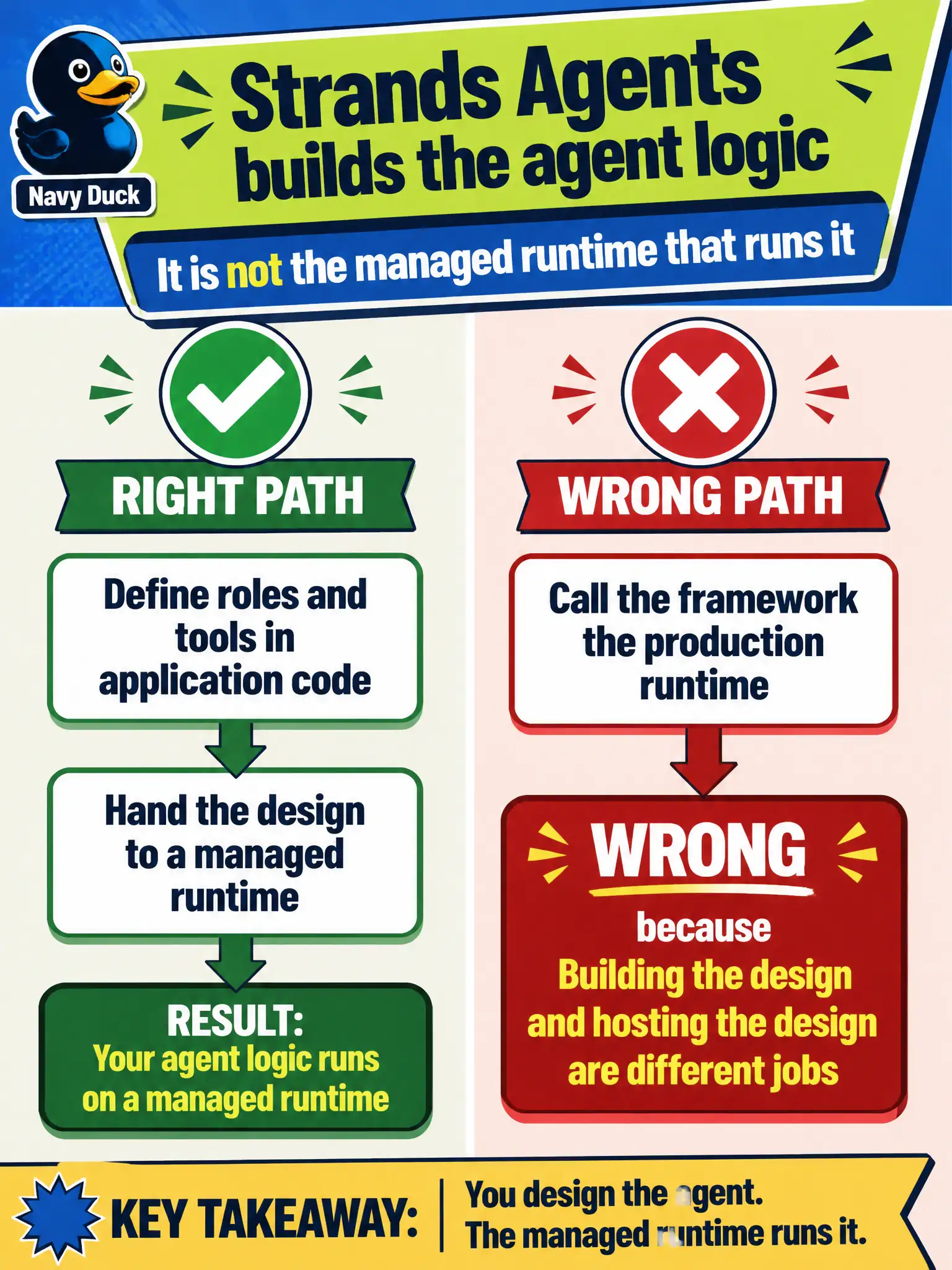
Think of writing the play on paper before you rent the theater. Strands Agents is the framework that describes the roles and tools in code. AgentCore is the later runtime, Quick is a dashboard, and Polly is a voice.
Full Explanation
Strands Agents is the framework for describing and building multi-agent roles and tool use in application code. The ice-rink pair wants to define that logic now and host it later; the framework step is separate from the managed runtime step, which matches how the exam distinguishes build-the-agent from run-the-agent. Write the play before you rent the theater.
Amazon Bedrock AgentCore is the managed place to run and operate agents; equating the framework with the runtime collapses two different jobs into one answer. Amazon Quick is analytics on business data and does not author agent roles or tool graphs. Amazon Polly is text-to-speech and is not an agent framework for multi-role tool use in application code.
Exam caveat: a clean agent design still needs tool permissions, observation logging, and evaluation of multi-step failures before you promote it to a managed runtime. Operational check: encode roles and tools in the framework first, review tool allow-lists with rink safety constraints, run scripted failure cases, then choose the managed runtime when you are ready to operate session memory and scale without babysitting servers.
Keep artifacts clear: the framework holds role definitions, tool schemas, and orchestration code; the later runtime holds scale, session memory, and operational guardrails. Answering with the runtime when the stem asks only for the build-the-logic step is a common mix-up to avoid.