
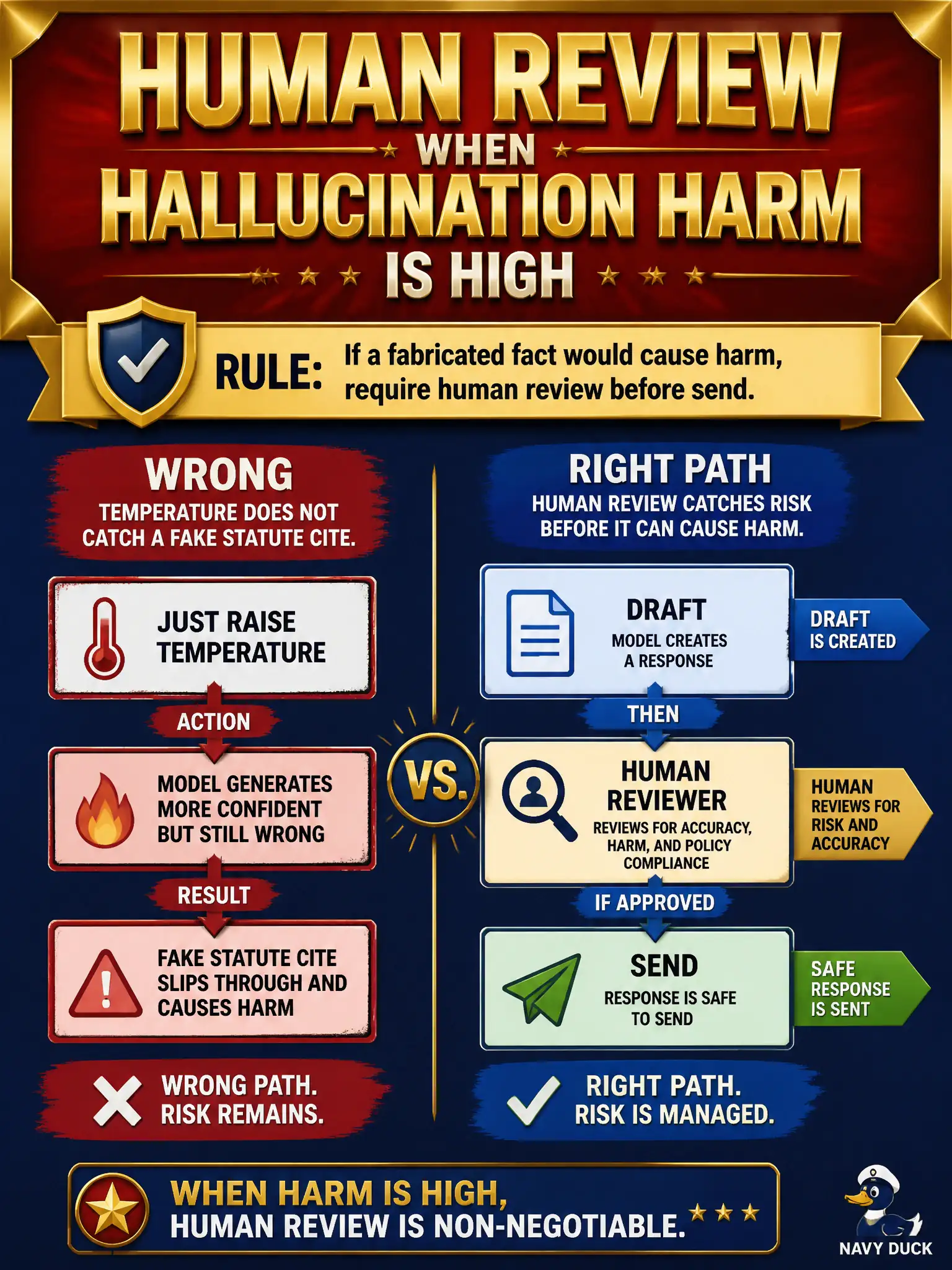
A fire-grant office may use a model to draft a denial letter but will not send it until a reviewer checks it. A fabricated statute cite is unacceptable. A vendor says just raise temperature. Which control fits?
Select an answer to reveal the explanation.
Short Explanation
Think of a denial letter that cannot go out with a fake statute cite. A reviewer has to check it. Raising temperature is not a reviewer, and a hose picture is not a lawful letter.
Full Explanation
Mandatory human review fits because a fabricated statute cite in a fire-grant denial letter is high-harm hallucination: the letter must not leave until a reviewer checks it. When generation can invent legal authority, process control—not sampling tricks—is the right answer. Human-in-the-loop before send is the control that matches the office’s stated risk and refusal to accept fake cites.
Raising temperature and sending without review worsens variability and removes the only gate against fake cites; temperature is not a reviewer. Skipping review because drafts never invent cites is false; citation hallucination is a known failure mode and is exactly why review exists. Replacing the letter with an image of a hose does not produce a lawful denial communication and abandons the required content entirely.
Exam caveat: review quality matters—rubber-stamping drafts is not a control—and temperature adjustments are creativity settings, not safety gates. Operational check: require cite verification against the statute library before send, log reviewer decisions, quarantine any draft that introduces unverifiable citations, and forbid vendor advice that swaps sampling knobs for human review.