
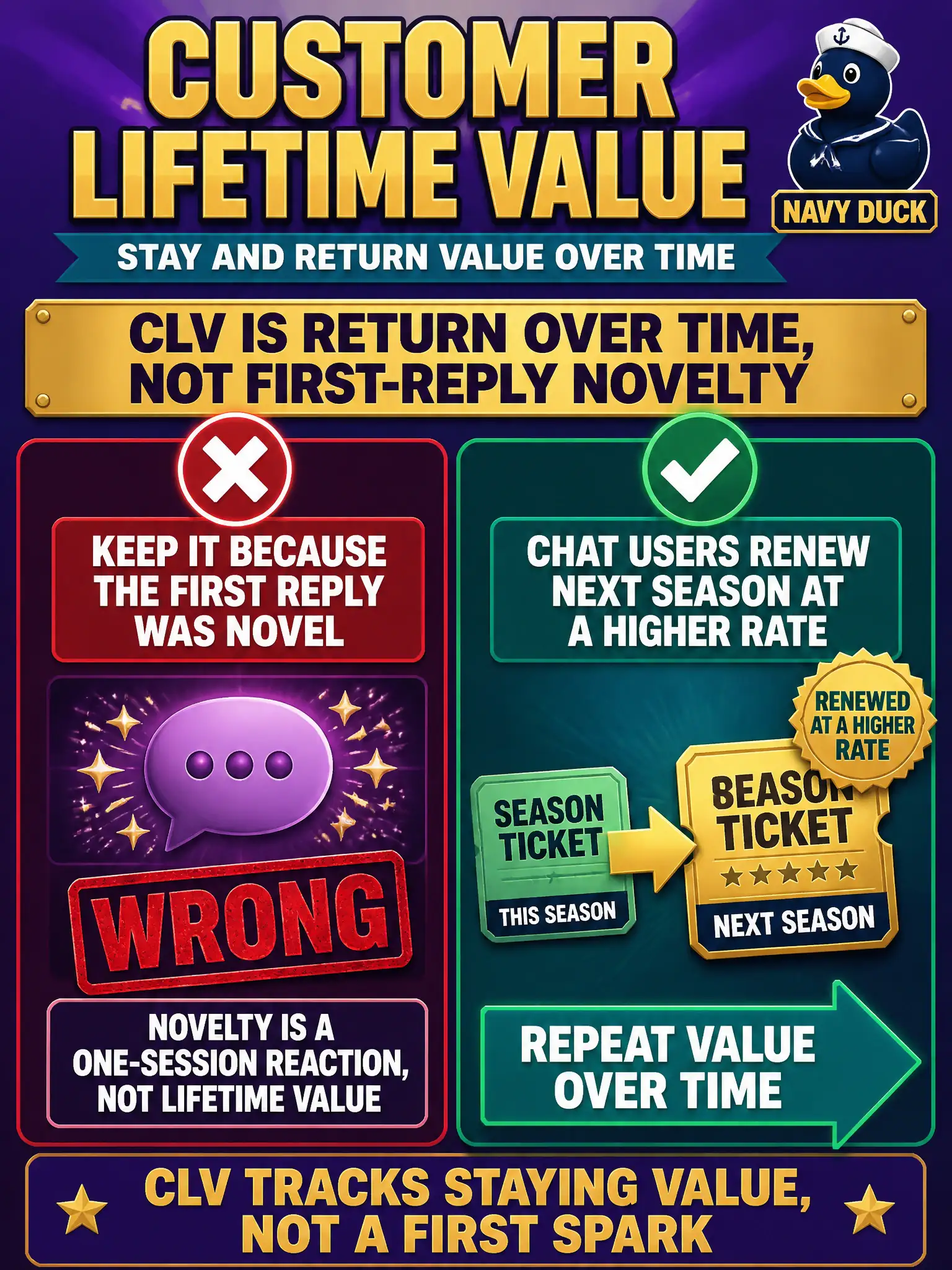
A choir keeps a chat helper because members who use it renew next season at a higher rate than members who do not. The board is not judging the helper by one-session novelty. Which metric justifies keeping it?
Select an answer to reveal the explanation.
Short Explanation
Think of members who chat and then renew next season more often. That is customer lifetime value. One-session novelty, a drawing RMSE, and a token bill with no renewal link do not keep the helper.
Full Explanation
Customer lifetime value, shown here as higher next-season renewal among chat users, is the retention metric that justifies keeping the choir helper. Lifetime value captures ongoing relationship and dues over time; a higher renewal rate among members who use chat is that framing, not a one-turn novelty score. The board is keeping the helper because retention moved, which is the durable business case.
One-session novelty of the first reply measures short-term surprise, not whether members return next season. RMSE on a rehearsal-hall drawing applies a numeric error metric to an unrelated visual artifact and does not speak to renewal. Token price with no renewal relationship only costs the service; without linking spend to retention, the invoice cannot justify keeping the helper on the budget.
Exam caveat: renewal differences may reflect who already engages deeply with the choir, so lifetime-value claims are directional evidence tied to retention rather than automatic proof that chat alone caused renewals. Operational check: compare renewal rates for chat users versus non-users in the same membership cohort, exclude one-time guests, and review whether chat content promises services the choir cannot deliver.