
A zoo gift-shop kiosk must answer hours questions in about one second. An overnight rewrite of the volunteer handbook can take several minutes. Which factor should drive the model and hosting choice?
Select an answer to reveal the explanation.
Short Explanation
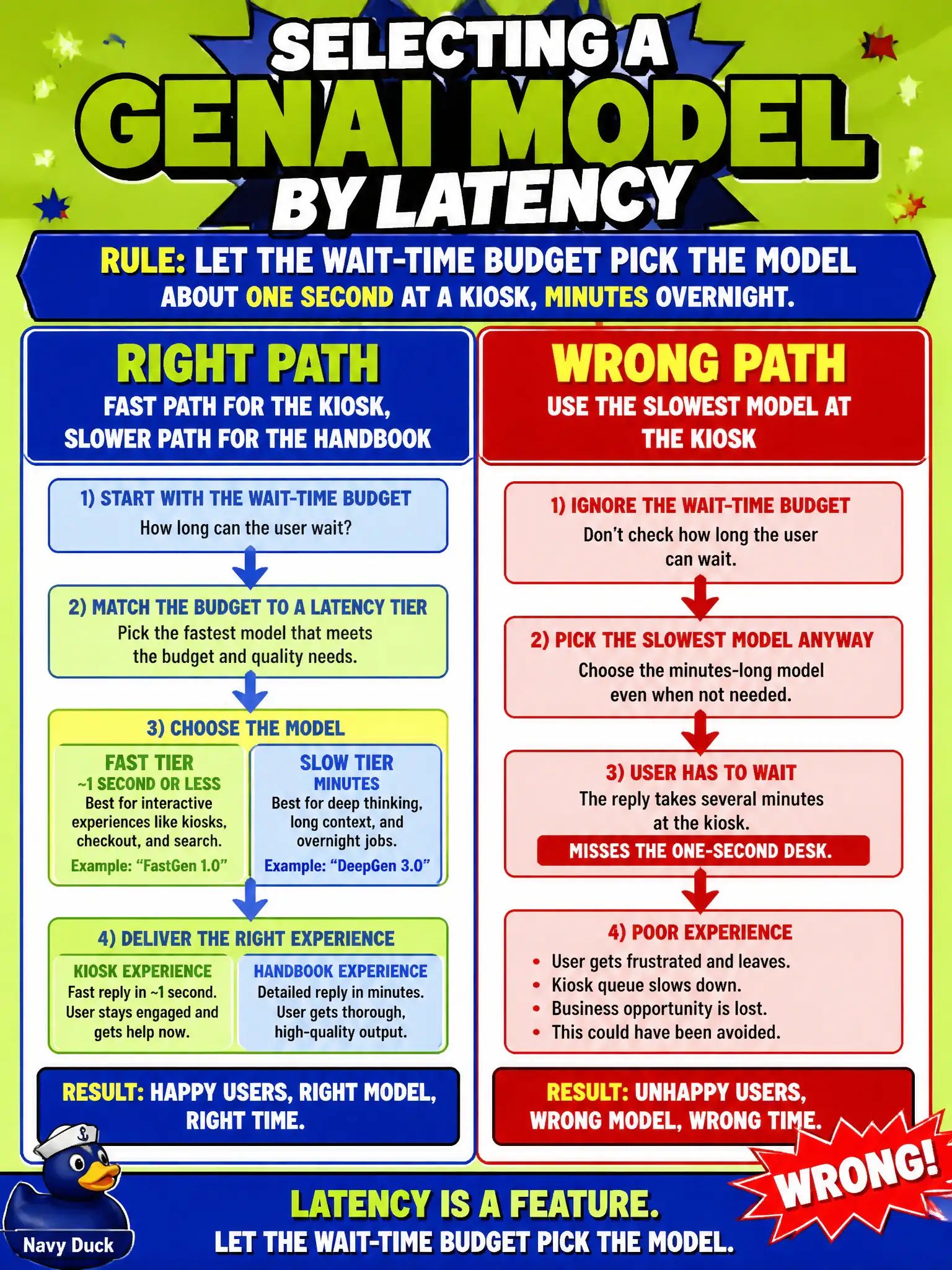
Think of a kiosk that has one second versus a handbook rewrite that can sit overnight. Latency picks the path. A catchy name and a BLEU score do not make the kiosk faster.
Full Explanation
Latency is a first-class selection factor: interactive public-facing paths need fast responses, while offline batch rewriting can tolerate longer runtimes. The zoo gift-shop kiosk must answer hours questions in about one second, whereas an overnight volunteer-handbook rewrite can take several minutes, so latency should drive model and hosting choice for each path separately.
Brand familiarity because the slower model has a catchier name does not meet a one-second front-desk budget and confuses marketing with performance. Always picking the slowest model, even for the kiosk, deliberately violates the interactive requirement guests experience at the counter. Ignoring latency and judging both jobs only by BLEU scores quality of text overlap for rewrite tasks, not wait time at the gift-shop kiosk.
Exam caveat: one size does not fit all workloads. The same organization may correctly choose a fast small model for a kiosk and a slower stronger model for overnight document work.
Operational check: set a hard p95 latency SLO for kiosk hours answers, load-test the chosen hosting path against that SLO, and keep the handbook rewrite on a batch queue that never shares the kiosk's real-time capacity pool.