
A quilting shop needs original block drawings. A school-board clerk needs long-form policy prose. A bicycle-share depot needs one model that accepts a wheel photo plus a typed note. A vendor says pick whichever brand the intern already likes. How should the team choose?
Select an answer to reveal the explanation.
Short Explanation
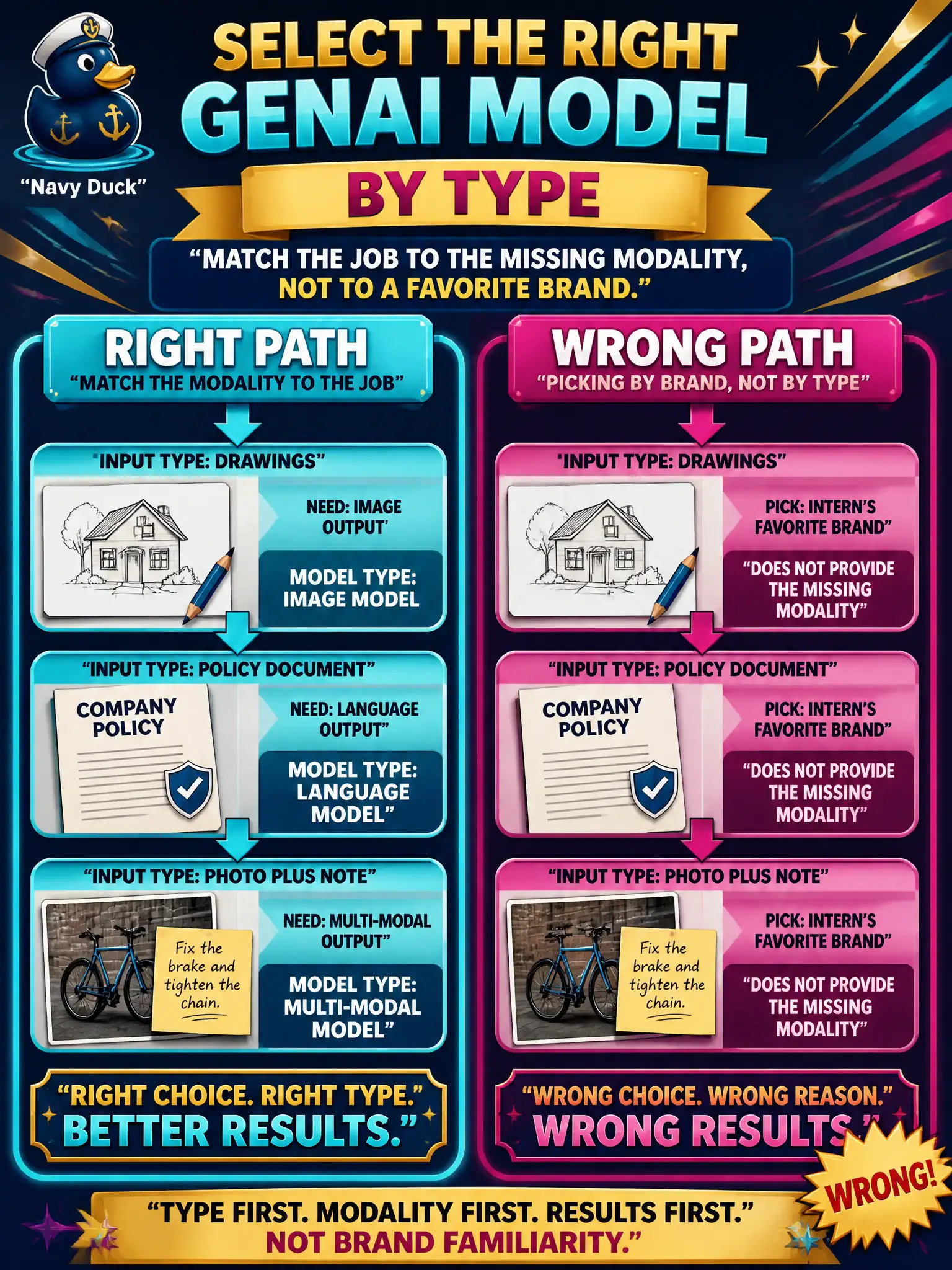
Think of picking the right tool for the job, not the brand on the intern's laptop. Drawings want an image model, policy prose wants a language model, and a wheel photo plus a note wants multi-modal. A language-only model cannot draw, and an image-only model cannot rewrite a packet.
Full Explanation
Model selection should follow modality: an image model for original block drawings, a language model for long-form policy prose, and a multi-modal model when the input mixes a wheel photo with a typed note. Matching those three model types to the quilting shop, school-board clerk, and bicycle-share depot jobs is the correct approach—not picking by brand familiarity.
Picking the brand the intern already likes, regardless of modality, ignores whether the model can draw, write long prose, or accept mixed inputs. Using a language-only model for the drawings and the wheel photo fails because language-only systems do not generate drawings or reliably consume image input. Using an image-only model for the 20-page policy rewrite fails because image generators are not the right tool for long policy text.
Exam caveat: modality fit beats brand loyalty. Multi-modal is for mixed inputs; do not force one model type across mismatched jobs.
Operational check: write a one-page selection matrix listing input/output modality for each municipal job, require documented capability match before purchase, and pilot each chosen model on a real sample (block sketch, policy chapter, wheel photo plus note).