
A zoo gift shop wants an after-hours helper that can answer hours questions and start a refund request. They already have poster art and do not want another drawing model. Which use case is this?
Select an answer to reveal the explanation.
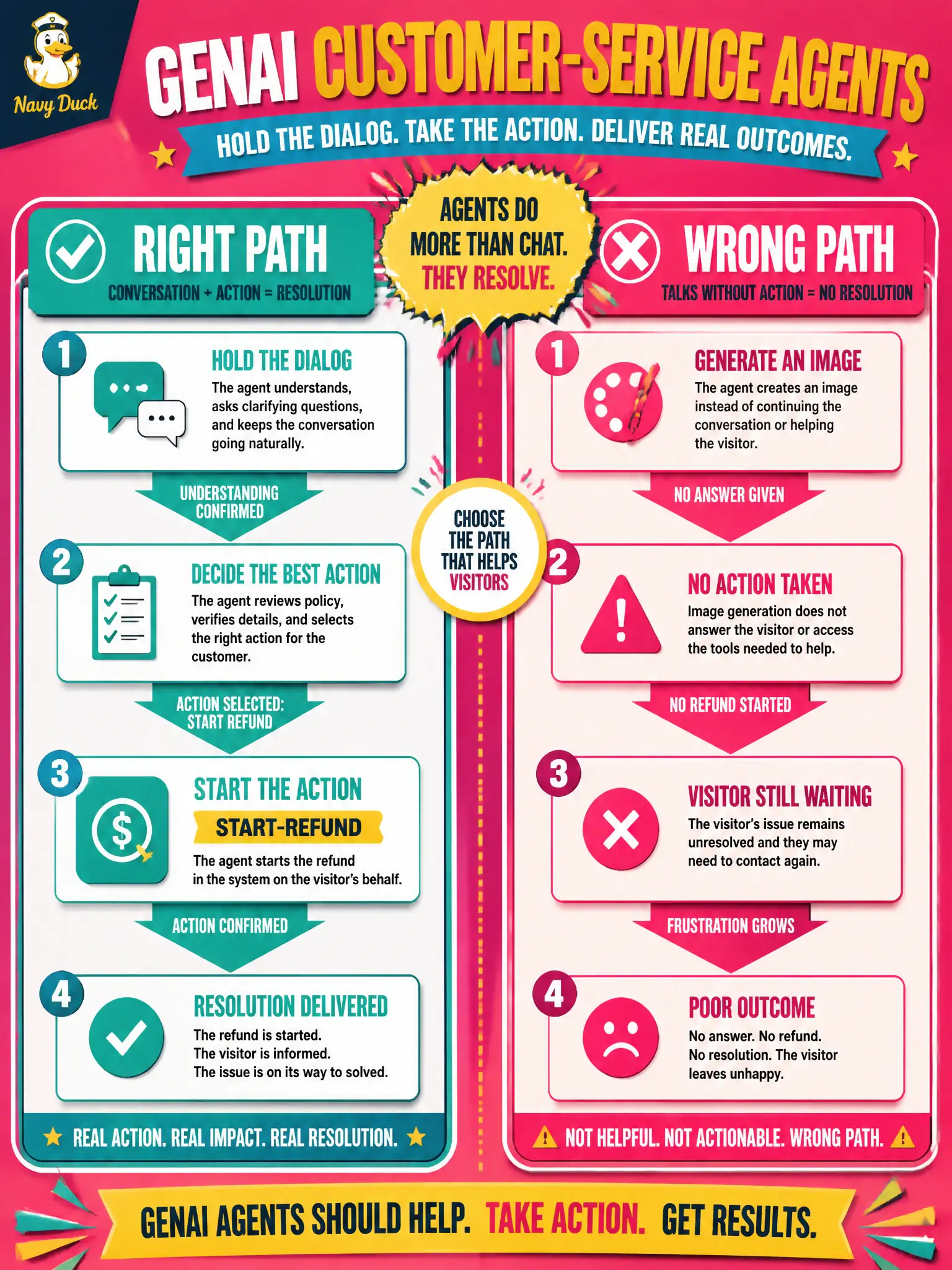
Short Explanation
Think of an after-hours clerk who can answer what time do you close and start a refund. That is a customer-service agent. A new poster painter, a sales forecast, and leftover-SKU piles do not talk to a visitor.
Full Explanation
A generative customer-service agent is built for multi-turn dialog and for invoking actions when the conversation requires them. The zoo gift shop needs an after-hours helper that can answer hours questions and start a refund request, which is exactly that combination of conversational capability plus tool-backed action—not another content or forecasting model.
An image generator that only paints new poster art produces visuals. The shop already has poster art and explicitly does not want another drawing model; painting cannot answer hours or open a refund. A classical forecast of next month's stuffed-animal sales predicts a quantity. It does not hold a visitor dialog or initiate a refund workflow. Clustering leftover souvenir SKUs groups inventory identifiers. It neither converses with a guest nor starts an operational action.
Exam caveat: agent use cases are defined by dialog plus actionability. Generating media or predicting sales may be valuable elsewhere, but they fail when the stem requires answering a person and starting a business process.
Operational check: for the after-hours agent, verify that refund starts require authentication, audit logging, and a staff-approval threshold for high-value returns so a fluent chat cannot silently issue money without policy controls.