
A municipal ice-rink crew wants to turn on a compressor-fault model for live alarms this weekend. They have not yet collected a held-out test week of plant logs, and some teammates say deploy first and gather data later. Which sequence should they follow?
Select an answer to reveal the explanation.
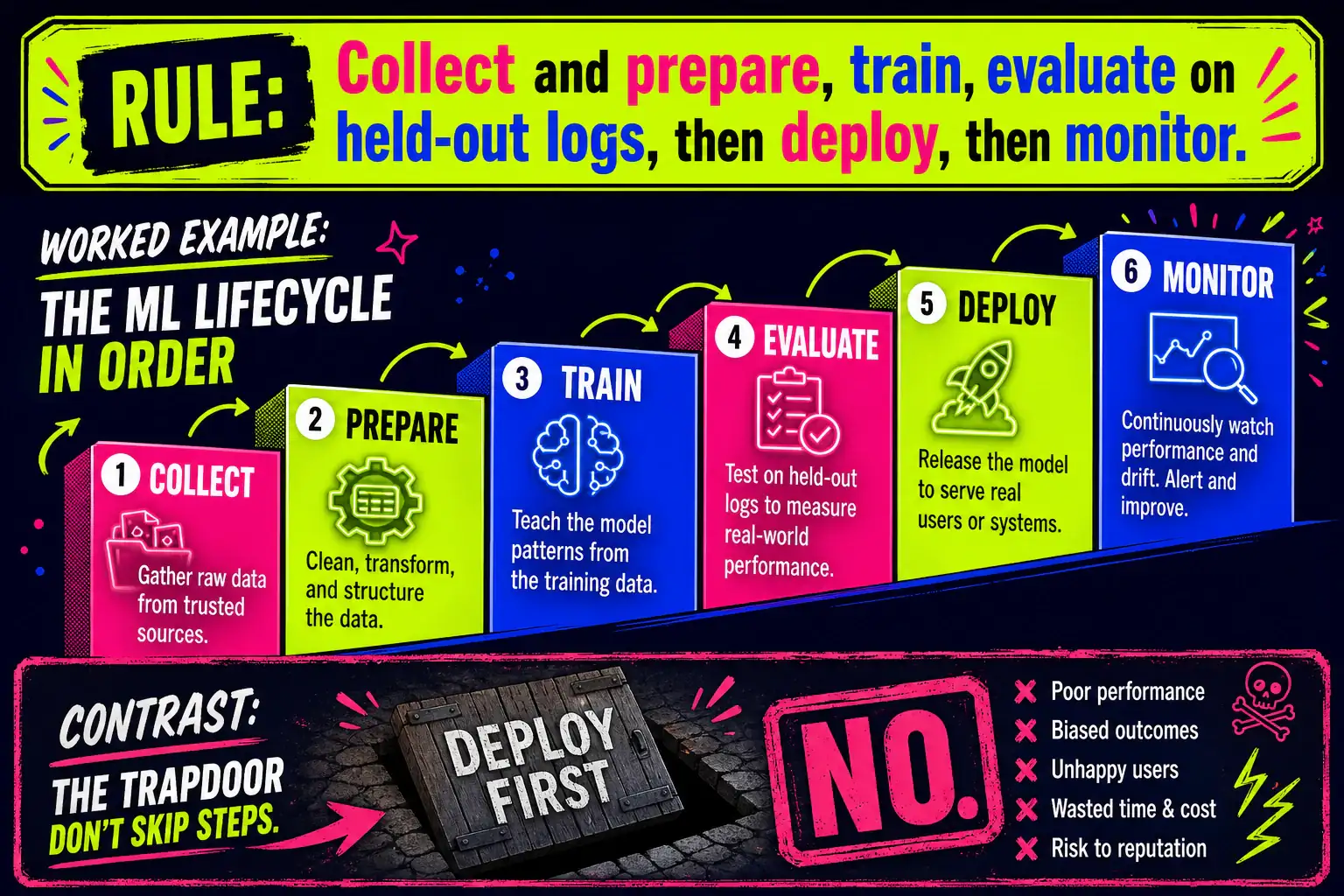
Short Explanation
Think of tasting the soup before you serve it, not putting it on the table first. Collect, train, evaluate on a held-out week, then deploy, then watch it. Alarms this weekend with no test logs is serving raw.
Full Explanation
Turning on a municipal ice-rink compressor-fault model for live alarms requires the standard supervised sequence: collect and prepare data, train, evaluate on held-out plant logs, deploy, then monitor. That order is correct because held-out evaluation is the evidence the model works on unseen logs before it can page the crew this weekend. Deploying first and collecting data later skips the proof step and can flood the rink with false or missed alarms while the team is still assembling ground truth after the fact. Monitoring the live plant before any labeled data exists has nothing reliable to watch and cannot replace a proper evaluation pass. Training and deploying in one step while treating monitoring as optional decoration leaves post-go-live faults undiagnosed and violates evaluate-then-deploy discipline. Teammates saying "deploy first and gather data later" are reversing the lifecycle the exam expects you to defend. Exam caveat: exam items often tempt "ship now, learn later"; the safe answer keeps evaluate-before-deploy and keeps monitoring after deploy. Operational check: seal a held-out test week of compressor logs, record precision and recall on that week, and only then enable live alarms with a monitoring dashboard for drift and false-alarm rate.