
A university dining hall collected thousands of written comment cards. Leadership wants sentiment and recurring key phrases from that existing text. They do not want a transcript of the dish-room radio. Which AWS service matches this job?
Select an answer to reveal the explanation.
Short Explanation
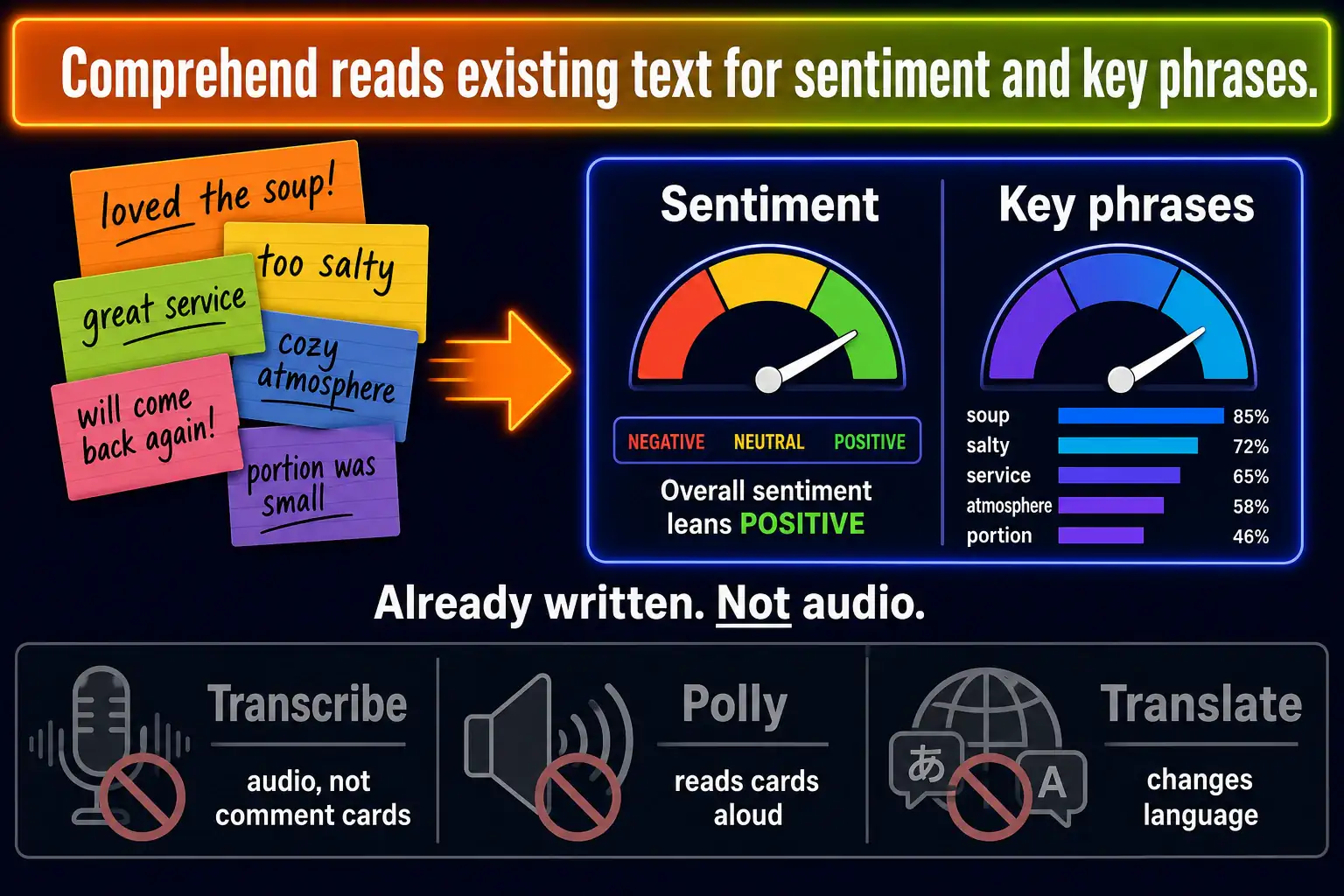
Think of a stack of comment cards and a highlighter that marks loved-the-soup versus too-salty. Amazon Comprehend reads existing text for sentiment and key phrases. Transcribe is for the dish-room radio, Polly would read the cards aloud, and Translate just changes language.
Full Explanation
Thousands of written university dining-hall comment cards need sentiment and recurring key phrases extracted from existing text, which is Amazon Comprehend's job. Comprehend fits because the input is already prose and the outputs are language insights—sentiment, entities, and key phrases—without requiring speech transcription or translation as the primary goal. Amazon Transcribe would turn dish-room radio audio into text, but leadership already has written cards and explicitly does not want a radio transcript for this analysis. Amazon Polly would read the comment cards aloud for accessibility or announcements and adds no sentiment or key-phrase analytics for leadership. Amazon Translate would change the cards into another language rather than analyze tone and recurring phrases in the language diners already used. Starting from usable text means you analyze it; you do not first invent an audio pipeline. Exam caveat: Comprehend analyzes text; Transcribe creates text from audio—do not pick Transcribe when usable text already exists. Operational check: batch a sample of cards through Comprehend, review sentiment distributions and key-phrase outputs with dining leadership, and confirm no audio ingestion path is part of the approved workflow.