
A historic streetcar education app must stay grounded in the car-history binder, finish the quiz workflow, and stay under a budget. Which evaluation mix matches those goals?
Select an answer to reveal the explanation.
Short Explanation
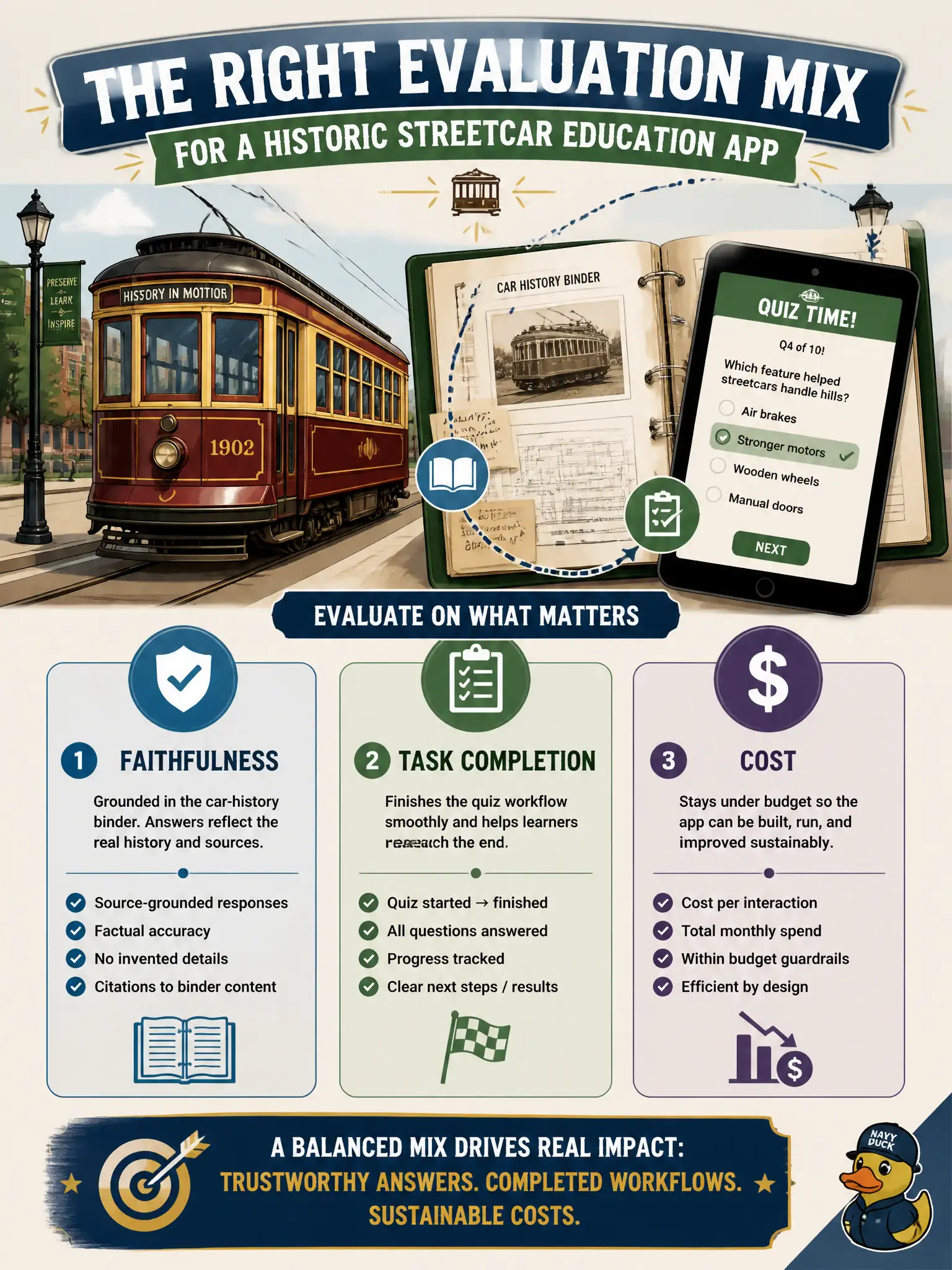
Think of a streetcar app that has to stay in the binder, finish the quiz, and hold the budget. Score faithfulness, task completion, and cost. One vanity fluency or overlap number does not cover that mix.
Full Explanation
A streetcar education app that must stay grounded in the car-history binder, finish the quiz workflow, and stay under budget needs a mix of faithfulness, task completion, and cost. No single vanity metric covers grounding, workflow success, and spend at once for a museum or transit heritage program. The evaluation plan should report all three so staff can see tradeoffs when prompts or models change for the historic education experience.
A single public writing-benchmark score ignores binder grounding, quiz completion, and budget constraints that the museum board actually funds. Fluency alone does not finish the quiz or hold cost within the municipal allowance. ROUGE alone is not grounding, completion, and cost simultaneously, even if overlap looks tidy on sample answers drawn from the binder.
Exam caveat: improving one axis can regress another—cheaper models may complete quizzes with ungrounded binder claims. Read the mix together on every release instead of chasing one green score for board reports.
Operational check: publish a release dashboard with faithfulness on binder claims, quiz completion rate, and cost per session; block promotion if any of the three breaches the agreed threshold for the streetcar education app.