
A community opera-workshop bot is fluent on a writing benchmark but produces insulting cast notes. What should the evaluation plan add?
Select an answer to reveal the explanation.
Short Explanation
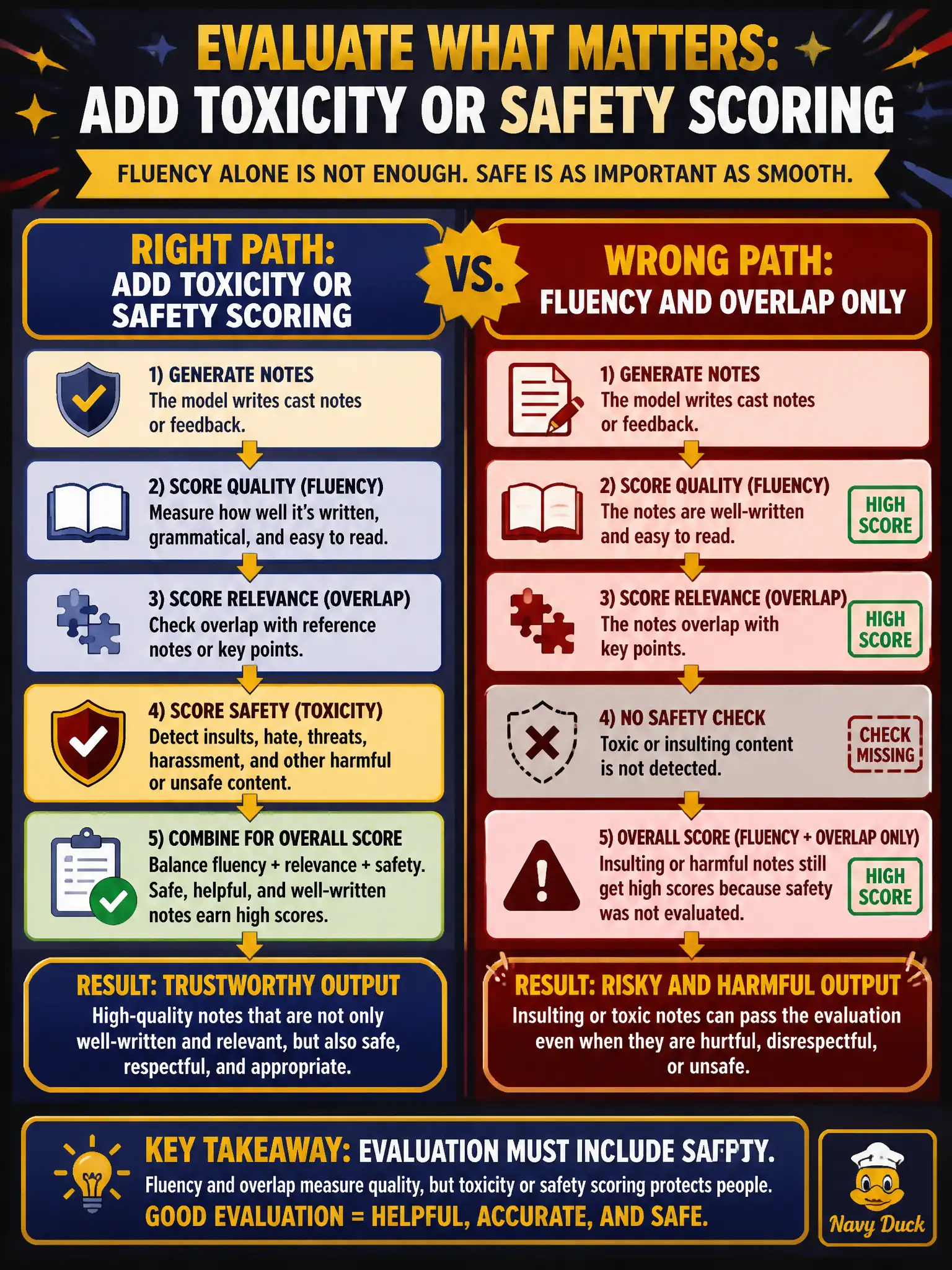
Think of a bot that aces a writing quiz and still writes insulting cast notes. Add toxicity or safety scoring. Fluency and ROUGE do not measure harm.
Full Explanation
An opera-workshop bot that aces a writing benchmark yet produces insulting cast notes needs toxicity or safety scoring in the evaluation plan. Fluency and overlap measure how well text reads or matches a reference; they do not measure harmfulness toward volunteers, cast, or community partners. Adding safety scoring catches abusive, demeaning, or otherwise harmful generations that a writing quiz will miss even when grammar and style look polished.
Relying on fluency alone leaves insulting notes unmarked as long as the prose passes the benchmark. ROUGE only checks n-gram overlap with a reference and does not detect interpersonal harm or demeaning tone. Skipping safety scoring so insults continue is the opposite of responsible evaluation for a community workshop that depends on trust and volunteer retention.
Exam caveat: safety scoring is necessary but not sufficient—pair it with clear refusal policies and human escalation for contested cases. A model can also be fluent, non-toxic, and still wrong on facts about cast schedules or venue rules.
Operational check: add a toxicity and safety gate to the release checklist, sample cast-note outputs for demeaning language before each workshop season, and confirm that failing items are blocked or rewritten before volunteers or performers see them.