
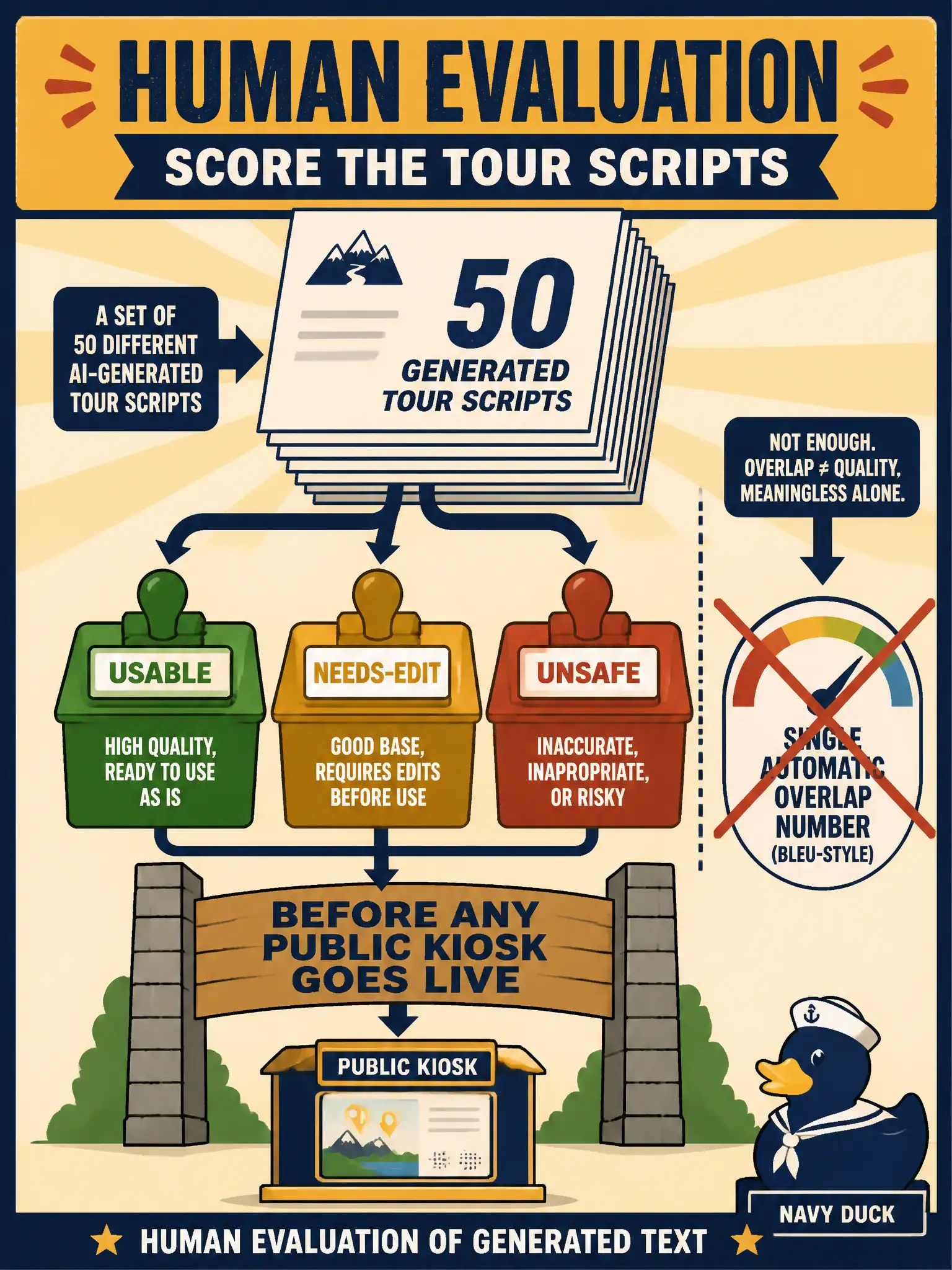
A historic pulp-mill education desk has docents score 50 generated tour scripts as usable, needs-edit, or unsafe before any public kiosk goes live. Which evaluation approach is that?
Select an answer to reveal the explanation.
Short Explanation
Think of docents scoring 50 tour scripts as usable, needs-edit, or unsafe before the kiosk goes live. That is human evaluation. A ROUGE number, shipping unreviewed, or last year's attendance chart does not replace those scores.
Full Explanation
Docents at the historic pulp-mill education desk scoring fifty generated tour scripts as usable, needs-edit, or unsafe is human evaluation of generated text. For open-ended education content, human judgment catches factual tone, local mill history issues, and safety problems that a single automatic overlap metric will miss before a public kiosk goes live. That approach works because generated tour language needs usability and safety judgments that n-gram overlap cannot certify on its own. ROUGE-only evaluation measures n-gram overlap with references and cannot replace every docent review for usability and safety on visitor-facing scripts. Skipping review and shipping the first fifty scripts to the kiosk accepts unvetted visitor-facing risk. Last year’s attendance dashboard measures foot traffic, not script quality for mill tours. Exam caveat: human evaluation needs a clear rubric and sampled double review to control subjectivity; it is complementary to automatic metrics, not always a total replacement for them in every pipeline. Operational check: complete the fifty-script rubric pass, require remediation of any unsafe items, gate kiosk launch on a documented human-evaluation sign-off, and archive the scored scripts so later seasons can compare quality under the same standards.