
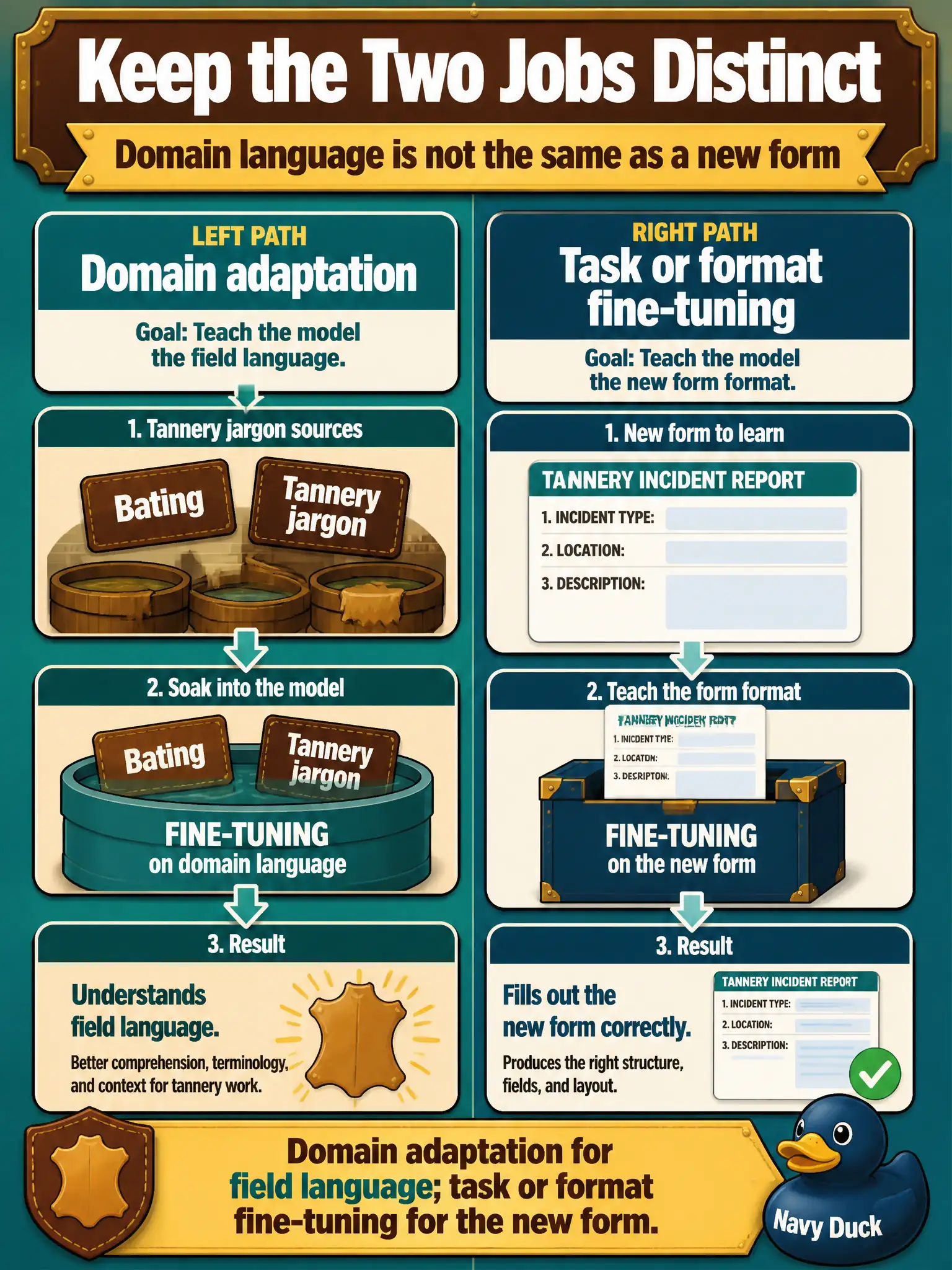
A historic tannery can soak the model in tannery jargon so it understands bating, or it can teach a new three-field incident form. How should those two jobs stay distinct?
Select an answer to reveal the explanation.
Short Explanation
Think of soaking in tannery jargon versus teaching a new three-field form. Domain adaptation for the language, task fine-tuning for the form. Do not swap those names.
Full Explanation
Soaking a model in tannery jargon—terms such as bating—so it understands field language is domain adaptation. Teaching a new three-field incident form is task or format fine-tuning: changing how answers are structured for a specific operational job at the historic tannery. Keeping those jobs distinct matters because the data and success criteria differ—lexicon coverage versus schema compliance on the incident form. Treating both as a dashboard refresh invents a non-training control that updates neither language nor format. Using a content filter for jargon and a cache for the form misassigns safety and caching features to customization roles they do not play. Swapping the names confuses domain-language work with task-format work and leads teams to pick the wrong job type. Exam caveat: teams often need both stages in sequence—domain adaptation first, then task fine-tuning—but exam answers should still name each job correctly. Operational check: measure jargon comprehension on domain probes separately from form-field completeness on incident examples so failures are attributed to the right stage. Write separate success criteria for language familiarity and form compliance in the project plan.