
A community makerspace desk allowed 2,000-token answers and now prints tool novels nobody asked for, which also inflates the bill. Which inference control should the team apply?
Select an answer to reveal the explanation.
Short Explanation
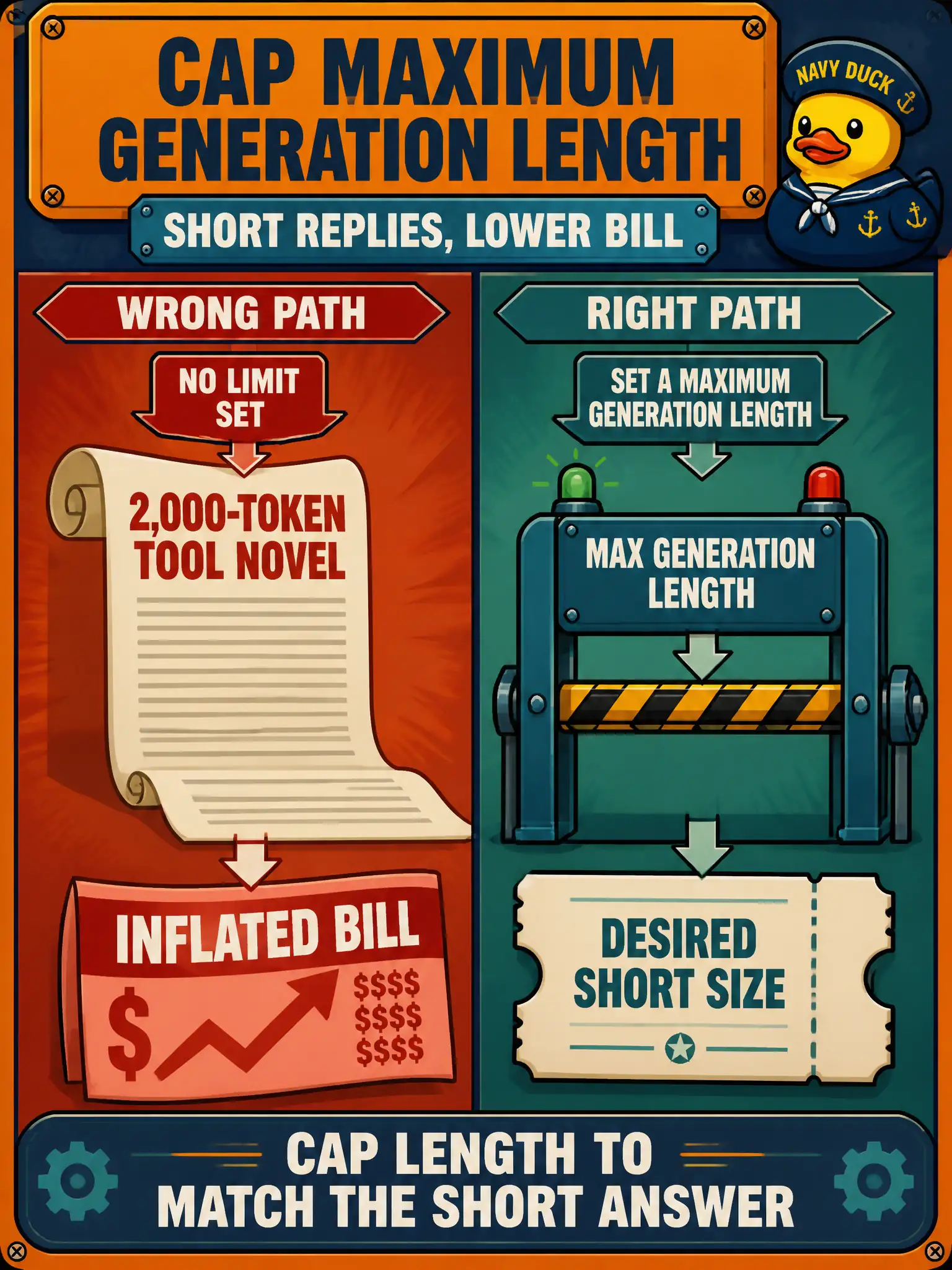
Think of tool questions that turned into 2,000-token novels. Cap maximum generation length. Temperature is not a page limit, and unbounded replies are how the bill blew up.
Full Explanation
The community makerspace desk allowed 2,000-token answers and now prints tool novels nobody asked for while inflating the bill. Capping maximum generation length so replies match the desired short size is the inference control that fixes both user experience and spend. Output length is not merely cosmetic: longer generations consume more tokens, take longer, and bury the practical answer under unused prose.
Leaving generation unbounded fails because that is how every tool question became a novel and how the token bill grew. Raising temperature fails because randomness is not a page limit; temperature changes variability of wording, not the maximum number of tokens produced. Claiming output length never affects user experience or token cost fails because both readability at the desk and metered generation cost scale with how long the model is allowed to write.
Exam caveat: max tokens / max generation length is a first-class inference control alongside temperature and top-p; practitioner scenarios with runaway replies usually point here. Operational check: set a maximum generation length aligned to short tool answers, regenerate the same questions, confirm replies stay brief and usable, and compare token usage against the previous unbounded baseline.