
A municipal lost-and-found clerk needs consistent one-line bin tags, not essays. A vendor offers a research-scale model that writes long reports. Which size-and-complexity choice fits the job?
Select an answer to reveal the explanation.
Short Explanation
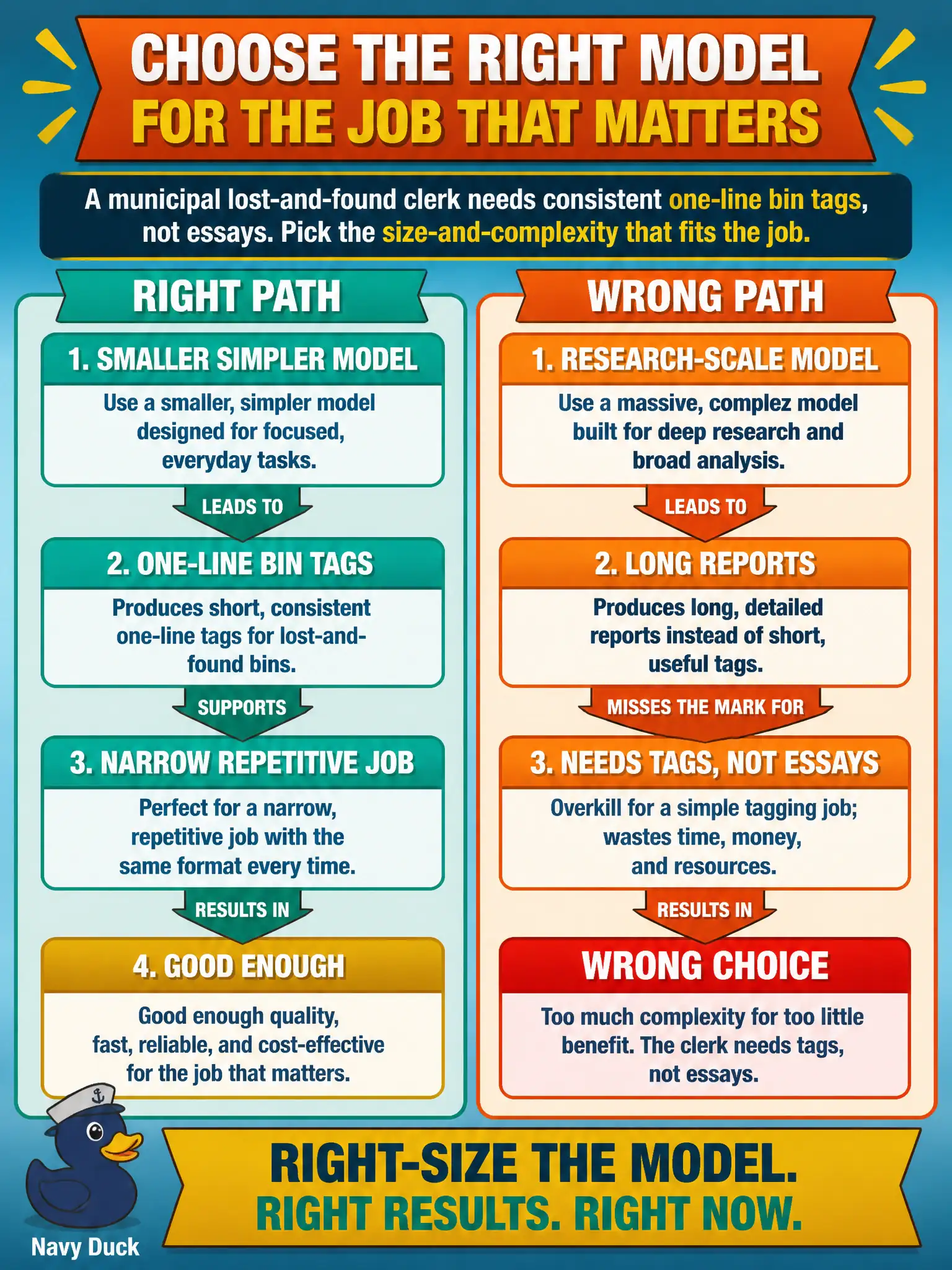
Think of one-line bin tags, not research essays. A smaller, simpler model that is good enough is the right size. The largest model writes booklets the clerk never asked for.
Full Explanation
The municipal lost-and-found clerk needs consistent one-line bin tags, not essays or research reports. For that narrow, repetitive job, a smaller, simpler model that is good enough is the right size-and-complexity choice: it matches the output shape, keeps cost and latency down, and avoids over-generating. Model capacity should follow task complexity; one-line tags do not require a research-scale generator.
Always picking the largest research-scale model fails because excess capacity writes long reports the clerk never asked for and wastes spend on a repetitive labeling task. Claiming model size never matters once English is readable fails because size drives verbosity, latency, and cost even when the language is understood. Skipping the tags to stand up a year-long custom research project first fails because it abandons the immediate operational need for an unrelated research program.
Exam caveat: right-sizing models to narrow tasks is a core applications skill—largest is not default-correct when the job is short, repetitive, and well bounded. Operational check: generate sample bin tags with a small model under a tight max-length setting, confirm clerks get consistent one-liners, and only escalate model size if measured tag quality actually fails.