
A community-theater box office will fire thousands of short what time is curtain turns every weekend. A vendor offers the most expensive long-context model for every turn. Which application-level filter should win?
Select an answer to reveal the explanation.
Short Explanation
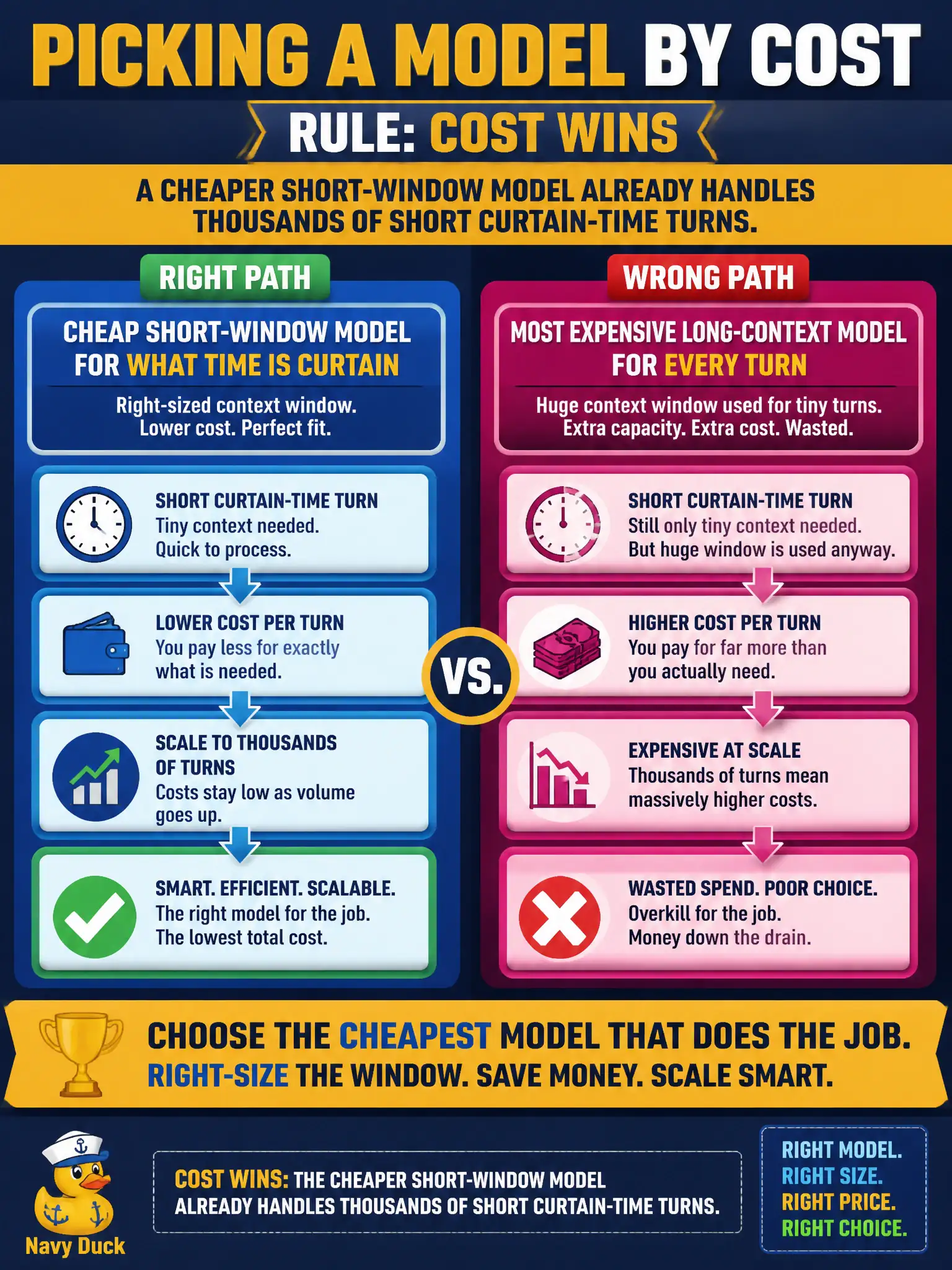
Think of thousands of what-time-is-curtain turns. A cheaper short-window model already handles them. The expensive long-context model is a weekend money pit, and curtain time is not a photograph.
Full Explanation
Application-level model selection for the community-theater box office starts with what the workload actually asks. Thousands of short “what time is curtain” turns are narrow, repetitive text questions that a cheaper short-window model can already handle. Cost is therefore a valid application filter: paying for the most expensive long-context model on every turn is waste when a cheaper model meets the task.
Always buying the most expensive long-context model for a one-line hours question fails because long context and premium pricing are not required by the input or the answer shape. Claiming cost never matters once an application is live fails because live traffic multiplies per-call spend; weekends of thousands of turns make an expensive default a recurring money pit. Using an image-only model fails because curtain time is a text fact, not a photograph, so modality is wrong as well as cost discipline.
Exam caveat: cost, latency, modality, and context needs are all application-level filters; practitioner items often expect cost to win when the task is short and high-volume. Operational check: sample real box-office turns, measure token use and answer quality on a short-window cheaper model, and only escalate to long-context premium models for the minority of turns that truly need them.