
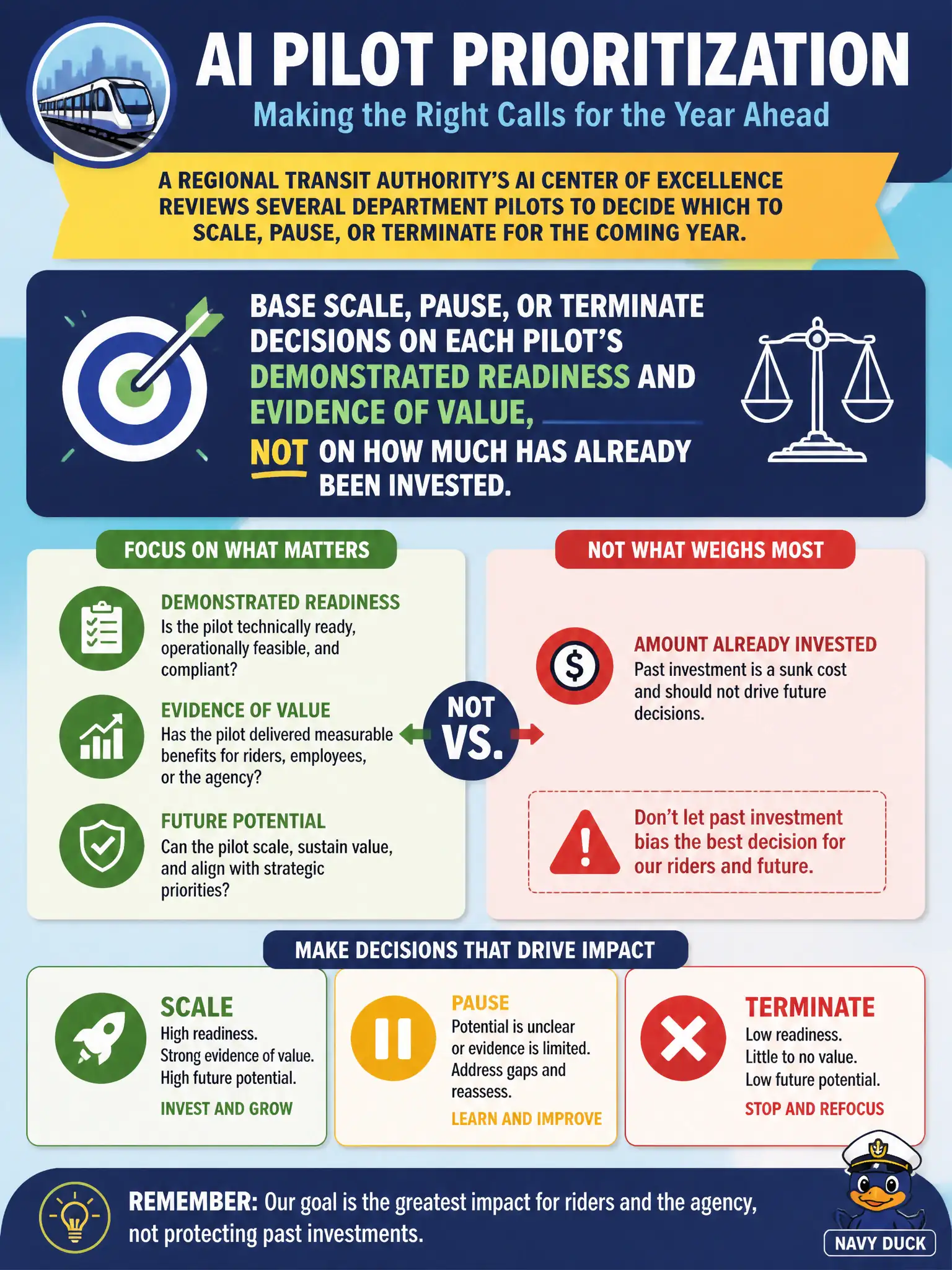
A regional transit authority's AI Center of Excellence reviews several department pilots to decide which to scale, pause, or terminate for the coming year. What should drive this prioritization decision?
Select an answer to reveal the explanation.
Short Explanation
Money already spent doesn't make a weak pilot stronger, that's the sunk-cost trap talking. The smart call looks at what a pilot actually proved it can do, not how much it already cost to find out.
Full Explanation
Prioritization based on demonstrated readiness and evidence of value ties scaling decisions to actual performance data, which is the core discipline of a Center of Excellence's portfolio-review function. Continuing to fund pilots mainly because they've already consumed resources is textbook sunk-cost reasoning, which ignores whether continued investment is actually justified by results going forward. Prioritizing pilots by initial excitement substitutes enthusiasm for evidence, risking scaling something popular but underperforming over something quieter but genuinely effective. Scaling every pilot that simply reached completion conflates finishing a trial with proving it delivered value, missing pilots that completed but underperformed on the metrics that matter. Scope caveat: readiness assessments should weigh both quantitative results and qualitative factors like governance and workforce preparedness. Operational check: confirm each pilot's scale, pause, or terminate recommendation cites specific performance data against predefined criteria, not narrative impressions alone.