
A municipal utility is moving an AI pilot to enterprise scale without having defined what success will look like at that scale. What risk should leadership recognize?
Select an answer to reveal the explanation.
Short Explanation
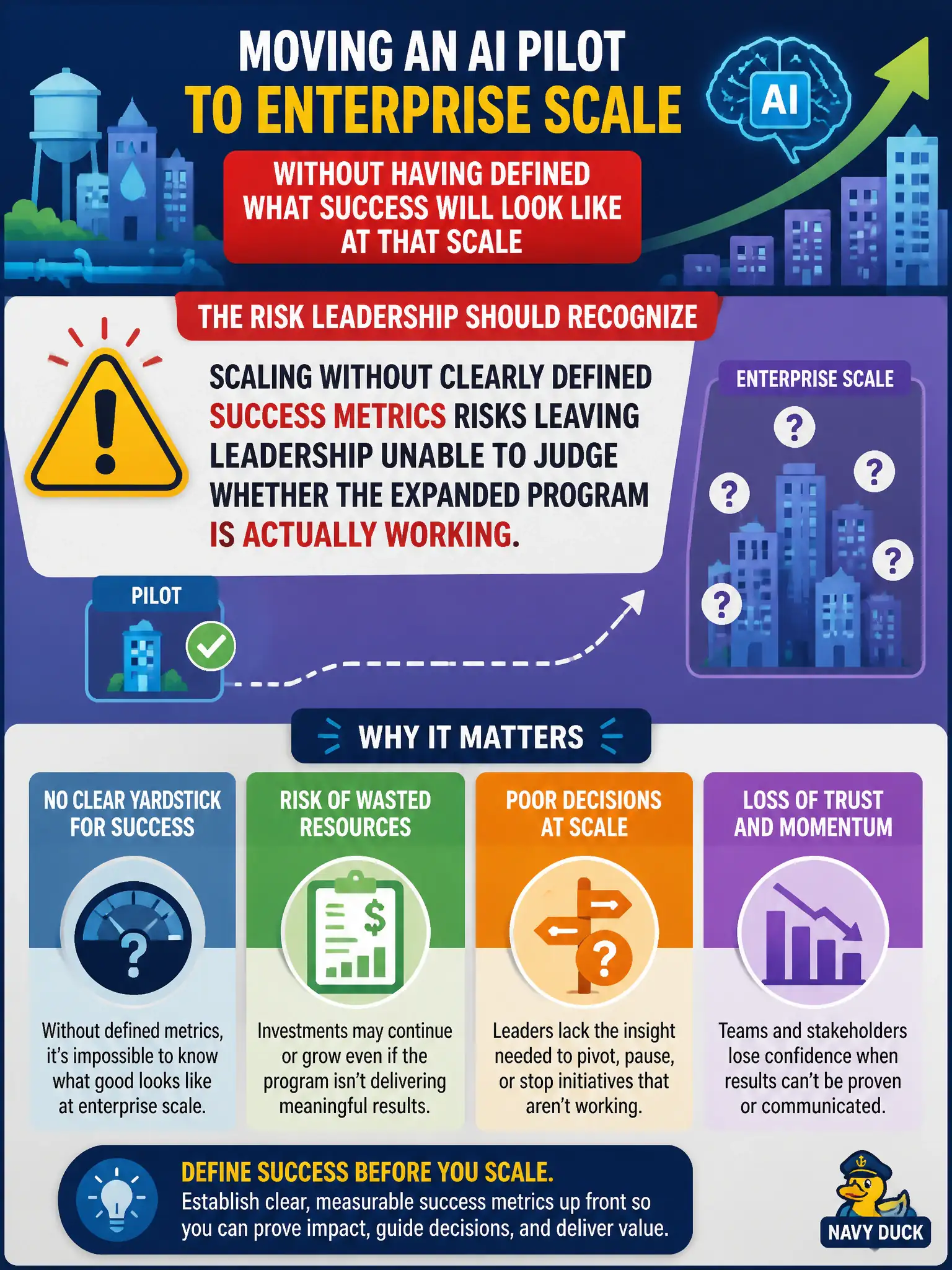
Scaling without a scoreboard means you can't tell a win from a loss until it's too late. Without clear success metrics defined up front, leadership has no way to judge whether the bigger rollout is actually delivering value.
Full Explanation
Clearly defined success metrics give leadership a concrete basis for evaluating whether enterprise-scale performance meets expectations, which is essential for course-correcting early rather than discovering problems well after they've spread. Treating metrics as pilot-only work misunderstands that performance at scale can differ meaningfully from a contained pilot, so evaluation criteria need revisiting, not retiring. Assuming pilot-stage metrics carry over unchanged ignores that scale often introduces new dimensions worth measuring, such as consistency across sites or cost per unit at volume. Dismissing the gap as a minor documentation issue underrates how it blocks leadership's ability to make evidence-based go or no-go decisions during the rollout. Scope caveat: success metrics should tie back to the business objectives the initiative was meant to serve, not just technical performance. Operational check: confirm target metrics and thresholds are documented and agreed upon by stakeholders before enterprise-scale rollout begins.