
A public-health agency scaling an AI triage tool must plan for what happens if the system becomes unavailable during peak demand. What should this business-continuity plan include?
Select an answer to reveal the explanation.
Short Explanation
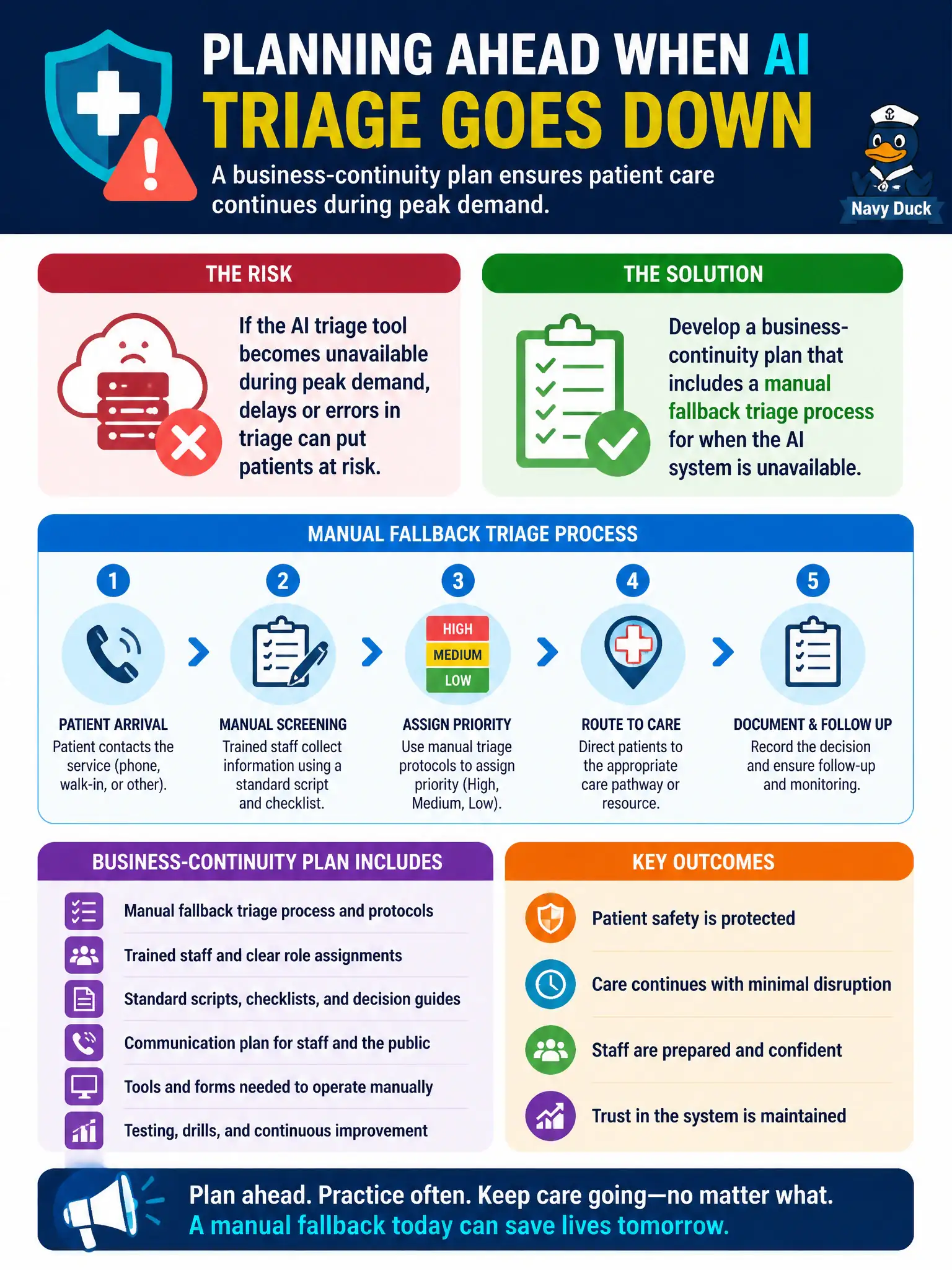
Even the best system has an off day, especially right when everyone needs it most. Build a manual fallback for triage so care doesn't stop just because the AI does, that backup plan turns a system outage into a manageable hiccup.
Full Explanation
A documented manual fallback preserves the agency's core function during an outage, which is the essence of business-continuity planning for production AI systems, particularly in public-health settings where demand peaks and downtime can coincide. Assuming outages are unlikely enough to deprioritize planning ignores that peak-demand periods are exactly when both system strain and the consequences of downtime are highest. Pausing triage entirely during an outage abandons the agency's core mission at the moment it's needed most, rather than degrading gracefully to a manual process. Relying on a vendor's uptime guarantee as the main safeguard outsources an operational risk the agency itself remains accountable for when residents are affected. Scope caveat: fallback procedures need periodic drills, since an untested plan often fails under real pressure. Operational check: confirm staff have practiced the manual triage fallback process within the past year, not just that a document describing it exists.